Insights
GUIDE
Confirmed
iPhone 17 Pro vs iPhone 16 Pro Size: What’s Actually Different?
Official iPhone 17 Pro vs iPhone 16 Pro size comparison: height, width, thickness, weight, pocket fit, case compatibility, and whether the physical difference justifies upgrading.
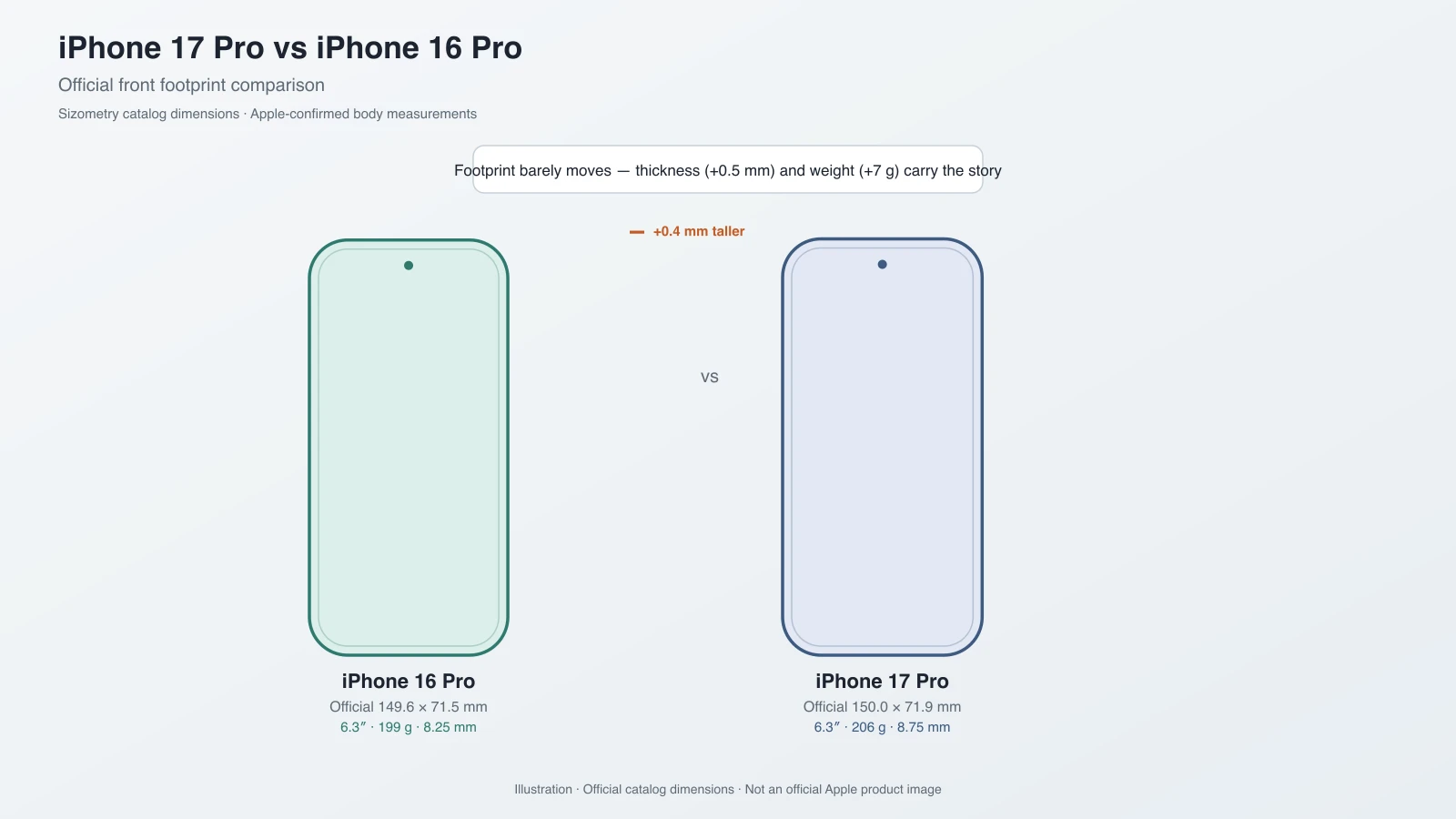
A four-figure Pro upgrade rarely fails because the chip is slow. It fails when the new phone makes your pocket, case, or one-handed habit feel wrong. On paper, iPhone 17 Pro is barely taller and wider than iPhone 16 Pro. The outline stays in the same mid-size Pro class. The real physical story sits in extra depth, added mass, and a more assertive camera plateau — changes a ruler records quietly and a hand meets every day.
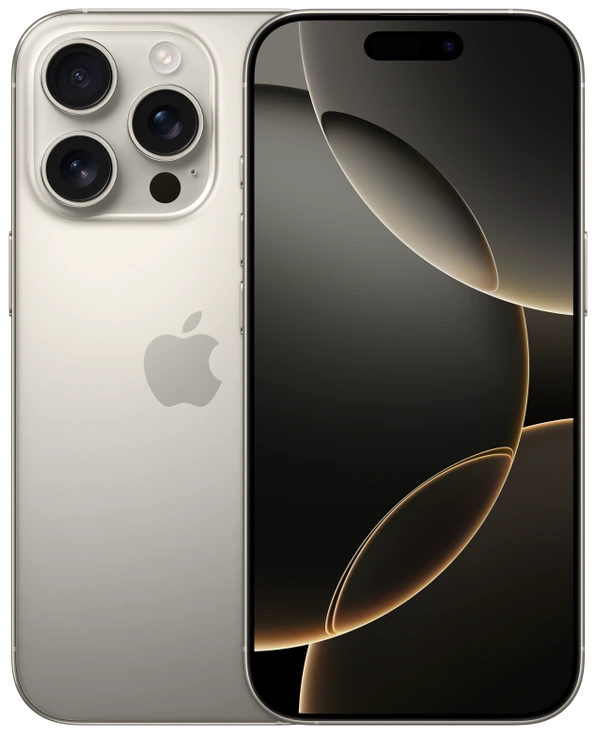
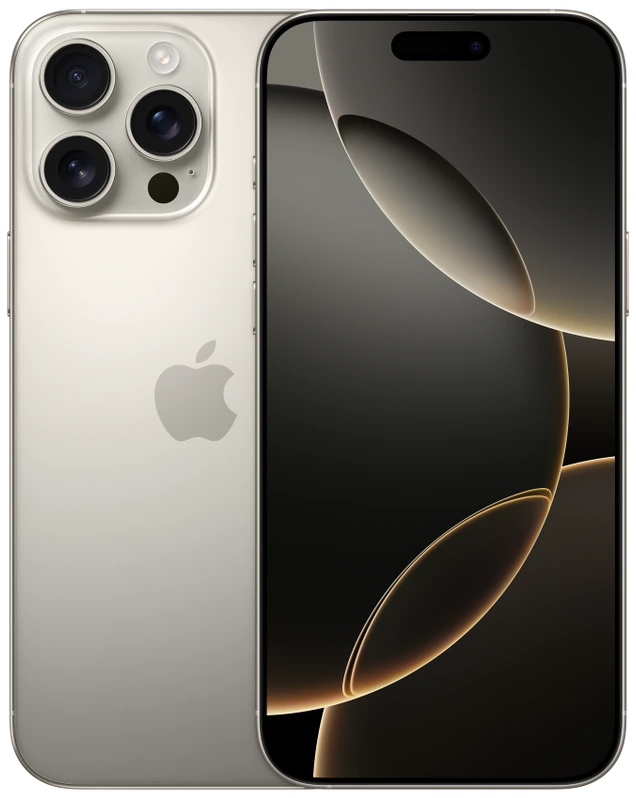
Sizometry’s job here is not to reprint Apple’s sheet. It is to separate the millimeters that matter from the ones that only look decisive in a screenshot. For live outlines while you read, start with the iPhone 16 Pro vs iPhone 17 Pro comparison. Catalog pages for iPhone 16 Pro and iPhone 17 Pro hold the official figures this article interprets.
Quick Answer
• Same size class — both remain mid-size Pros with a 6.3-inch display class • Meaningful body change — extra depth and added mass, not a taller or wider silhouette • Pocket impact — the outline still fits the same pockets; comfort hinges on thickness, camera island, and case bulk • Case compatibility — treat a 16 Pro shell as a temporary sleeve at best, not a daily 17 Pro case • Upgrade verdict — size continuity removes a reason *not* to upgrade; it does not create a reason *to* upgrade
Size Comparison Table
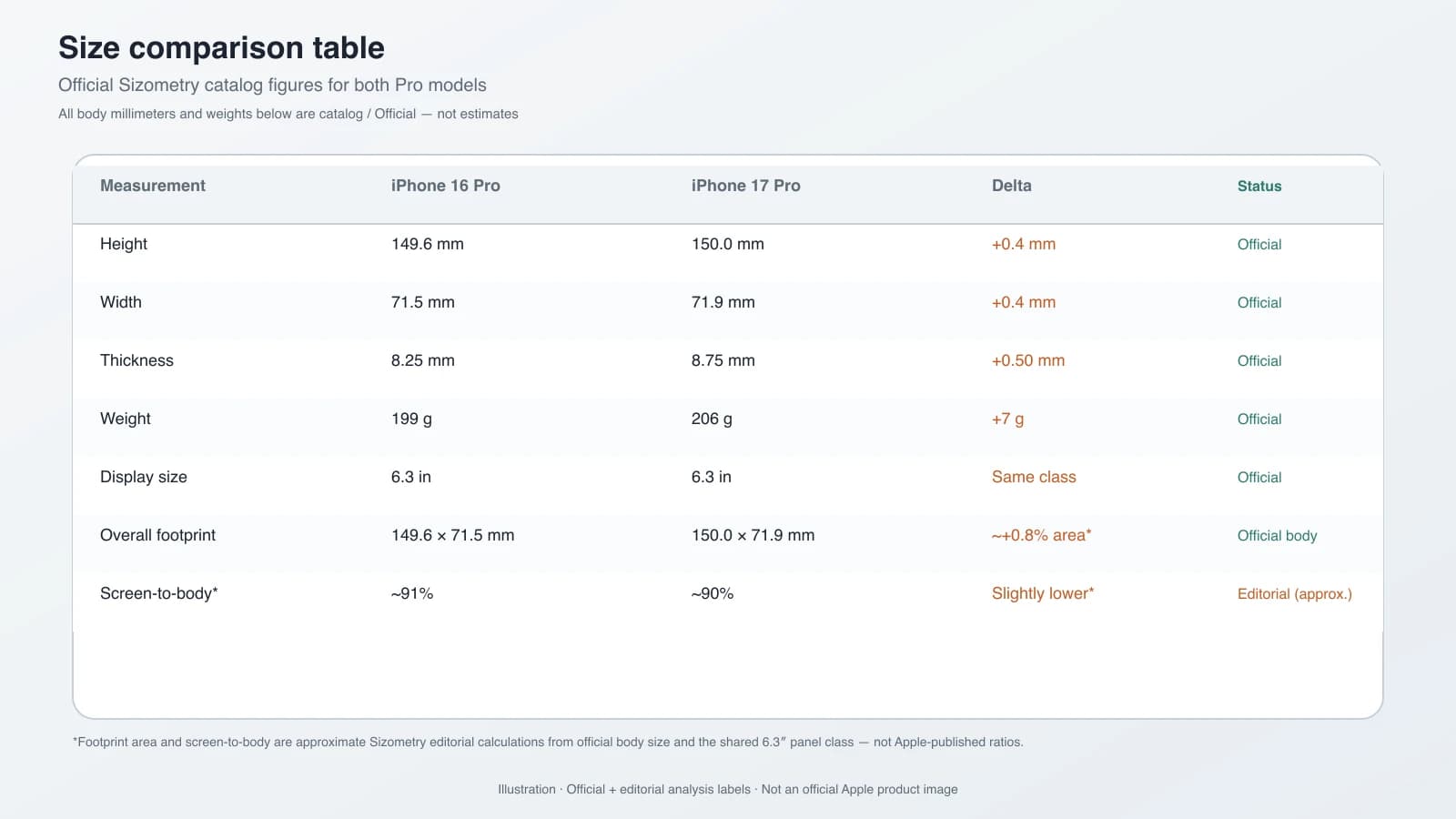
Body millimeters and grams below are **official** Sizometry catalog figures aligned with Apple’s published Pro specs. Footprint area and screen-to-body are **Sizometry editorial analysis** calculated from those figures — not Apple-published ratios.
• Measurement — iPhone 16 Pro — iPhone 17 Pro — Delta — Status • Height — 149.6 mm — 150.0 mm — +0.4 mm — Official • Width — 71.5 mm — 71.9 mm — +0.4 mm — Official • Thickness — 8.25 mm — 8.75 mm — +0.50 mm — Official • Weight — 199 g — 206 g — +7 g — Official • Display size — 6.3 in — 6.3 in — Same class — Official • Resolution class — 2622 × 1206 — 2622 × 1206 — Same class — Official • Overall footprint — 149.6 × 71.5 mm — 150.0 × 71.9 mm — ~+0.8% area — Official body / Editorial area • Screen-to-body (approx.) — ~91% — ~90% — Slightly lower on 17 Pro — Sizometry editorial analysis
Apple changed the numbers a ruler sees more than the size class your hand recognizes. Height and width stay inside the same silhouette. Depth and mass are the deltas most people can feel without calipers. The screen-to-body row is a rough editorial check only — supporting evidence that the marketed display class did not grow with the chassis.
Height Analysis
The height bump is real on a spec sheet and almost invisible in a pocket. Mid-size Pros already ask many people for a pinky brace under the bottom edge. That habit does not change here.
Top-corner Control Center, banners, and browser chrome stay at the far end of the same reach band. Vertical scrolling does not ask for a new gesture vocabulary. If 16 Pro already dug when you sat down, the slightly taller 17 Pro will not invent a new problem — and it will not fix an old one.
The interesting mistake is calling this “bigger” in the Pro Max sense. That is a different product entirely. When height anxiety is really Max anxiety, compare iPhone 17 Pro Max vs iPhone 17 Pro instead of arguing over a Pro-to-Pro refresh.
Width Analysis
Width is the footprint dimension your thumb actually budgets for. The year-over-year change stays inside the same mid-size typing lane. If far-side keys already felt like a stretch on 16 Pro, 17 Pro will not rescue you. If they already felt natural, they still will.
In practice, a typical case sidewall adds more width than this generation does. That is why bare-metal caliper talk often overstates what daily use feels like. Landscape gaming and video still run on the same 6.3-inch-class canvas; the deeper slab and camera plateau change seating more than the tiny width bump does.
A larger number is not always a larger experience. Width keeps the phone familiar. It does not redefine one-handed comfort.
Thickness
Here is where the comparison changes.
Official body thickness is the slab figure — the number that rose by half a millimeter. Maximum carried thickness is that slab plus the raised camera plateau and whatever your case adds. People often quote the first number and live with the third.
Sizometry’s editorial read of 17 Pro’s camera packaging is that the island looks and behaves more assertively than a quiet lens tweak. That is judgment about presence on a desk and pressure in a flat pocket, not a claim of a measured bump depth Apple has published as a separate sheet value. Desk rock and face-up sit are plateau problems as much as slab problems. A phone can keep nearly the same footprint and still feel less compact once depth and camera geometry take over.
Bare, the extra depth is enough for thickness-sensitive hands to notice — especially if 16 Pro already felt non-thin. Cased, the shell often swamps Apple’s delta unless the new case is built deeper to clear the camera region. Some people like the more planted landscape hold. Others miss the blade-like slide into tight denim. Neither reaction is wrong; both are thicker-phone reactions, not taller-phone reactions.
Weight
The added mass is small on a kitchen scale and uneven in daily life.
Static weight is what a store demo makes dramatic: bare phones, one in each hand, thirty seconds of comparison. Repeated handling is different — unlock, reply, pocket, unlock again across a commute. Balance and thickness shape perceived heaviness as much as the gram delta does. A dense case can outweigh Apple’s change before lunch.
Sensitive hands notice the surcharge during long reading, overhead holds, and face-height calls. People who never remove a substantial case, or who are stepping down from Pro Max, often shrug. Honestly, this is not the reason to upgrade — but it can be a fair reason to stay if you already disliked 16 Pro’s density.
One balanced observation from side-by-side testing culture: many people notice a weight change immediately, then stop noticing it after a few days of adaptation. Demo drama and week-two ownership are not the same measurement.
Display and Bezels
Buy the display story only if you want a bigger canvas. You will not get one.
Both phones stay in the same 6.3-inch Super Retina XDR class at the same 2622 × 1206 resolution class and 120 Hz in Sizometry’s sheet. App layouts, keyboard proportions, and video framing remain familiar. Usable screen is a continuity story, not an upgrade story.
Sizometry’s approximate screen-to-body estimate — roughly 91% on 16 Pro and 90% on 17 Pro when the shared panel class is placed on the official bodies — only supports that point. It is editorial math, not an Apple ratio, and the gap is too small to treat as a usability feature. Marketing talk about thinner borders cannot invent a roomier reading plane when the chassis grows slightly and the marketed diagonal holds still.
If “new Pro” meant “bigger screen” in your head, look at Pro Max. Do not ask bezels to do that job.
Open iPhone 17 Pro and iPhone 16 Pro side by side in the Sizometry size comparison tool.
Open size comparison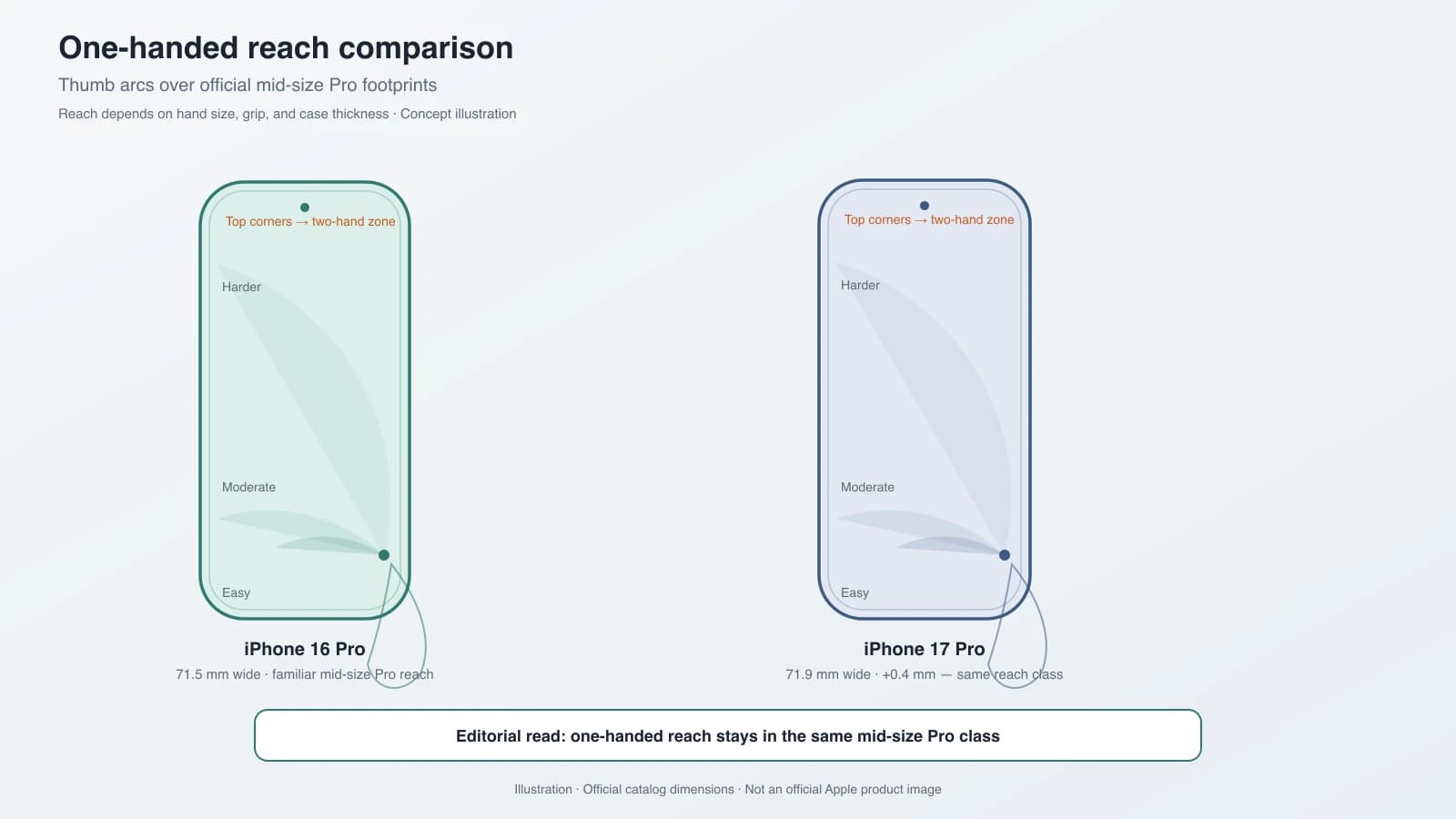
Everyday Usability
Walk through an ordinary day and the difference appears in pockets and long holds, not in the outline.
Checking Maps while walking still fits the same one-handed reach band. Replying on a train keeps the familiar mid-size Pro script: unlock, type, re-pocket. Taking a photo is where balance around the camera module and the denser stack show up first — landscape can feel more planted; a quick jeans draw feels slightly thicker. Reading in bed puts weight and depth on tired wrists; a pillow-propped two-hand hold erases both. A long call held at face height is the other honest test. The phone does not become awkward. It becomes slightly more present.
Notification triage and top-corner gestures do not retrain you. If Reachability was part of your 16 Pro life, keep it. If it was not, 17 Pro will not invent the need.
Pocketability
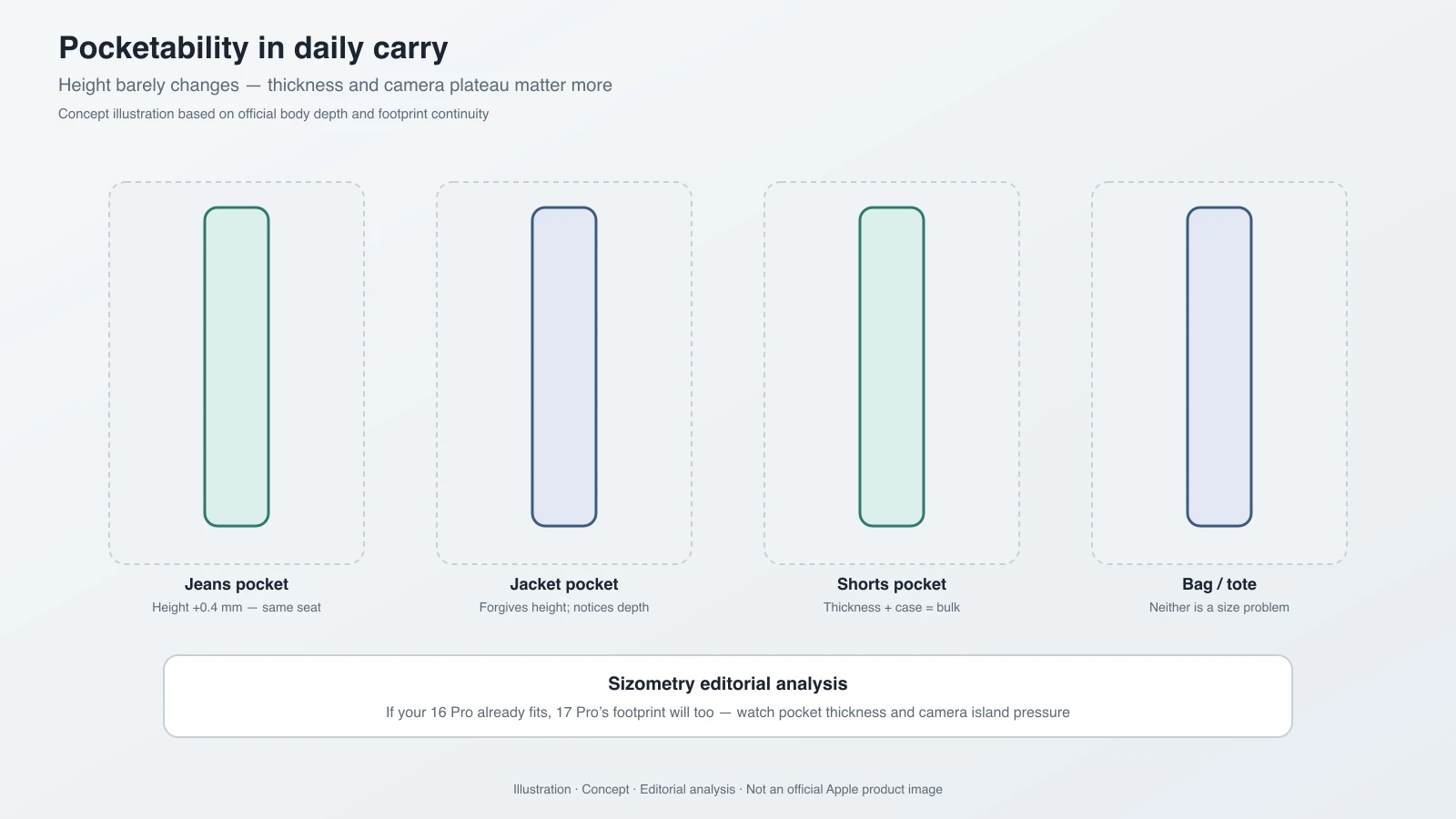
You are seated. You tip forward to pull the phone from a front jeans pocket. The outline still comes out the same way — same vertical band, same familiar rectangle. What you feel against the fabric is depth: slab, camera island, and case stack.
Footprint decides whether the phone fits. Thickness, camera geometry, and case bulk decide whether it feels comfortable. Bare 17 Pro remains a jeans phone for most people who already carried 16 Pro. A bulky case can tip a tight pair over the line even when a slim 16 Pro setup did not. Shallow shorts punish depth first. Jackets forgive almost everything except a deep MagSafe wallet stack.
If your 16 Pro already fits your life’s pockets, the 17 Pro outline will too. Re-check comfort only if you hated 16 Pro thickness or your preferred case adds a tall camera clearance hump.
Case Compatibility
Plan on a case designed for iPhone 17 Pro.
A soft, loose sleeve may physically accept the phone. A precision-molded 16 Pro shell should not be expected to seat cleanly. The footprint change looks tiny on a ruler and large inside a snug mold. Camera openings, button cutouts, and magnetic ring alignment are the practical failure points — not a theoretical debate about 0.4 mm.
MagSafe on the phone is not the same question as MagSafe through an old case. Existing wallets and chargers can still work with a correct 17 Pro case or bare-device alignment. Forcing a stiff 16 Pro shell can leave magnets off-center and weaken attachment. That is a fit problem, not a claim that every accessory in your drawer becomes useless.
Treat generation-specific cases, camera-ring protectors, and precision wallets as the conservative default.
Should You Upgrade?
Size continuity removes a reason not to upgrade. It does not create a reason to upgrade.
**Upgrade if…**
• You already want 17 Pro for camera, performance, battery, or materials, and size was only the fear in the doorway • You need a replacement phone and still want mid-size Pro handling without drifting toward Max bulk • A slightly denser, more planted slab is acceptable or even preferable
**Stay with iPhone 16 Pro if…**
• Size was the pitch — the footprint barely moved • You are already at your thickness limit in tight pockets or with a case on • You do not want to replace a working case and MagSafe stack this cycle • Extra depth and mass sound like pure downside for how you hold a phone
For lived-in ownership notes beyond dimensions, see the iPhone 16 Pro and iPhone 17 Pro user-experience guides.
Sizometry Verdict
Is iPhone 17 Pro meaningfully larger than iPhone 16 Pro? Not in the way upgrade threads usually mean. The front footprint stays mid-size Pro. Pocket silhouette, typing lane, and display canvas remain familiar. Technically larger is not practically larger.
Will a 16 Pro owner notice? Seldom in height or width. More often in the denser hold — extra depth, added mass, and camera-plateau presence once a case goes on. Some people adapt in days. Thickness-sensitive carriers may keep noticing.
Should physical size decide the purchase? Only as a veto, not as a reason to spend. If you like 16 Pro in your hand, 17 Pro feels like the same phone with a heavier ending. If you hoped Apple would shrink the Pro, it did not. If you hoped for a bigger screen, look at Pro Max.
Test in person: hold both bare, then in the case style you actually buy; sit with the phone in a front pocket; raise it for a Maps-length hold. Ignore the height callout. Listen to depth and mass.
Buy 17 Pro when the rest of the product wins and you still want this size class. Stay on 16 Pro when the phone you already carry still fits your hands, pockets, and patience. The millimeters are clear. The purchase is about everything else.
If you are weighing whether to skip a generation, continue with iPhone 18 Pro size and thickness.
Frequently Asked Questions
Is the iPhone 17 Pro actually bigger than the iPhone 16 Pro? Slightly on the official sheet — taller and wider by 0.4 mm each, thicker by 0.50 mm, and heavier by 7 g. It remains the same mid-size Pro class, not a step toward Pro Max.
Does a thicker phone always feel worse? No. Extra depth can feel more planted in landscape and less razor-like in the palm. The trade is pocket pressure and a denser slide into tight fabric. Preference decides more than the millimeter label.
Should comfort-focused buyers upgrade? Only if something other than size already justifies the premium upgrade. Comfort-focused owners who dislike thickness or added mass have a fair reason to stay on 16 Pro.
Will existing MagSafe accessories still work? Many wallets and chargers can still work with iPhone 17 Pro when alignment is correct. That does not make a 16 Pro case a safe daily shell. Phone MagSafe compatibility and old-case fit are different questions.
Why can a tiny footprint change still require a new case? Precision molds, camera openings, and button cutouts fail on small mismatches. A loose sleeve may accept the phone; a snap-fit 16 Pro case should not be trusted for daily protection or alignment.
Will the weight difference disappear after a few days? Often, yes for people who adapt quickly — especially inside a familiar case style. Side-by-side store tests exaggerate the change; week-two ownership usually softens it. Thickness-sensitive users may keep noticing on long holds.
Will iPhone 17 Pro fit in the same pockets as iPhone 16 Pro? In outline terms, yes for nearly every pocket that already accepted 16 Pro. Comfort still depends on thickness, camera island, and case bulk.
Does the iPhone 17 Pro have a larger display? No. Both stay in the official 6.3-inch class at the same resolution class. Usable screen size is effectively unchanged.
Is the size difference worth upgrading for? Almost never by itself. Let camera, performance, battery, or device condition make the case. Treat size as reassurance that the Pro class remains familiar.
How does iPhone 17 Pro compare with iPhone 17 Pro Max for size? Pro Max is a different class — taller, wider, heavier, and built around a 6.9-inch display. Use iPhone 17 Pro Max vs iPhone 17 Pro when that is the real decision.