iPhone 17 Pro User Experience
Sizometry Verdict
Editorial scores based on recurring themes across professional reviews, hands-on testing, and expert analysis.
Overall user experience
8.5
out of 10
The most capable 6.3-inch iPhone for buyers who will use telephoto zoom and sustained Pro performance — with a meaningful premium over the standard model.
Category scores
Camera
9.0
The 48MP 4x telephoto transforms distant-subject shooting in ways the standard iPhone 17 cannot match, with strong consistency across lenses.
Battery and charging
7.5
Comfortable all-day endurance for typical use with a modest edge over the standard model, but clearly behind the Pro Max.
Performance
9.0
Fast routine use with occasional warmth under sustained load.
Handling and portability
7.5
Manageable daily carry with familiar reach and pocket trade-offs for the size class.
Build quality
9.0
Aluminum unibody construction feels premium, rigid, and precisely assembled — a high point of the Pro ownership experience.
Value
8.5
Balanced capability for the price with deliberate omissions versus higher tiers.
Strengths
- 48MP 4x telephoto with real everyday usefulness
- Strong sustained performance and improved thermals
- Premium aluminum unibody build
- Full Pro cameras in a pocket-friendlier size than Pro Max
Weaknesses
- Significant premium over the standard iPhone 17
- Modest battery advantage over the standard model
- Heavier than the standard iPhone 17 for one-handed use
- Incremental upgrade for recent Pro owners
Best for
- Buyers who will use telephoto zoom regularly
- Users wanting Pro performance without Pro Max size
- On-device editors and sustained workload users
- Upgraders from iPhone 14 Pro or older Pro models
Less suitable for
- Casual shooters satisfied with the standard iPhone 17
- Users needing maximum iPhone battery life
- Weight-sensitive buyers preferring the lighter standard model
- iPhone 16 Pro owners without specific pain points
Upgrade recommendation
Current device: iPhone 14 Pro
Recommendation: Strongly recommendedNotes: Telephoto, sustained performance, thermals, and build quality gains are substantial across multiple generations.
Current device: iPhone 15 Pro
Recommendation: Worth consideringNotes: Meaningful improvements for heavy camera and sustained workloads; optional for satisfied current owners.
Current device: iPhone 16 Pro
Recommendation: Depends on prioritiesNotes: Refinement upgrade — compelling for zoom and thermal priorities, skippable for content recent Pro owners.
Current device: Standard iPhone owners (iPhone 15/16/17)
Recommendation: Depends on prioritiesNotes: Justified only if telephoto reach and Pro performance match actual workflows, not hypothetical use.
Current device: Pro Max owners considering smaller Pro
Recommendation: Worth consideringNotes: Same camera system with substantially better handling; trade 8 hours rated video playback and display size.
Bottom line
The iPhone 17 Pro answers the standard-model question with telephoto reach, sustained performance, and premium build — not with a larger screen or dramatically longer battery. Buy it when you will use the 4x lens and push the A19 Pro regularly; stay with the iPhone 17 when you will not. Against the Pro Max, it is the same camera system in a more pocketable, one-hand-friendly package with accepted endurance trade-offs. iPhone 14 Pro and older owners gain the clearest upgrade case; iPhone 16 Pro owners should upgrade only with specific priorities in mind.
See its real size next to another phone or tablet.
Open size comparisonOverview
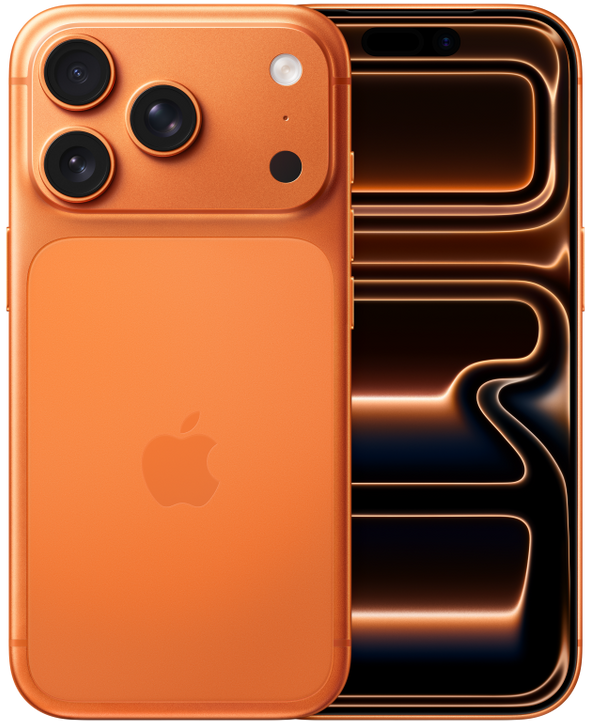
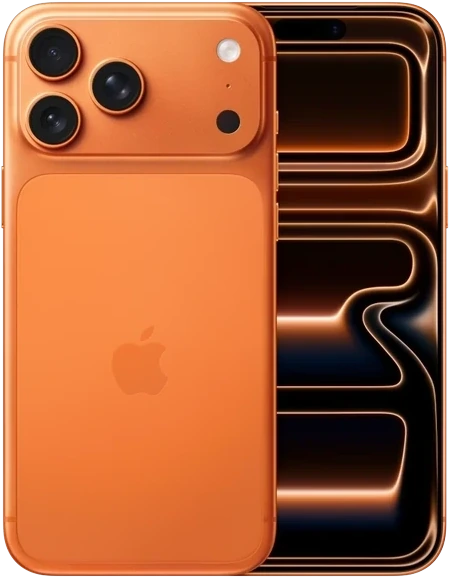
In reviews, the iPhone 17 Pro is framed as the practical sweet spot in Apple’s 2025 lineup — optical telephoto reach, stronger sustained performance, and a more substantial chassis without Pro Max bulk. The recurring question is straightforward: why pay more than the standard iPhone 17 when both share a 6.3-inch display and most daily software features?
This summary focuses on daily handling, endurance, camera limits, and who the device suits best — not benchmark rankings.
Daily use
Daily use feels immediately responsive — app launches and lens switching match the standard iPhone 17 in routine tasks. Differences surface in Pro workflows: 4x telephoto frames from across a room, 48MP burst processing, or long drives with navigation and streaming without strain.
The telephoto lens encourages more intentional framing — capturing distant subjects instead of accepting digital crop. Parents at sporting events and travelers shooting architecture cite this as the Pro’s most tangible daily benefit over the standard model.
iOS 26 stability mirrors the broader lineup: dependable core tasks with selective frustration around region-limited intelligence features. Background photo and video processing feels less disruptive than on older Pro chips, though the gap is subtle in casual messaging.
iPhone 17 Pro
View the full specifications, dimensions, pricing, and related models.
Camera
The 48MP 4x telephoto is the defining Pro advantage. Optical reach transforms concerts, youth sports, zoo visits, and city travel — where the standard iPhone 17’s digital crop produces acceptable social shares but lacks telephoto clarity and stabilization. Color consistency across ultrawide, main, and telephoto lenses earns praise for mixed-focal-length albums and video projects that switch lenses frequently.
The main and ultrawide inherit iPhone 17 reliability — predictable exposure, strong stabilization, natural skin tones. Pro owners value faster lens switching and 48MP crop headroom for print and large-screen viewing, workflows casual standard-model owners rarely push.
Battery and charging
Apple rates the iPhone 17 Pro at 31 hours of video playback versus 30 on the standard iPhone 17 and 39 on the Pro Max. Moderate daily use — messaging, social apps, intermittent photography, navigation — finishes comfortably with light reserve; heavy telephoto shooting, gaming, and prolonged GPS drain faster than casual-camera days.
The one-hour edge over the standard model is real but rarely cited as a purchase differentiator at this size. Owners who charge overnight seldom debate Pro versus standard on battery alone; multi-day margin and all-day heavy camera users more often look to the Pro Max.
Performance
The A19 Pro matches the standard iPhone 17’s A19 in routine tasks — launches, camera processing, and multitasking feel equally fast. The Pro distinction emerges under sustained load: video export, mobile gaming, augmented-reality sessions, and navigation with simultaneous media streaming.
Thermals are the most improved Pro talking point. iPhone 15 Pro and 16 Pro upgraders report less brightness dimming and stabler frame rates during 20–40 minute gaming or editing sessions. The aluminum unibody dissipates heat more predictably than prior stainless designs — managed warmth rather than uncomfortable hotspots in most accounts.
Handling and portability
At 71.9 mm × 150 mm and 206 g, the iPhone 17 Pro is marginally larger and 29 g heavier than the standard iPhone 17. many users still find it one-hand manageable for texting and quick camera grabs, but the extra mass shows during extended single-hand sessions.
The aluminum unibody and 8.75 mm thickness produce a secure grip. Side controls stay within thumb range, though top-of-screen reach fatigues sooner than on the lighter standard model.
Slim cases preserve thumb reach; rugged cases can push the phone past comfortable one-thumb territory and amplify the weight gap from the standard iPhone 17.
Build quality
The aluminum unibody is the most discussed build change — rigid, precisely assembled, premium finish that resists daily scuffs better than some expected after leaving stainless steel. Substantial at 206 g without Pro Max fatigue.
Buttons and the Action button retain tactile precision. The 8.75 mm profile feels planted compared with the standard model’s 7.95 mm — less flex when pressing the display.
Considering another iPhone 17 model?
Similar size devices
This summary is based on recurring reports from public discussions.