Insights
RUMOR
Rumor
iPad mini 8 Size Rumors: Dimensions, Weight and Portability Changes
iPad mini 8 size rumors for real use — dimensions, weight, thickness, one-handed portability, and case compatibility, using the iPad mini (A17 Pro) as the analytical baseline. Apple has not announced the next model.
Apple has not announced the next iPad mini, and future dimensions, weight, thickness, and display size remain unknown. “iPad mini 8” is only the common unofficial name for that expected successor. The iPad mini (A17 Pro) is the only official baseline.
Four realistic design paths remain in view: the same chassis with internal upgrades, a similar footprint with narrower bezels, a slightly larger display and body, or a thinner chassis with packaging trade-offs. Preserving compact portability appears more consistent with the product’s established role than moving substantially toward the iPad Air size class. This is editorial analysis, not reporting.
Detailed panel analysis is available in iPad mini 8 Display Rumors. Endurance context is covered in iPad mini 8 Battery Rumors, imaging context in iPad mini 8 Camera Rumors, and launch timing in iPad mini 8 Release Date Rumors. Measurement conventions follow Sizometry’s methodology.
Concise Current Answer
Official status: Apple has not announced next-generation dimensions, weight, thickness, or display size.
Practical question: The key issue is whether a successor remains compact enough to stay clearly distinct from the iPad Air.
Sizometry view: Continuity of the current handling advantage fits the product’s established role better than a major body increase, but this remains editorial analysis.
What Size Information Is Officially Known
Apple has not announced next-generation design, dimensions, weight, thickness, screen size, materials, release timing, price, chip, or accessory compatibility. No future measurement should be considered confirmed until Apple publishes the specifications.
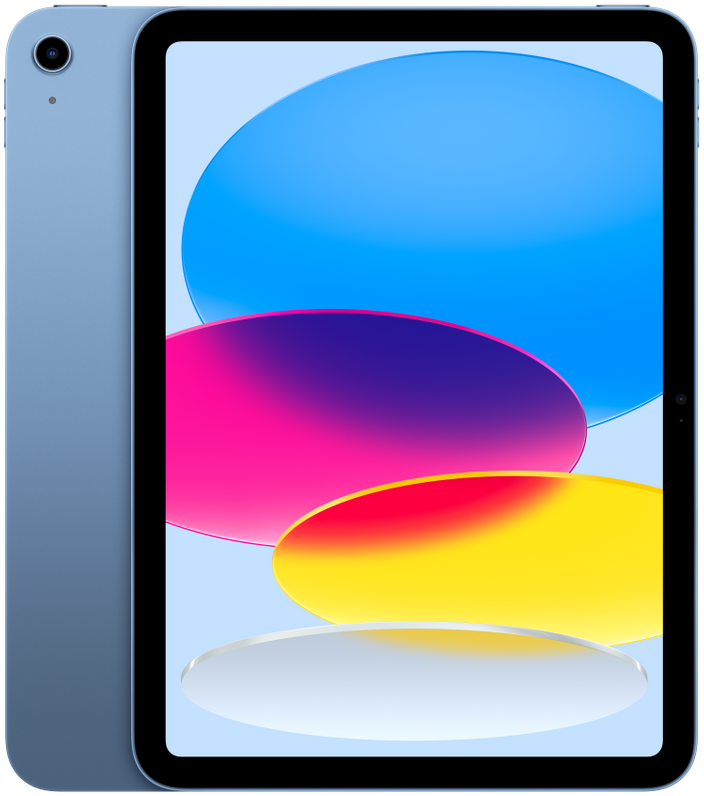
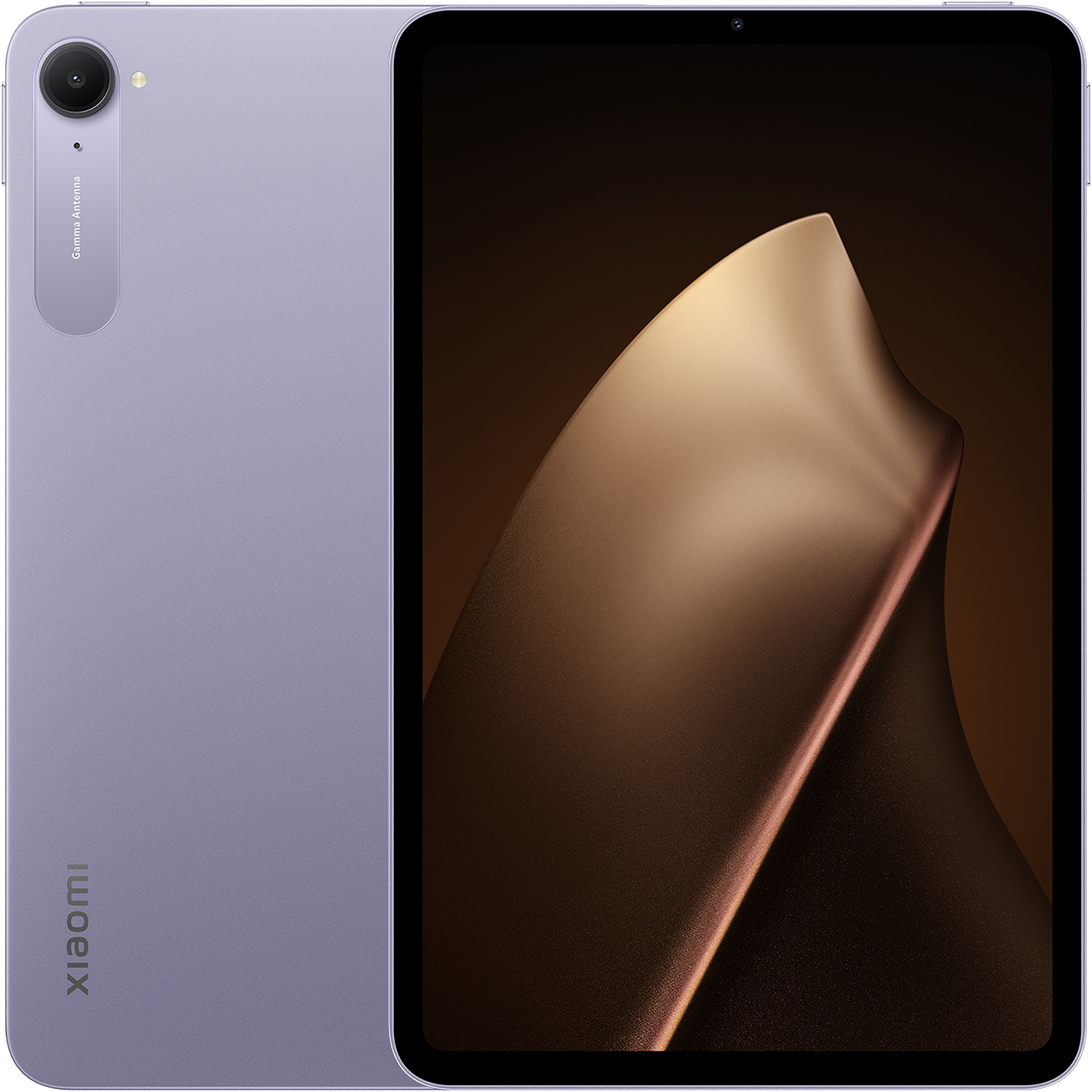
What is officially known is limited to the iPad mini (A17 Pro) and to Apple’s broader iPad catalog. The iPad (A16) and iPad Air 11-inch (M4) sit in clearly larger size classes. The Xiaomi Pad Mini provides a useful compact Android comparison, but it offers no evidence about Apple’s future dimensions.
Current-Model Dimensions and Weight
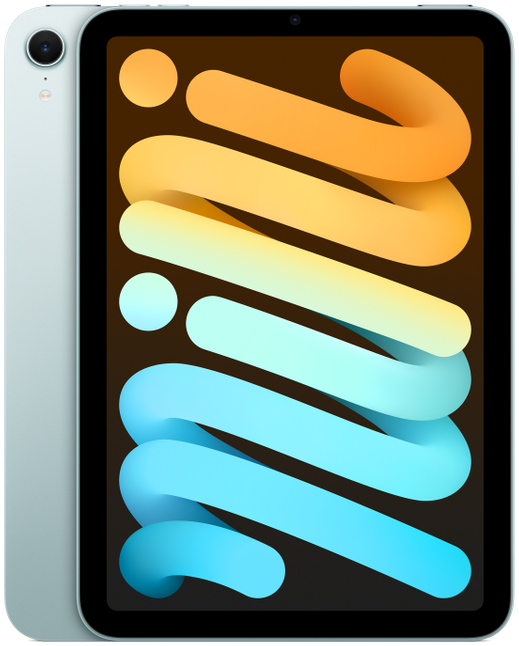
The iPad mini (A17 Pro) provides the verified starting point for every portability discussion.
Apple official specifications for the iPad mini (A17 Pro):
• Height — 195.4 mm • Width — 134.8 mm • Depth — 6.3 mm • Wi-Fi weight — 293 g • Wi-Fi + Cellular weight — 297 g • Display — 8.3-inch rectangular diagonal
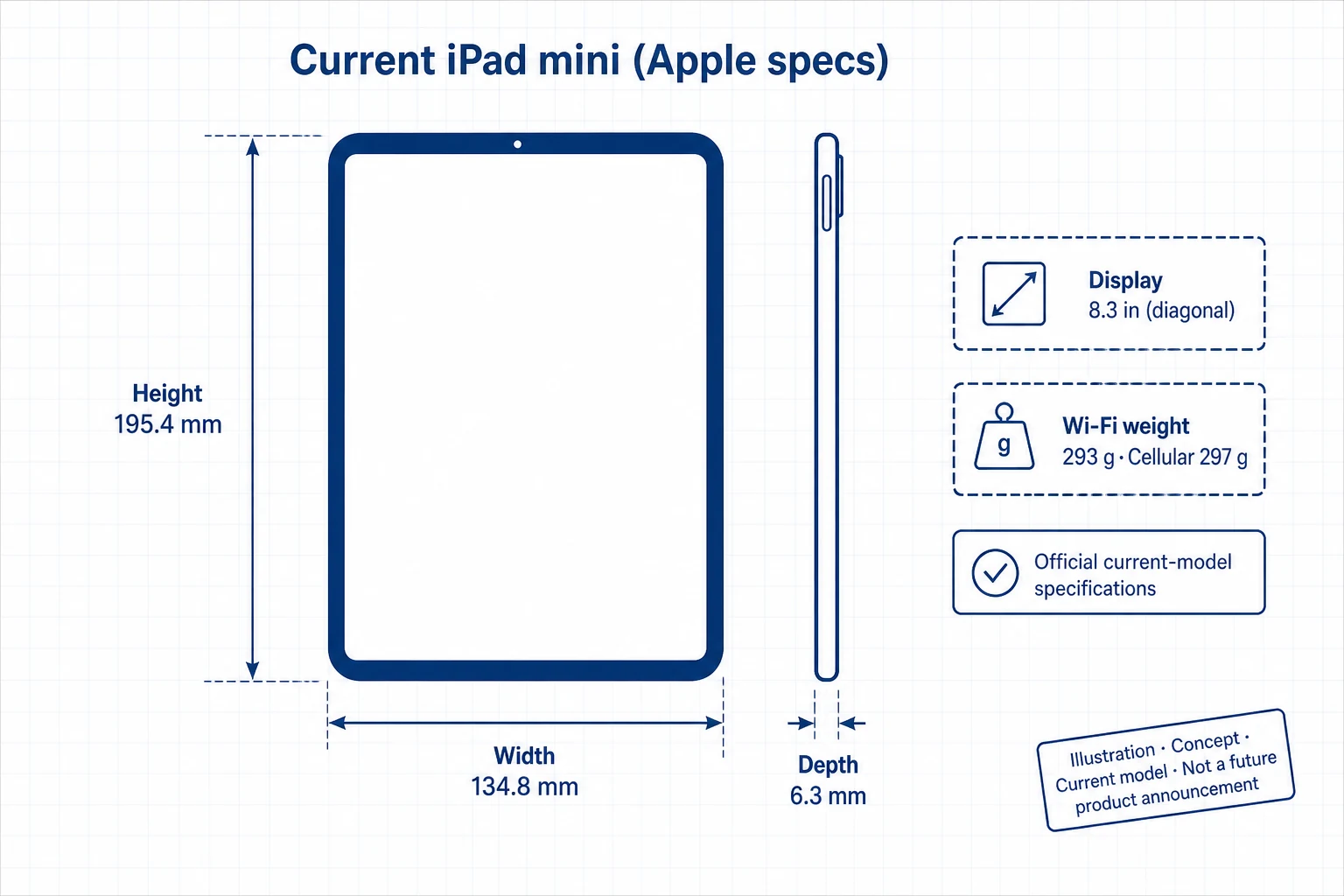
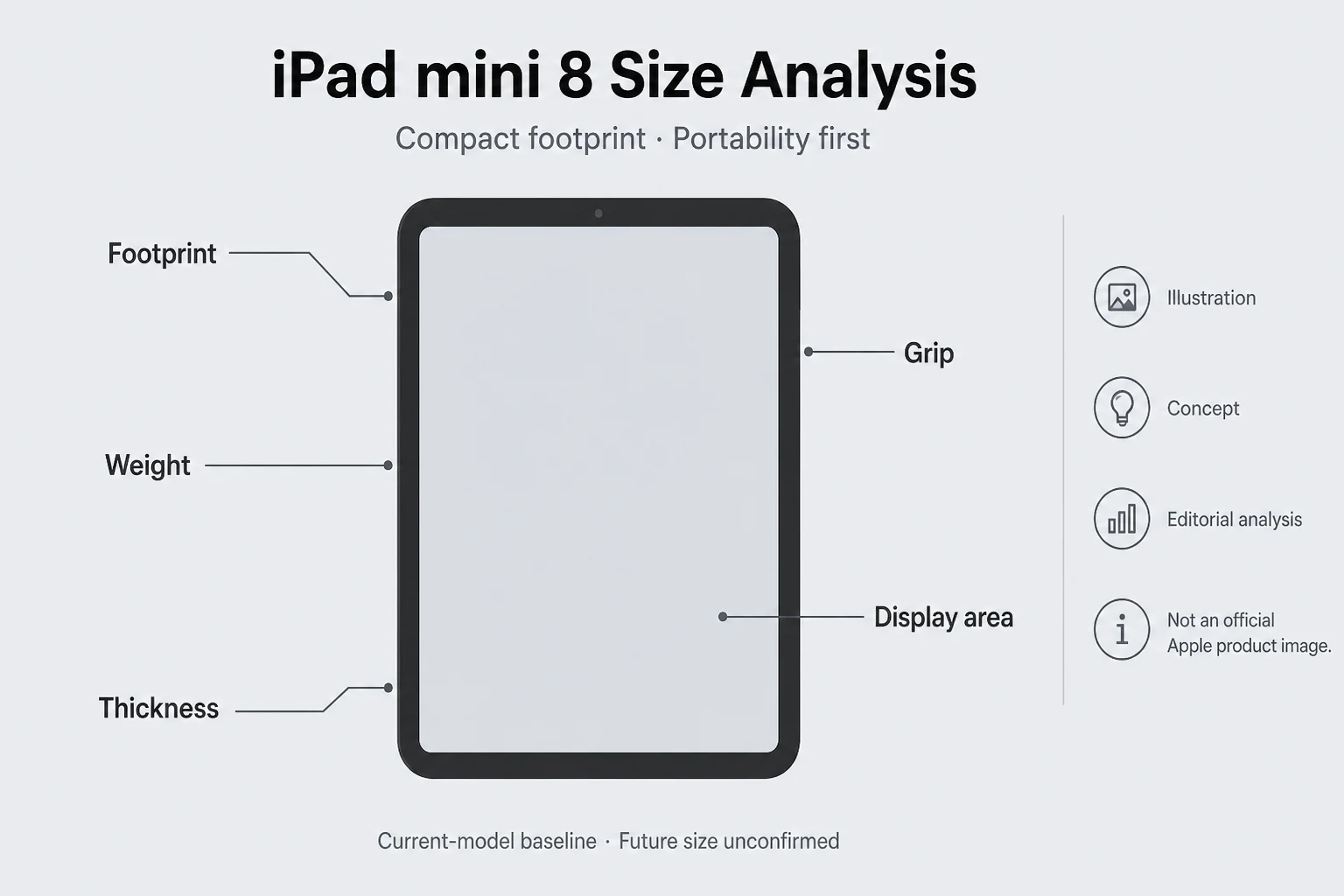
Chassis height and width decide bag fit and grip span. The marketed 8.3-inch rectangular diagonal describes the viewing plane, while Apple notes that rounded corners make the actual viewable area smaller than that rectangle. Depth affects edge pressure and how the tablet sits once a case adds thickness. These are related measurements, not interchangeable ones.
Explore device details
The mini’s value comes from the relationship among footprint, weight, thickness, bezel width, grip comfort, battery volume, and usable display area — not from diagonal size alone.
Historical iPad mini Size Changes
Apple has kept the mini identity through meaningful redesigns rather than continually enlarging the product into a small Air.
Generation — Display — Height — Width — Depth — Wi-Fi weight — Design significance — Source
• iPad mini (5th generation) — 7.9 in — 203.2 mm — 134.8 mm — 6.1 mm — 300.5 g — Home-button chassis — Apple official specifications • iPad mini (6th generation) — 8.3 in — 195.4 mm — 134.8 mm — 6.3 mm — 293 g — Full-screen redesign, same width, shorter height — Apple official specifications • iPad mini (A17 Pro) — 8.3 in — 195.4 mm — 134.8 mm — 6.3 mm — 293 g — Same exterior size class with internal upgrades — Apple official specifications
The 5th-to-6th generation transition is the clearest size lesson. Apple shortened the body from 203.2 mm to 195.4 mm while keeping width at 134.8 mm, moved from a 7.9-inch home-button display to an 8.3-inch full-screen panel, and slightly increased depth from 6.1 mm to 6.3 mm. Usable display area grew inside a chassis that remained unmistakably mini. The iPad mini (A17 Pro) then retained that modern footprint rather than stretching toward 11-inch iPad territory.
Could Apple Increase the Display Without Enlarging the Body?
A larger diagonal does not automatically require a proportionally larger chassis. Narrower bezels, more efficient display-to-body packaging, and rounded-corner panel geometry can increase usable area inside a familiar outline. Camera and sensor placement, structural border requirements, accidental-touch margins, and room for batteries, antennas, and speakers still constrain how far that approach can go.
No bezel reduction for a successor has been confirmed. A similar footprint with narrower bezels would preserve portability more effectively than enlarging the whole chassis, although Apple has not confirmed either approach. Panel-technology questions that interact with bezel packaging are covered in iPad mini 8 Display Rumors.
Apple might also enlarge the footprint for a larger display, more battery volume, better thermal headroom, or revised camera placement. Those are real hardware motives, not predictions — and a larger body risks overlapping the smaller iPad Air experience.
Bezel Reduction and Usable Screen Area
Bezel width determines how much additional display area can fit inside a fixed chassis outline. Narrower borders can reclaim usable area without changing bag footprint, but structural rails, antenna windows, and accidental-touch margins still limit how far that can go. Usable screen area matters more for reading, comics, notes, and games than the marketing diagonal alone. Until Apple publishes a future outline and panel geometry, any specific future bezel figure remains unsupported.
Thickness and Battery Trade-offs
A thinner device is not an unconditional improvement. Reducing depth can place greater pressure on battery volume, rigidity, thermal spreading, and edge comfort, depending on the internal design, and can make camera protrusion feel more prominent. Slightly greater thickness can be acceptable if it improves battery life or rigidity — but Apple has not announced a future thickness figure. How thickness interacts with cell volume and charging is explored in iPad mini 8 Battery Rumors. Thickness is part of the device’s internal packaging budget, not merely a cosmetic specification.
Weight and One-Handed Comfort
Total grams matter, yet balance often decides comfort. Center of mass, portrait-versus-landscape distribution, top-heavy camera hardware, case weight, Apple Pencil attachment, and the 4 g cellular premium on the iPad mini (A17 Pro) all change how a tablet feels after twenty minutes.
Holding a mini usually means gripping from one long edge or supporting from a lower corner while the opposite thumb reaches controls. Hand size and grip style vary, but for many one-handed grips, added width affects grip span more directly than a similar increase in height. The established 134.8 mm width contributes strongly to the current model’s one-handed character, although comfort still varies with hand size, grip style, case weight, and balance.
Portrait Reading, Gaming, Note-Taking, and Travel Use
Ebooks, manga, comics, and web reading favor a canvas large enough for type yet light enough for bed, sofa, airline trays, and standing commutes. The iPad mini works best as a small-bag, sling, camera-bag, or occasional large-pocket device rather than as a universally pocketable tablet — no tablet fits every pocket, and cases change effective dimensions immediately. Travel value depends on footprint, weight, and case bulk together, not display inches alone.
Physical size also affects gaming reach, landscape grip, heat, fatigue, and immersion: a modestly larger screen can help visibility, while a heavier body can make long sessions more tiring. For notes, a larger canvas improves writing room but can reduce the compactness that makes Pencil carry easy; future Pencil compatibility is unannounced. Media gains from a differently proportioned display remain conditional until Apple publishes aspect ratio and body geometry.
Case and Accessory Compatibility
Even small changes to dimensions, buttons, camera cutouts, microphones, speakers, magnets, or Pencil attachment can break case compatibility. Compatibility cannot be known until Apple publishes the final hardware layout. Existing cases may not fit a successor if Apple changes the dimensions, buttons, camera cutout, magnets, speakers, or Pencil attachment.
Comparison With Current iPad mini, Base iPad, and iPad Air
The mini’s role is clearest beside Apple’s nearest full-size tablets. The table uses Apple’s official technical specifications for all three iPads.
Device — Display — Height — Width — Depth — Weight — Portability role — Source
• iPad mini (A17 Pro) — 8.3 in — 195.4 mm — 134.8 mm — 6.3 mm — 293 g Wi-Fi — Truly compact handheld tablet — Apple official specifications • iPad (A16) — 11 in (10.86 in rectangular measurement) — 248.6 mm — 179.5 mm — 7.0 mm — 477 g Wi-Fi — Everyday full-size iPad — Apple official specifications • iPad Air 11-inch (M4) — 11 in (10.86 in rectangular measurement) — 247.6 mm — 178.5 mm — 6.1 mm — 464 g Wi-Fi — Thin productivity tablet — Apple official specifications
The mini is substantially shorter and narrower than both larger iPads, and roughly 170–185 g lighter. That size and weight gap explains much of the iPad mini’s distinct appeal. Compare live outlines on Sizometry’s iPad mini (A17 Pro), iPad (A16), and iPad Air 11-inch (M4) pages, or use the comparison tool. For Android context, see the Xiaomi Pad Mini as a compact peer — it offers no evidence about Apple’s future dimensions.
Open iPad mini A17 Pro and iPad A16 side by side in the Sizometry size comparison tool.
Open size comparisonUsing Apple’s official height and width, Sizometry-derived rectangular body footprint for the iPad mini (A17 Pro) is approximately 26,340 mm² (approximately 263 cm²). The iPad (A16) rectangle at 248.6 × 179.5 mm is approximately 44,600 mm² (approximately 446 cm²) — roughly 69% larger. These calculations describe rectangular chassis footprint, not usable display area or device volume.
Sizometry Size Scenarios
The four scenarios below are analytical frameworks based on the iPad mini (A17 Pro) and common hardware trade-offs. They are not predictions, leaks, or confirmed roadmaps.
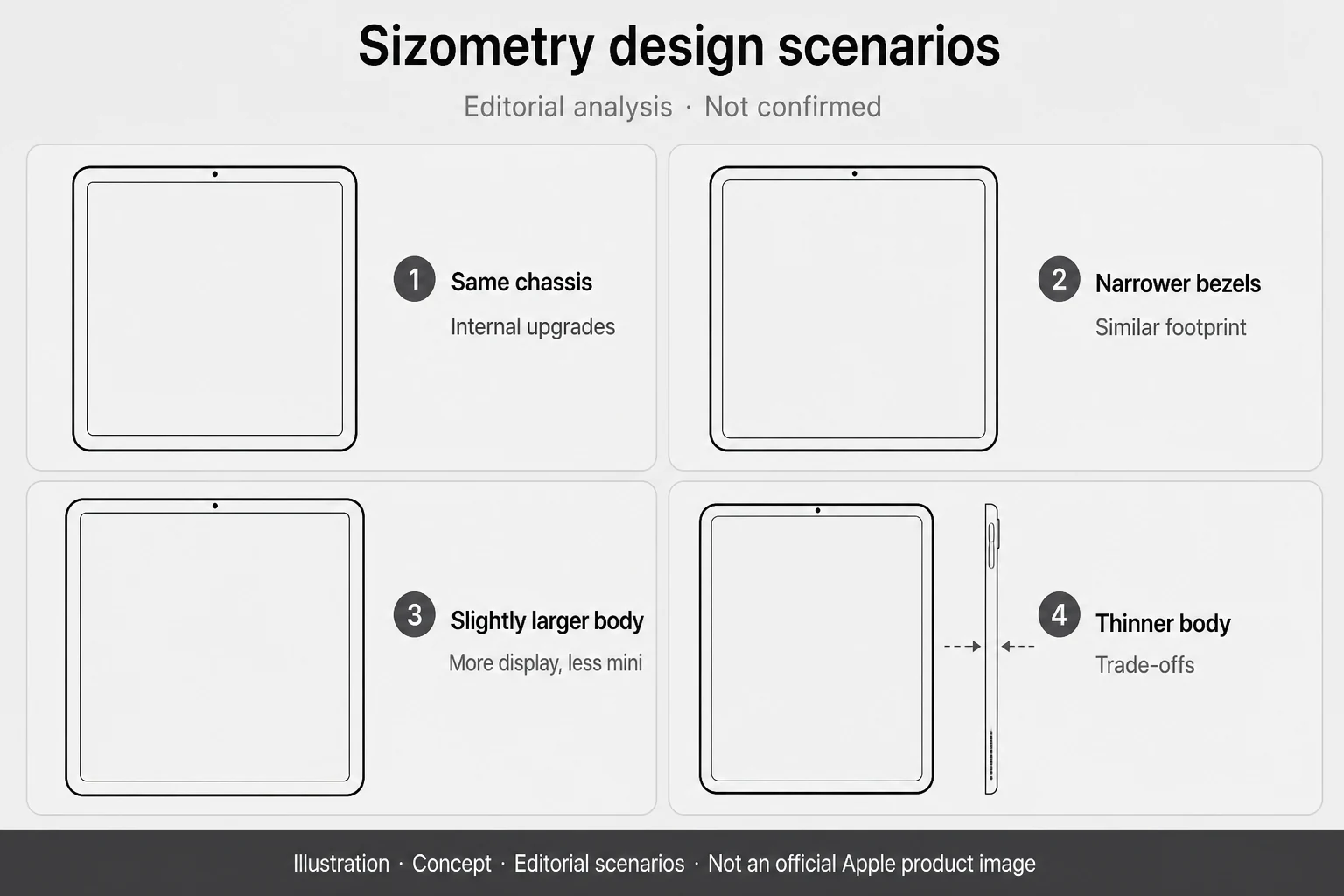
Scenario — Footprint — Display opportunity — Portability effect — Battery/thermal effect — Main risk — Status
• Same Chassis — Near-current outline — Limited by existing borders — Strongest continuity — Familiar thermal envelope — Less room for larger panel or battery — Editorial analysis • Similar Footprint With Narrower Bezels — Near-current outline — Modest usable-area gain — Portability largely preserved — Similar chassis volume — Accidental touch and structural border limits — Editorial analysis • Slightly Larger Display and Body — Larger height/width — More reading and media room — Reduced one-handed comfort — Potentially more internal volume — Overlap with smaller Air experience — Editorial analysis • Thinner Body With Packaging Trade-offs — Similar outline, reduced depth — Little automatic display gain — Easier slip-in carry, sharper edges possible — Battery and rigidity pressure — Camera bump and heat concentration — Editorial analysis
Same Chassis. Near-current exterior size best preserves one-handed familiarity and lowers redesign risk. Case compatibility would still remain unknown; internal upgrades still face limited room for a substantially larger display or battery.
Similar Footprint With Narrower Bezels. A modest usable-area gain inside a preserved outline would improve media and reading without becoming substantially larger. Structural borders, antenna space, and accidental-touch margins still constrain how far bezels can shrink; the carry advantage remains the headline.
Slightly Larger Display and Body. More comfortable reading, notes, games, and video are the upside, with potentially more internal volume. Costs include reduced one-handed comfort, overlap with larger iPads, and a bigger bag footprint. No reliable source has established specific future millimeter changes.
Thinner Body With Packaging Trade-offs. A thinner chassis can feel more premium in a bag, but battery volume, rigidity, edge comfort, thermals, and camera protrusion are the usual trade-offs. Reduced depth often helps less than reduced weight for long handheld sessions.
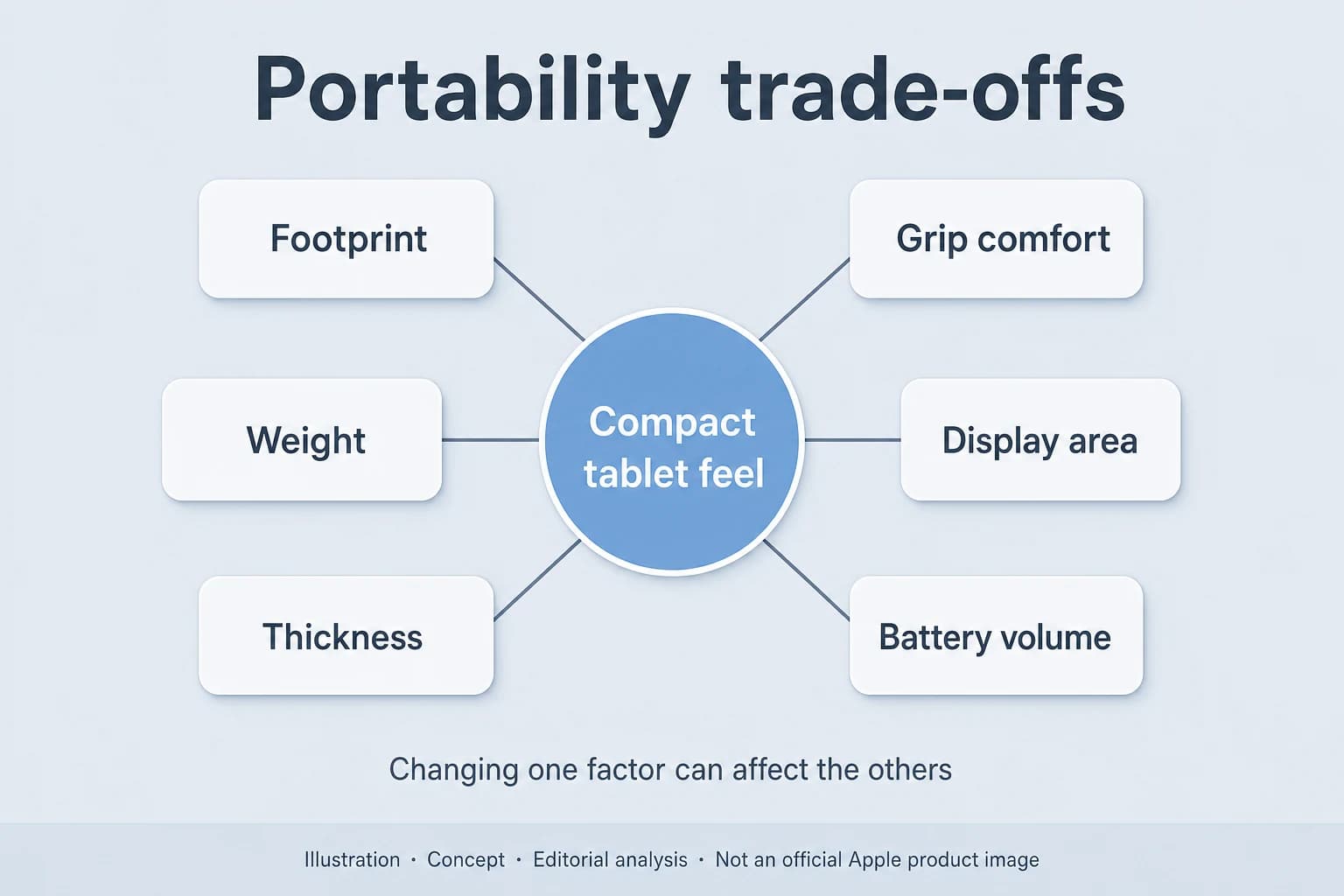
If Apple preserves the mini’s current product role, the Same Chassis and Similar Footprint With Narrower Bezels scenarios would protect compact handling most directly. A larger body would offer more display area but weaken one-handed distinctiveness, while a thinner chassis should be judged by its effect on weight, rigidity, thermals, and battery life. This is editorial analysis, not reporting.
Frequently Asked Questions
Has Apple announced the iPad mini 8 size? No. Apple has not announced dimensions, weight, thickness, or screen size for a product under the unofficial iPad mini 8 name.
Will the next iPad mini be larger than the current model? That is unknown. A larger body is possible. Recent mini generations have remained within a similar compact size class, but that does not confirm the next design.
Could the next iPad mini have a larger screen without a larger body? In principle, yes — through narrower bezels and more efficient packaging. No such redesign has been confirmed.
Will existing iPad mini cases fit the next model? Exact compatibility cannot be known until official dimensions and layouts are published. Even small cutout, button, magnet, or outline changes can break existing cases.
Could the next iPad mini become thinner? Possibly, but thinner is not automatically better for battery volume, rigidity, thermals, or edge comfort. No future thickness has been announced.
Will the next iPad mini be lighter? Weight is unannounced. The iPad mini (A17 Pro) is 293 g Wi-Fi / 297 g cellular; balance and case weight may matter as much as any future gram count.
Will it still be comfortable to hold in one hand? Comfort depends on final width, weight distribution, and hand size. A width close to the current 134.8 mm would preserve a familiar grip span, although comfort depends on hand size, balance, and case choice.
Is it worth waiting for the next iPad mini if portability matters? Wait only if your purchase is not urgent and you would value possible display, battery, or camera changes beyond size. Buyers who primarily want a proven compact footprint already have that in the current 195.4 × 134.8 mm model. Apple has not announced any next-generation dimensions or design changes. Timing context is in iPad mini 8 Release Date Rumors.
Conclusion
Apple has not announced the next iPad mini’s dimensions, weight, thickness, or display size. The iPad mini (A17 Pro) remains the only official baseline at 195.4 × 134.8 × 6.3 mm, 293–297 g, and an 8.3-inch display. For a successor, the most important question is not simply whether the diagonal grows, but whether the relationship among footprint, weight, thickness, grip, and usable display area continues to preserve the mini’s compact role.
This information has not been confirmed by the manufacturer.