Insights
RUMOR
Rumor
iPad mini 8 Battery Rumors: Battery Life, Efficiency and Charging Expectations
Could the next iPad mini last longer or charge faster? Separates Apple’s official 19.3 Wh baseline from efficiency, display-load, thickness, and charging trade-offs — still unconfirmed.
Apple has not announced an “iPad mini 8,” and it has not confirmed battery capacity, chemistry, official endurance ratings, charging wattage, charge time, charger inclusion, chip, display technology, thickness, or thermal design for a next-generation mini. “iPad mini 8” is the common unofficial name for that expected successor — not a confirmed commercial title. No reliable future milliamp-hour, watt-hour, or peak-watt figure is available today.
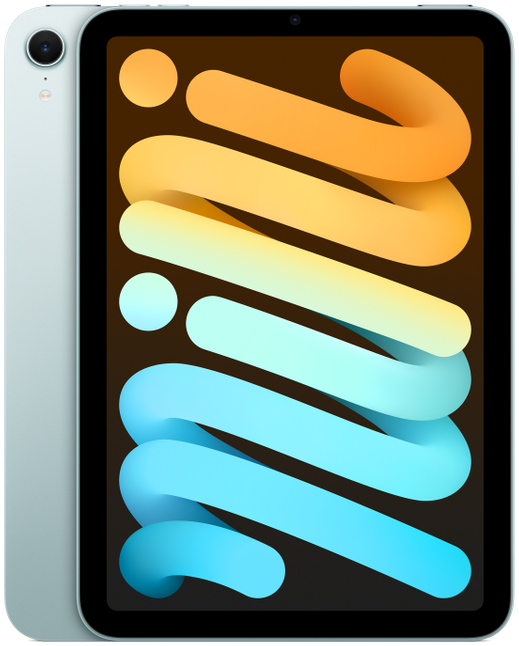
The safest baseline remains the shipping iPad mini with A17 Pro: Apple rates it for up to 10 hours of Wi-Fi web surfing or video playback, up to 9 hours of cellular web use, and lists a built-in 19.3-watt-hour lithium-polymer pack with USB-C charging. Better unplugged days, if they arrive, are more likely to come from efficiency and system balance than from a dramatic capacity headline alone. A brighter, larger, OLED, or higher-refresh display could either help or hurt endurance depending on content, brightness policy, and refresh behavior. Faster charging improves convenience; it does not enlarge the cell or automatically extend unplugged runtime.
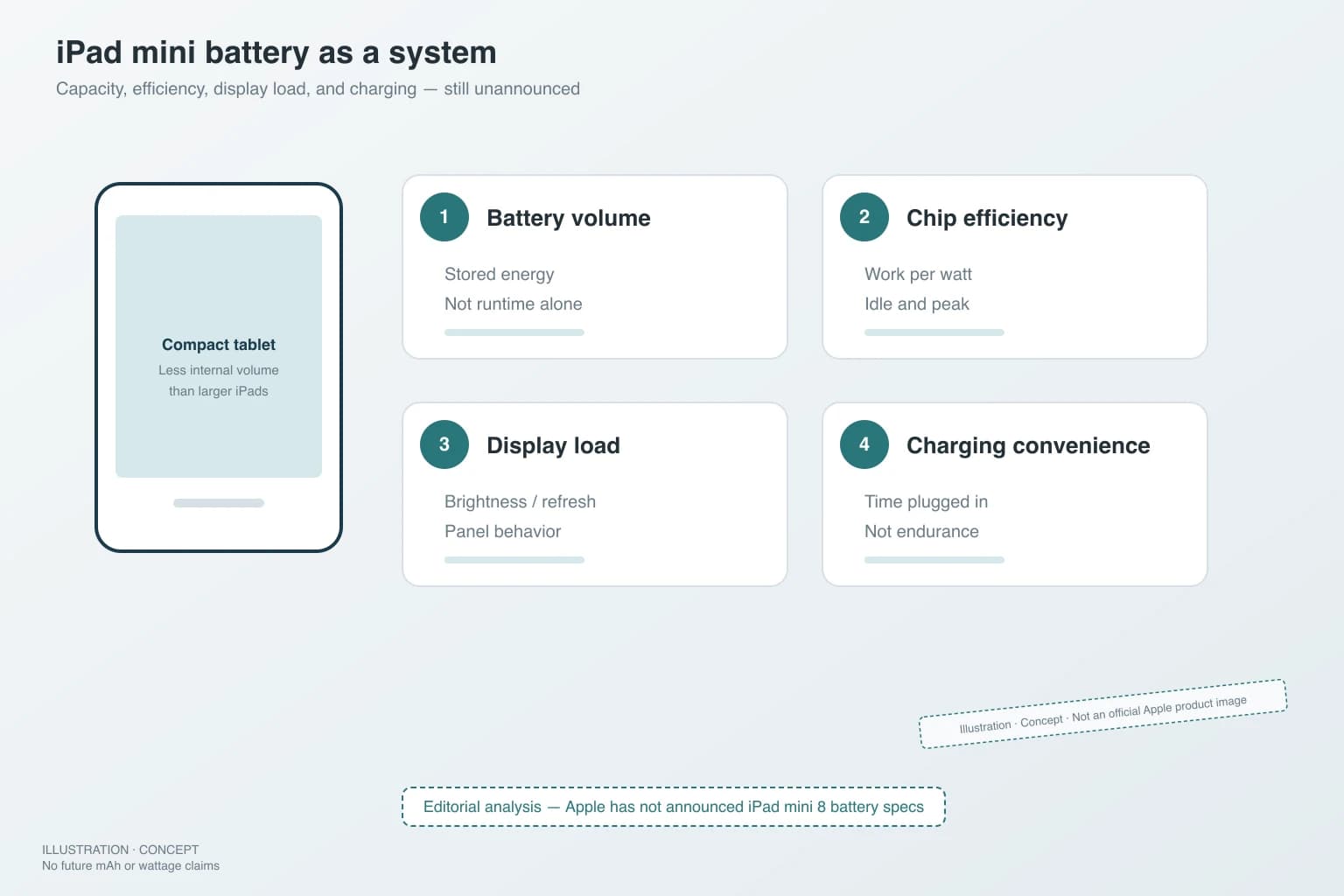
Industry display reporting can imply endurance trade-offs even when no capacity leak exists; that reporting is not an Apple battery specification. Sizometry’s current editorial assessment favors a modest efficiency-led improvement over a dramatic battery-life leap, because compact tablets have limited internal volume and any display upgrade can reclaim some of those gains.
Chassis and panel context live in iPad mini 8 Size Rumors and iPad mini 8 Display Rumors. Timing is covered in iPad mini 8 Release Date Rumors. Measurement conventions follow Sizometry’s methodology.
Concise Current Answer
Confirmed: Apple’s published power and battery claims for the current mini, including the 19.3 Wh pack, up-to-10-hour Wi-Fi video/web claim, up-to-9-hour cellular web claim, USB-C charging, and a 20W USB-C Power Adapter in the current retail box.
Display context: Reporting about possible display changes informs power-consumption scenarios for a successor, but no public Apple sheet confirms a larger cell, denser chemistry, a new peak wattage, or a revised official runtime claim.
Unknown: future Wh capacity, charging profile, whether a thinner body would shrink cell volume, how OLED or higher refresh would behave under white-heavy web versus dark reading, and whether travelers would feel the change more in top-up speed than in all-day reserve. Apple’s hour claims for the current model are standardized usage language — not a guaranteed personal stopwatch result for every owner, and not a conversion key for inventing next-generation runtime.
Explore device details
What Apple Officially States About the Current Model
Apple’s current iPad mini technical specifications are the cleanest public baseline:
• Item — Current official information — Practical meaning — Source • Battery energy — Built-in 19.3-watt-hour rechargeable lithium-polymer battery — Stored energy available to the system — Apple official specifications • Wi-Fi web or video — Up to 10 hours — Standardized Apple usage claim, not a personal stopwatch result — Apple official specifications • Cellular web — Up to 9 hours — Cellular models can finish the same Apple test earlier — Apple official specifications • Connector — USB-C charging — Wired refill and accessory power path — Apple official specifications • In-box accessories — USB-C Charge Cable (1 m) and 20W USB-C Power Adapter on the current model — Convenience for first setup; not a promise for every future SKU — Apple official specifications
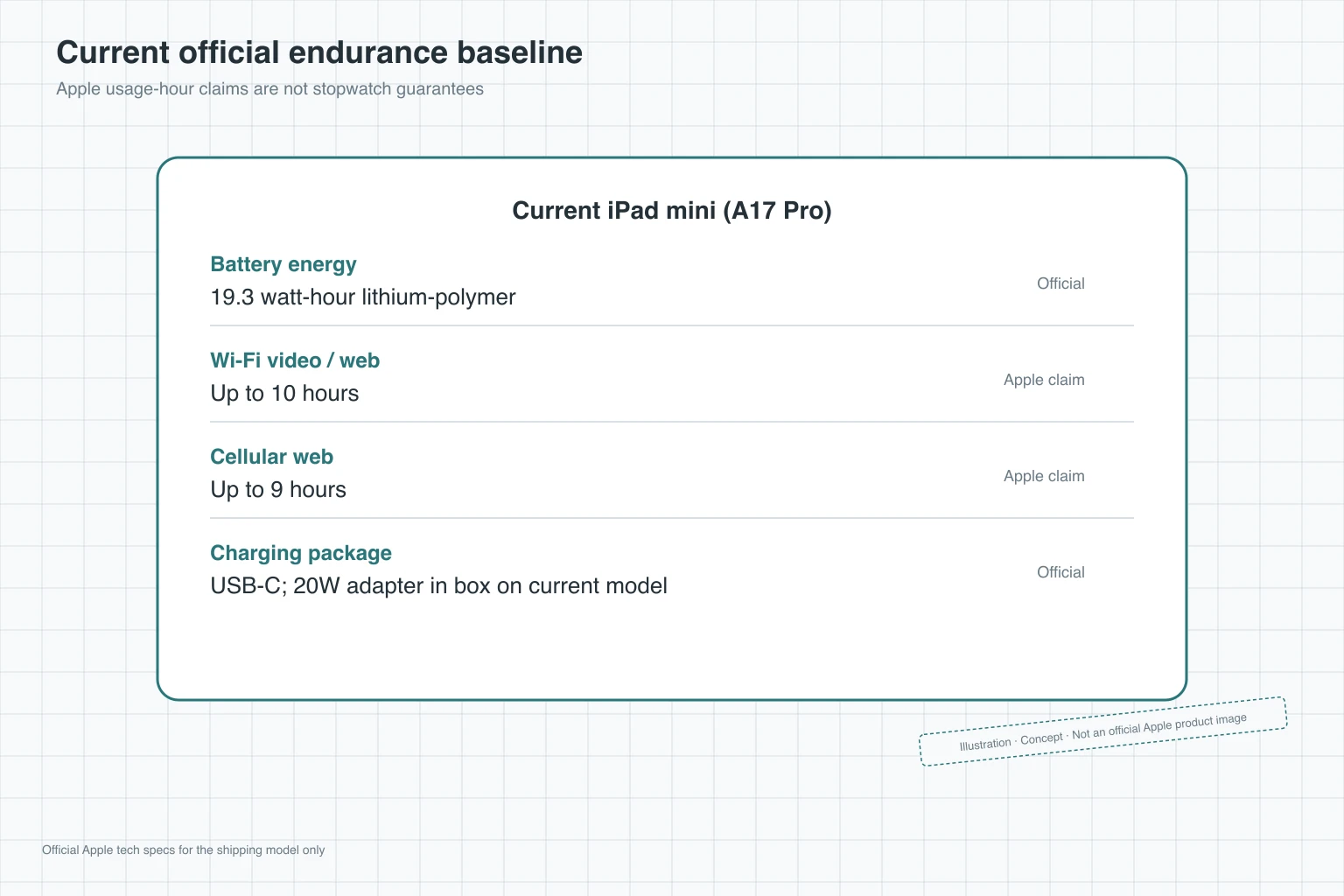
Apple’s standardized usage claims are useful for comparing products on the same test language. They do not guarantee identical real-world hours for every reader, traveler, gamer, or cellular owner. Brightness, signal strength, background sync, Pencil work, and app mix all move the gauge. Apple’s standardized battery-life claims should not be interpreted as guaranteed real-world endurance, nor should they be used to infer runtime for an unannounced successor.
What Remains Unknown About the Next Model
Apple has not officially confirmed the iPad mini 8 name, battery capacity, battery chemistry, an official battery-life rating for a successor, charging wattage, charge time, charger inclusion for a future configuration, chip, display technology, physical dimensions, or thermal design. Until Apple publishes a tech specs page, every future endurance or charging claim should stay labeled as reporting or editorial analysis.
No reliable public milliamp-hour figure has been established for a next-generation model. Industry display chatter can change power budgets without revealing cell size. Packaging, silicon, and software all remain open variables.
Why Battery Capacity Alone Does Not Determine Endurance
Battery life is not determined by capacity alone. Runtime depends on how much work the device performs per unit of energy: processor efficiency, display brightness, refresh rate, panel technology, radio use, standby behavior, software scheduling, heat, background activity, cellular signal strength, app workload, and battery aging. A larger cell can still feel shorter if display or radio demand rises. A similar cell can feel longer if idle drain and silicon efficiency improve.
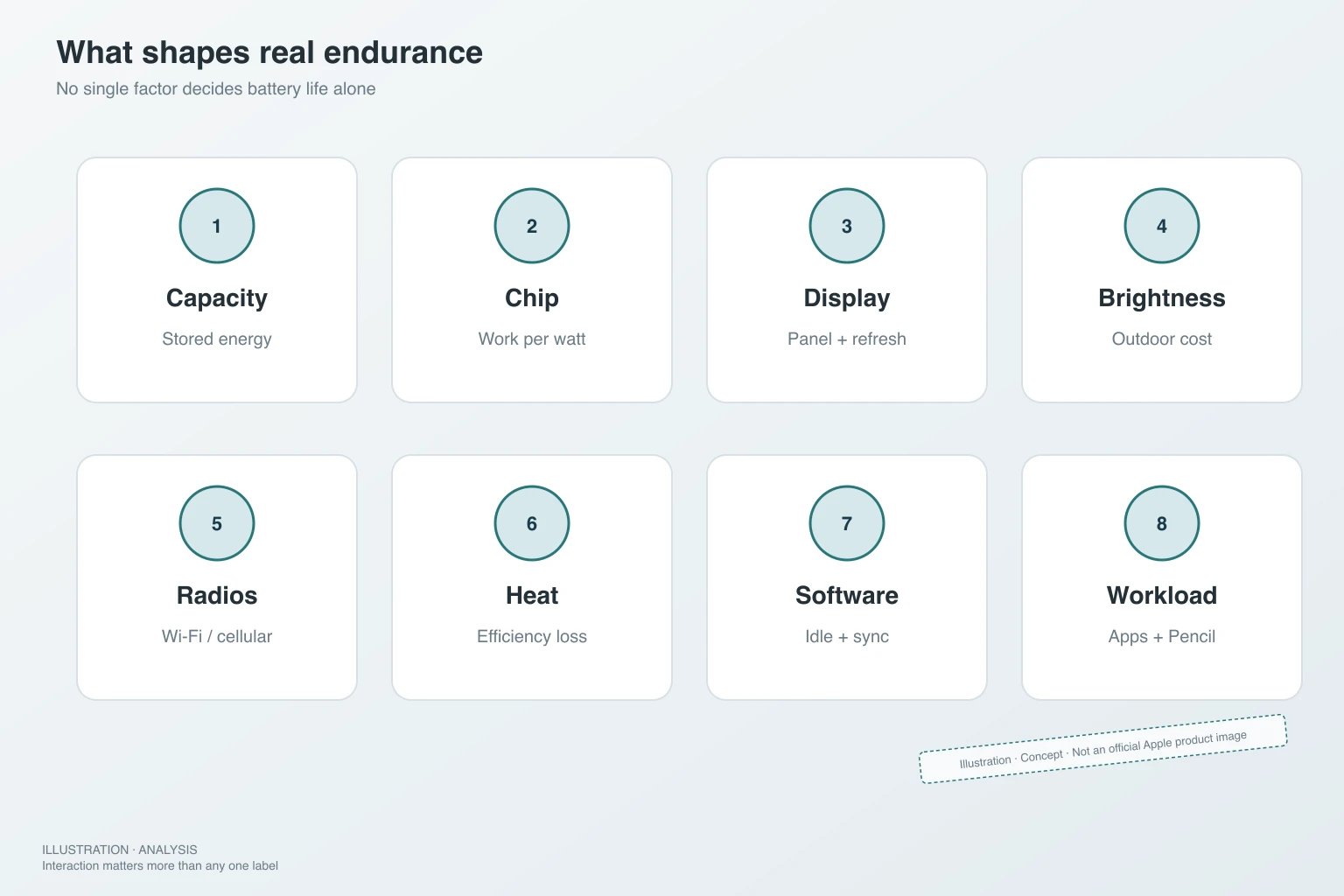
Readers often confuse related concepts:
• Concept — What it means — What it does not guarantee • Battery capacity — Stored energy available to the device — Longer runtime if power demand also increases • Efficiency — How much useful work the device performs per unit of energy — High performance in every workload • Official battery-life rating — Standardized manufacturer test result — Identical real-world endurance for every user • Charging wattage — Maximum or negotiated charging power — The same speed throughout a full charge • Charge time — Time needed under specific charger, cable, temperature, and software conditions — Better unplugged endurance • Battery health — Remaining ability to hold charge over time — An exact future lifespan
Chip Efficiency
A newer processor could improve light-use efficiency, video decode cost, background task overhead, and standby residual charge. It can also change sustained gaming and thermal behavior: cooler silicon may waste less energy fighting heat, while a faster chip under heavy GPU load can still consume more power if the workload expands to fill the headroom. A faster chip does not automatically consume less power. Pre-release chip names remain unverified; Apple has not published a next-mini chip in an official battery context.
Display Technology and Refresh-Rate Impact
Display choices are among the largest endurance variables for a handheld tablet. LCD keeps a backlight running across the panel. OLED can reduce power on dark content because black pixels emit little or no light, yet white-heavy webpages, high brightness, and high refresh rates can reduce or erase that advantage. Sustained high refresh can increase display and rendering demand, while adaptive refresh may reduce unnecessary updates during static content. Video, reading, and interface chrome all stress the panel differently. OLED does not automatically improve battery life. For panel-specific scenarios, see iPad mini 8 Display Rumors.
Thickness and Internal-Volume Trade-offs
Battery packaging follows the chassis. Depth, bezel changes, and competing modules all shape how much energy a compact tablet can store.
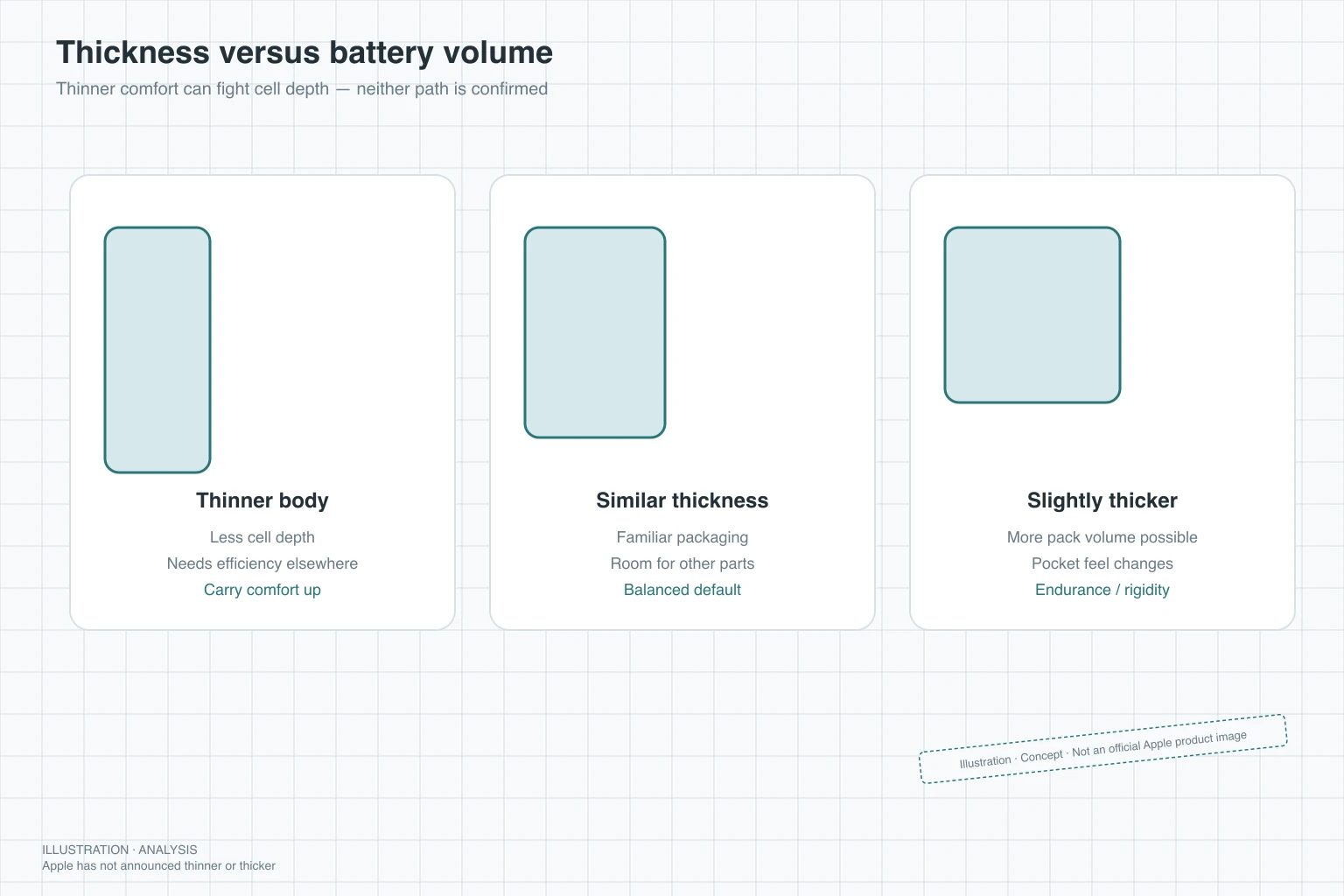
A same-size body with narrower bezels can grow active display area without growing external footprint, which may raise display power even when the bag fit feels familiar. A thinner body can improve carry comfort while reducing cell volume or increasing packaging pressure. Larger speakers, camera modules, structural reinforcement, and thermal components all compete for the same cavity. If Apple prioritizes thinness, efficiency elsewhere has to work harder to preserve days; a slightly thicker design could help pack volume, rigidity, or sustained performance — but Apple has not said the next mini will be thinner or thicker. Start from the current mini footprint in iPad mini 8 Size Rumors.
Brightness, Radios, and Real-World Workloads
High brightness can materially increase power consumption. Indoor reading at moderate luminance is kinder than sustained outdoor brightness. Temporary peak brightness is not the same as holding that peak for long sessions. Automatic brightness and dark mode can help when content cooperates; dark mode does not always save power on an LCD.
Cellular models may use more power because of modem activity, weak-signal searching, network handoffs, background sync, and location work. Apple’s own current sheet already separates an up-to-10-hour Wi-Fi claim from an up-to-9-hour cellular web claim.
Different workloads stress different subsystems. Ebook and manga reading often favor moderate brightness and relatively static frames. Web browsing mixes white backgrounds, scrolling, and radios. Streaming adds decode and network cost; downloaded video is usually kinder at moderate brightness. Note-taking adds Pencil input and sometimes cloud sync. Video calls combine cameras, radios, and sustained display. Navigation keeps brightness and location services active. Handheld gaming couples GPU load, display refresh, brightness, and heat — usually the steep end of the drain curve. Local video with hardware decoding and moderate brightness is often comparatively efficient; streaming and poor signal raise cost. Reading and notes favor long screen-on sessions at moderate brightness. Standby drain is shaped by background refresh, notifications, cellular connectivity, and sync. Exact hourly predictions for an unannounced model would invent false precision.
Heat and Sustained-Performance Effects
Heat reduces conversion efficiency and can accelerate aging when sustained, especially when gaming and charging overlap. A compact chassis has less surface area for spreading thermal load than a larger iPad, so sustained GPU or radio work can raise draw even when the capacity figure looks unchanged on paper. Future thermal design for a next mini is unannounced; heat is best understood as a system variable rather than a standalone battery specification.
Charging-Speed Expectations
Charging speed depends on charger capability, cable quality, the device’s power profile, battery temperature, state of charge, software limits, and battery-protection features.
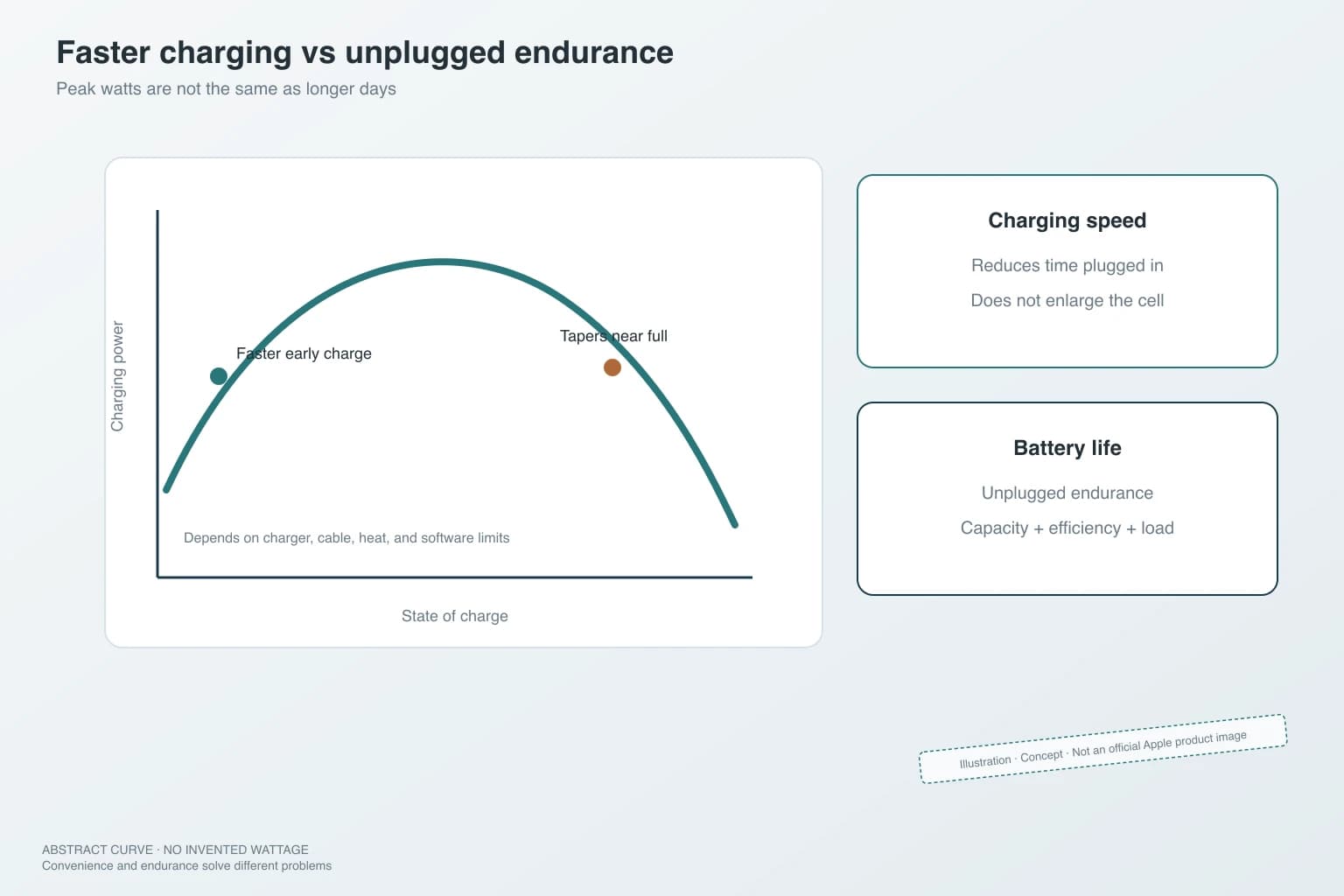
The highest negotiated rate is usually not sustained for the entire charge; curves typically taper as the pack nears full. Apple has not published a future peak wattage for a next mini.
Faster charging reduces time connected to power. It does not increase capacity. It does not automatically improve battery health. It may increase heat if not carefully managed. Real convenience depends on how quickly a useful mid-charge returns — not only on a peak wattage number on a slide. Travelers sometimes value a reliable short top-up more than a small mixed-use runtime bump, because those are different problems.
Charger and Cable Considerations
The current mini charges over USB-C and ships with a USB-C Charge Cable plus a 20W USB-C Power Adapter in the present retail box. Shared multi-port chargers, low-power bricks, worn cables, and charging while gaming can all change observed speed and temperature. Future box contents remain unknown until Apple publishes them.
Battery Aging and Long-Term Ownership
Lithium-ion packs age with cycle count, heat, long periods at full charge, deep discharge habits, and storage conditions. Software battery management can mitigate some stress; it cannot freeze chemistry. Practical habits matter more than rumor mill lifespan promises. No specific service-life figure is offered here.
Comparison With Current Official Tablets
Paper energy and official usage claims show why capacity alone is a weak ranking tool:
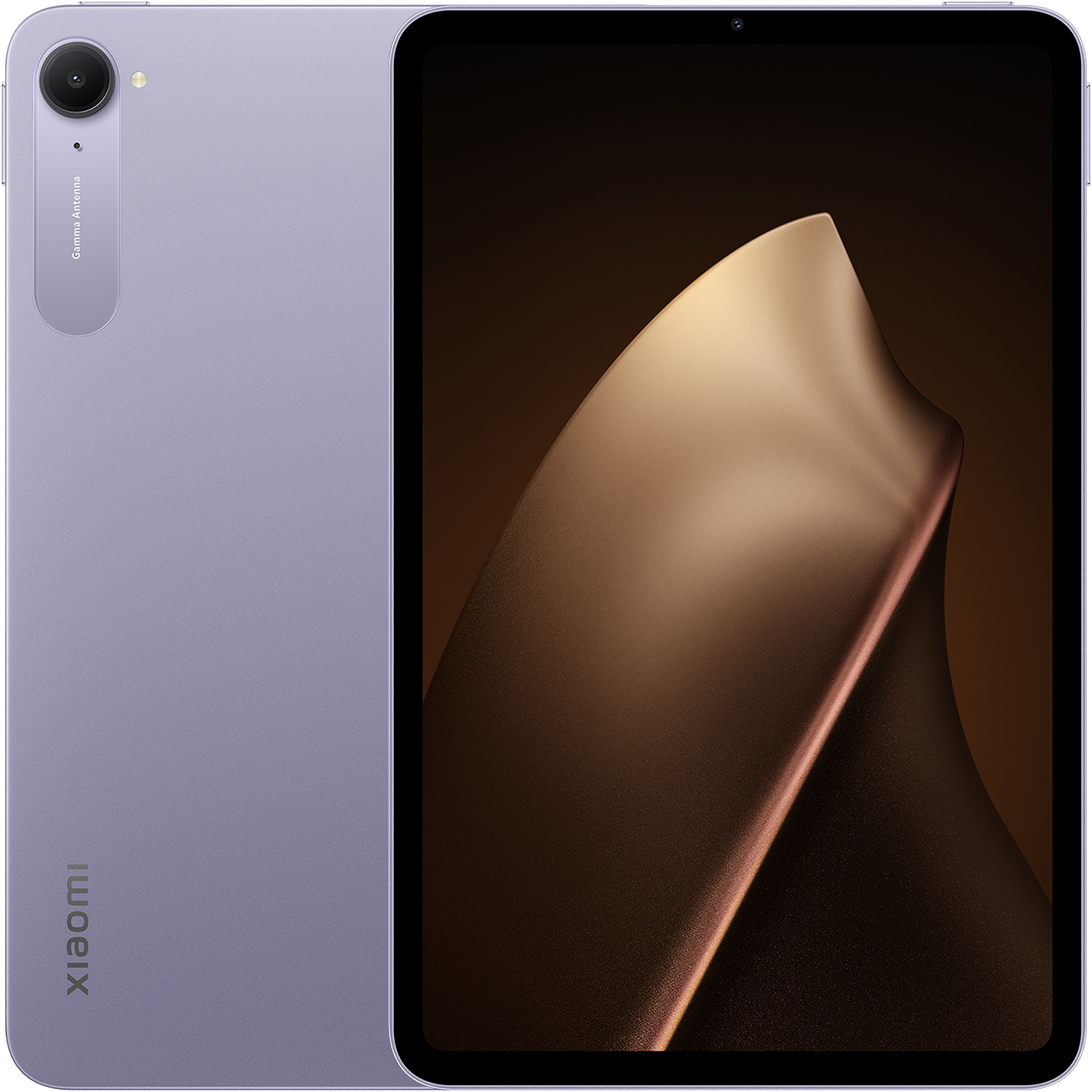
• Device — Official energy / usage framing — Role — Source • iPad mini (A17 Pro) — 19.3 Wh; up to 10 hours Wi-Fi web/video; up to 9 hours cellular web — Compact handheld tablet — Apple official specifications • Xiaomi Pad Mini — Competing compact Android tablet with its own published claims — Direct compact ownership contrast — Manufacturer specifications
Apple’s standardized hour language can look similar across products with very different watt-hour packs. That is why a next mini should be judged by system efficiency and display behavior, not by chasing a larger iPad’s Wh number into a pocketable chassis. Compare confirmed compact and mid-size baselines on the iPad Air 11-inch (M4), iPad (A16), and Xiaomi Pad Mini pages for compact peers rather than rumor arithmetic.
Open iPad mini A17 Pro and iPad A16 side by side in the Sizometry size comparison tool.
Open size comparisonSizometry Battery Scenarios
These four paths are analytical frameworks, not leaks or predictions.
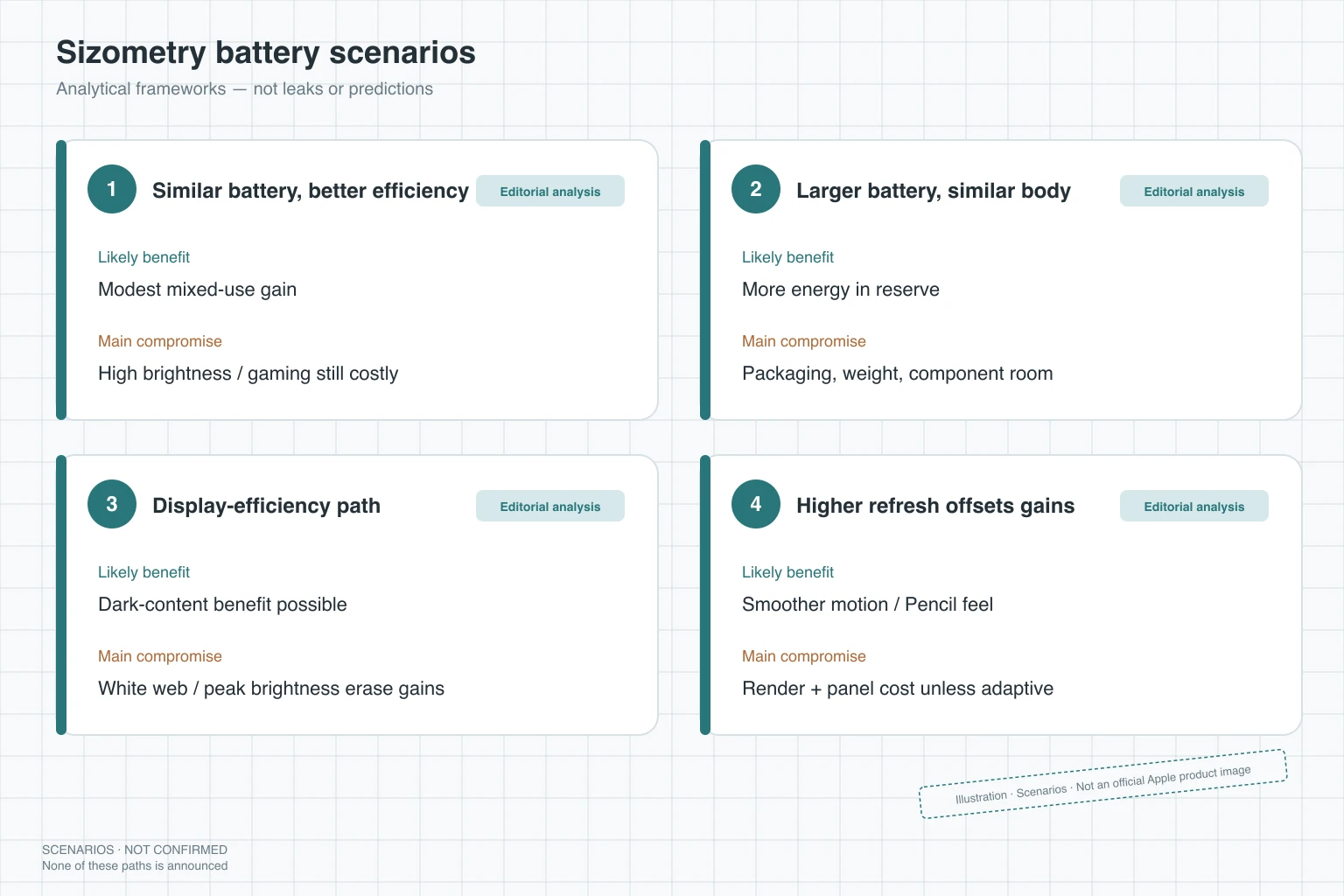
• Scenario — Main mechanism — Likely benefit — Main compromise — Best-use impact — Status • 1. Similar battery, better efficiency — Familiar chassis plus improved silicon/idle behavior — Modest mixed-use and standby gains — Limited help under high brightness or heavy gaming — Readers and light travelers notice first — Editorial analysis • 2. Larger battery in a similar body — More stored energy without a major external size jump — Stronger reserve on mixed days — Packaging pressure, possible weight, less room for other parts — Heavy media and gaming days — Editorial analysis • 3. OLED or display-efficiency gains — Dark-content efficiency and possible media benefits — Kinder comic/reader themes if implementation is careful — White-heavy web and peak brightness can erase gains — Dark UI and video-heavy owners — Editorial analysis • 4. Higher refresh offsets efficiency gains — Smoother motion and Pencil feel — Better scrolling and play feel — Higher display/render cost unless adaptive refresh mitigates it; more heat under load — Gamers and note-takers — Editorial analysis
An efficiency-led scenario aligns cleanly with the mini’s compact role, but that fit is editorial analysis rather than evidence of Apple’s plan. Greater stored energy would compete with weight, internal volume, structure, and other component priorities. None of these paths is confirmed.
The honest next-mini battery story is a system budget across volume, brightness, refresh, silicon, radios, and thermals — not a single leaked milliamp-hour slide.
Analytical Summary
Confirmed: current iPad mini power specifications only — the 19.3 Wh pack, up-to-10-hour Wi-Fi web/video claim, up-to-9-hour cellular web claim, USB-C charging, and the current retail box’s 20W USB-C Power Adapter.
Display context: Reporting about possible display changes informs power-consumption scenarios for a successor; no reliable capacity, chemistry, peak-watt, or revised runtime claim is confirmed for a next mini.
Unknown: future Wh capacity, charging profile, thickness impact on cell volume, OLED or high-refresh power behavior under mixed content, and whether travelers feel change more in top-up speed than in all-day reserve.
Sizometry view: an efficiency-led improvement is a reasonable analytical scenario, but display changes could consume part of that gain. Apple has not published enough information to identify the final outcome.
Frequently Asked Questions
Has Apple confirmed the iPad mini 8 battery capacity? No. Apple has not announced the product under that name and has not published a successor capacity, chemistry, or official runtime claim. No reliable future milliamp-hour figure has been established.
Will the next iPad mini have better battery life? It might feel modestly better if efficiency and idle behavior improve, but a dramatic leap is not established. Display upgrades could also reclaim some gains depending on brightness and content.
Will the next iPad mini charge faster? Unknown. Charging speed depends on the device power profile, charger, cable, heat, and software limits. No future peak wattage is confirmed.
Could OLED improve the next iPad mini’s battery life? Sometimes, especially on dark content. White-heavy pages, high brightness, and high refresh can reduce or erase that advantage, so OLED is not an automatic endurance win.
Would a 120Hz display reduce battery life? It can raise display and rendering cost if the panel stays at a high rate. Adaptive refresh may soften the penalty. Apple has not confirmed 120Hz for a next mini.
Could a thinner iPad mini have a smaller battery? A thinner chassis can reduce available internal volume, but final battery energy depends on the complete internal design. Apple has not announced either specification.
Will a future box include a charger? The current retail iPad mini includes a 20W USB-C Power Adapter and USB-C Charge Cable. Future box contents remain unknown until Apple publishes them.
Should I wait for the next iPad mini for better battery life? Wait if endurance on an older mini is your main complaint and you can tolerate launch uncertainty. Buy the current mini if you need a confirmed 19.3 Wh pack and Apple’s present usage claims now. Timing context is in iPad mini 8 Release Date Rumors.
Conclusion
The next iPad mini’s battery story will be decided by the interaction of cell volume, silicon efficiency, display behavior, brightness, radios, heat, and software — not by a single capacity rumor. Apple’s current mini remains the only official endurance baseline. Sizometry currently considers a modest efficiency-led improvement more plausible than a dramatic leap, especially if a brighter or higher-refresh panel arrives, but that remains editorial judgment until Apple publishes a finished sheet.
This information has not been confirmed by the manufacturer.