Insights
GUIDE
Confirmed
Galaxy Z Fold 8 vs iPad mini 7 Size: Can a Foldable Replace a Mini Tablet?
Can Galaxy Z Fold8 replace an iPad mini? Official size, pocketability, display geometry, reading, video, multitasking, and travel — plus when the mini remains the better tool.
A buyer considering Galaxy Z Fold8 may be asking whether its inner display can eliminate a separate compact tablet from everyday carry. That is the useful question behind Galaxy Z Fold 8 vs iPad mini 7 — not which marketing diagonal looks closer on a sheet.
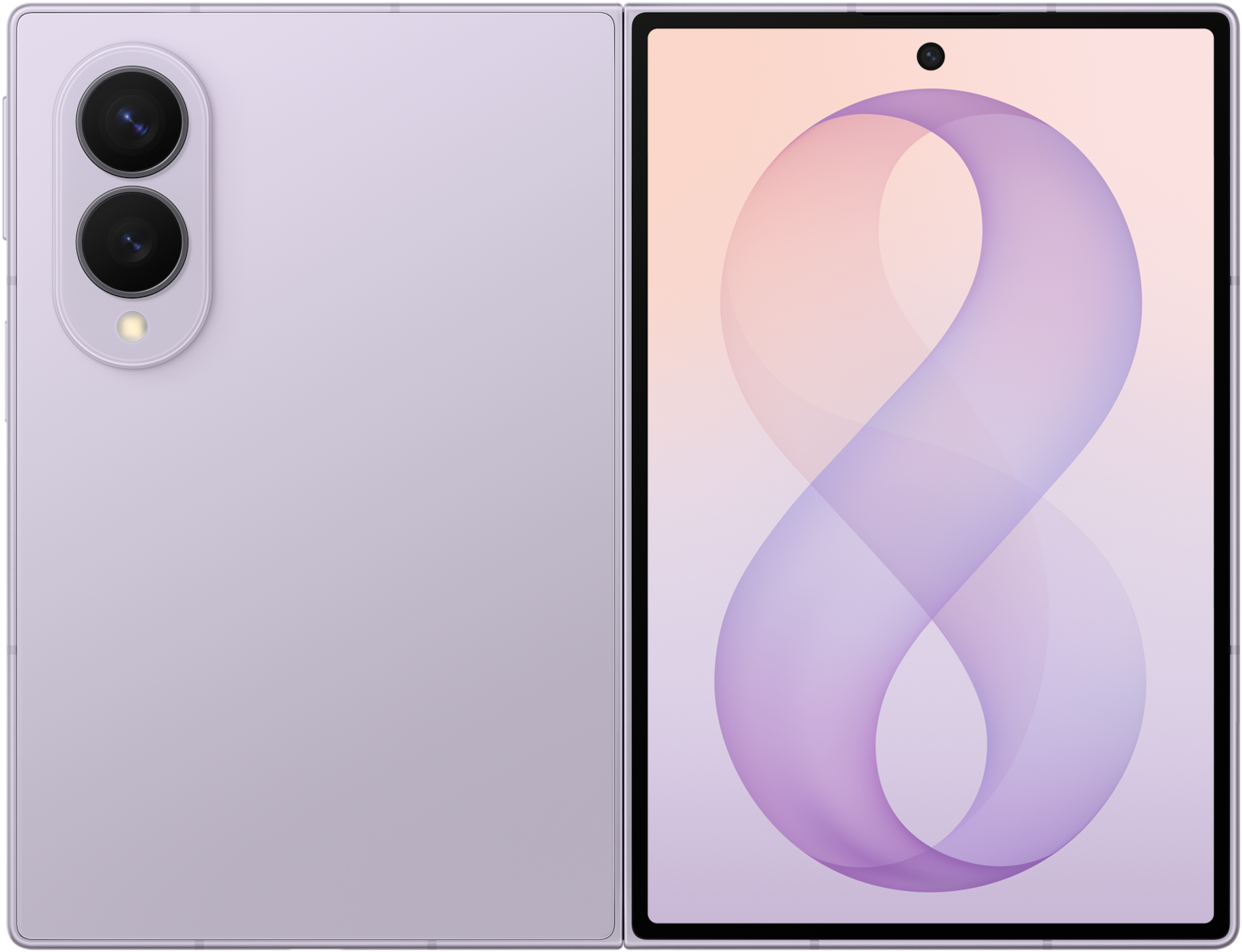
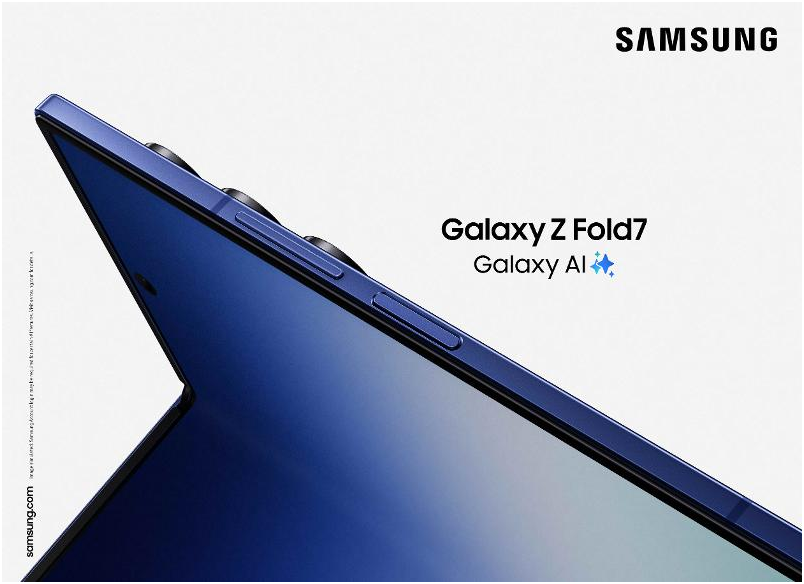
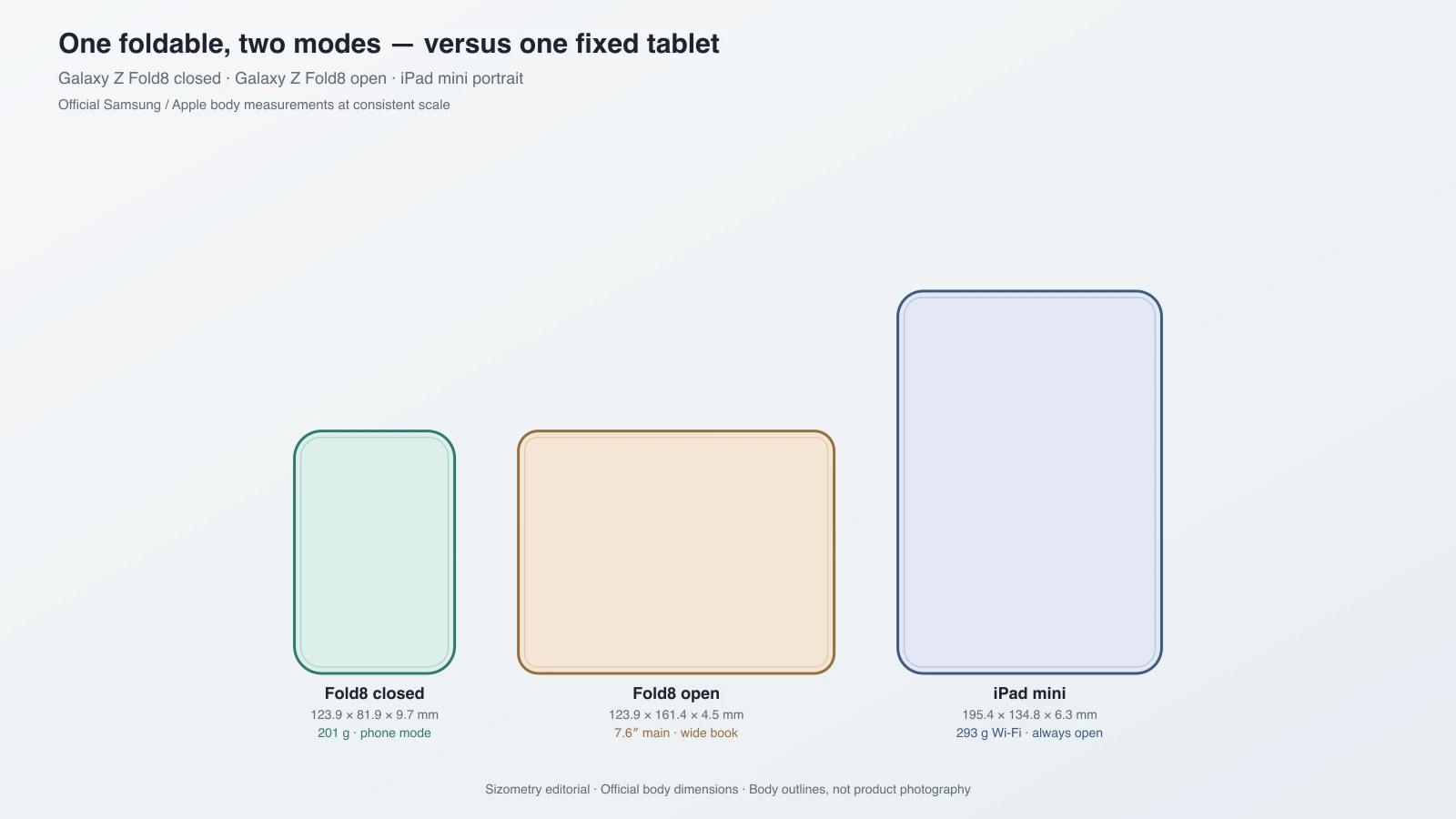
In Samsung’s published figures, Galaxy Z Fold8 folds to 123.9 × 81.9 × 9.7 mm at 201 g and opens to 123.9 × 161.4 × 4.5 mm, with a phone-mode cover display and a 7.6-inch main display. “iPad mini 7” is the common name for Apple’s iPad mini (A17 Pro): 195.4 × 134.8 × 6.3 mm, 293 g Wi‑Fi / 297 g cellular, and an 8.3-inch Liquid Retina panel. This article compares those products as carry systems — closed phone, open foldable, and fixed tablet — using manufacturer dimensions and careful footprint math. Short version: Fold8 is the stronger one-device option for browsing, reading, travel media, messaging, and light multi-window work; the mini remains stronger for Apple Pencil sessions, long dedicated-tablet use, and iPadOS-centered workflows.
Quick Answer
• Fold8 advantage — One device that covers phone tasks closed and a wide inner canvas open • iPad mini advantage — Always-open compact tablet with Apple Pencil Pro / Apple Pencil (USB‑C) support • Likely replacement cases — Web, ebooks, news, streaming, travel documents, maps, messaging, light multi-window work • Weaker replacement cases — Drawing, handwriting, heavy PDF markup, long rigid-surface sessions, Apple-only tablet workflows • Size reality — Similar marketed diagonals (7.6 in vs 8.3 in) hide different shapes, thicknesses, and carry rules • Evidence basis — Official Samsung and Apple body specs, plus Sizometry rectangular body-footprint calculations
Galaxy Z Fold 8 vs iPad mini 7 Dimensions
Body millimeters and grams below match Samsung’s and Apple’s published specifications. Display diagonals follow each manufacturer’s marketing measurement. Body-footprint percentages later in this article use external height × width and describe the enclosing rectangle, not active display area. Measurement conventions follow Sizometry’s methodology.
| Spec | Galaxy Z Fold8 | iPad mini (A17 Pro) | Source status |
|---|---|---|---|
| Folded body | 123.9 × 81.9 × 9.7 mm | — | Official (Samsung) |
| Unfolded body | 123.9 × 161.4 × 4.5 mm | — | Official (Samsung) |
| Tablet body | — | 195.4 × 134.8 × 6.3 mm | Official (Apple) |
| Weight | 201 g | 293 g Wi‑Fi / 297 g cellular | Official |
| Phone-mode display | 5.5 in cover display; 1972 × 1248; up to 120 Hz | — | Official (Samsung) |
| Larger working display | 7.6 in main Dynamic AMOLED 2X; 2448 × 1848; up to 120 Hz; rounded corners and camera hole reduce viewable area | 8.3 in Liquid Retina; 2266 × 1488; up to 500 nits; rectangular diagonal, less viewable area | Official |
| Stylus input | No S Pen support | Apple Pencil Pro and Apple Pencil (USB‑C) | Official |
| Device role | Phone with fold-out workspace | Dedicated compact tablet; it does not replace the conventional smartphone role | Official product roles |
| Manufacturer battery claim | Typical 4,800 mAh (rated 4,660 mAh); up to 26 h video (Samsung lab conditions) | 19.3 Wh rechargeable lithium-polymer battery; up to 10 h Wi‑Fi web/video, 9 h cellular web (Apple conditions) | Official; testing methods not comparable |
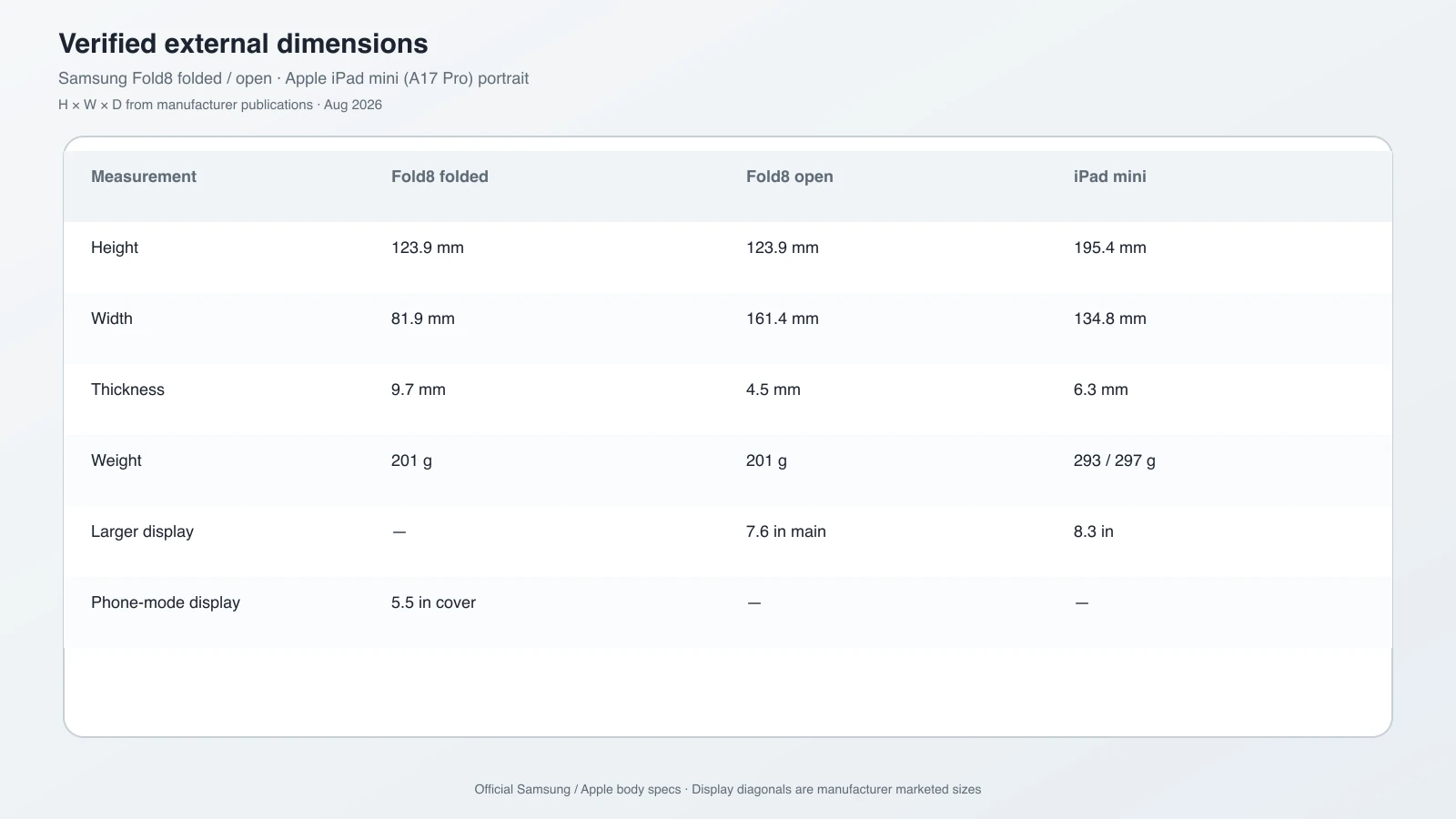
Closed, Fold8’s height and width sit in phone territory while thickness climbs to 9.7 mm. Open, the same 123.9 mm height meets a 161.4 mm width — a short, wide book beside the mini’s taller 195.4 × 134.8 mm portrait slab. “Wider than the mini” is true only in that portrait body comparison (161.4 vs 134.8 mm); the mini remains taller and larger in front footprint.
The More Useful Comparison: Folded Phone, Open Foldable, and Fixed Tablet
Approximate rectangular body footprints from the official external dimensions:
• Fold8 folded — 123.9 × 81.9 mm ≈ 10,150 mm² • Fold8 unfolded — 123.9 × 161.4 mm ≈ 20,000 mm² • iPad mini — 195.4 × 134.8 mm ≈ 26,340 mm²
Those are enclosing-rectangle estimates, not display area. Against the mini’s front footprint, Fold8 folded is about 61% smaller; Fold8 open is about 24% smaller. Versus the mini alone, Fold8 is 92 g lighter than the Wi‑Fi model and 96 g lighter than cellular.
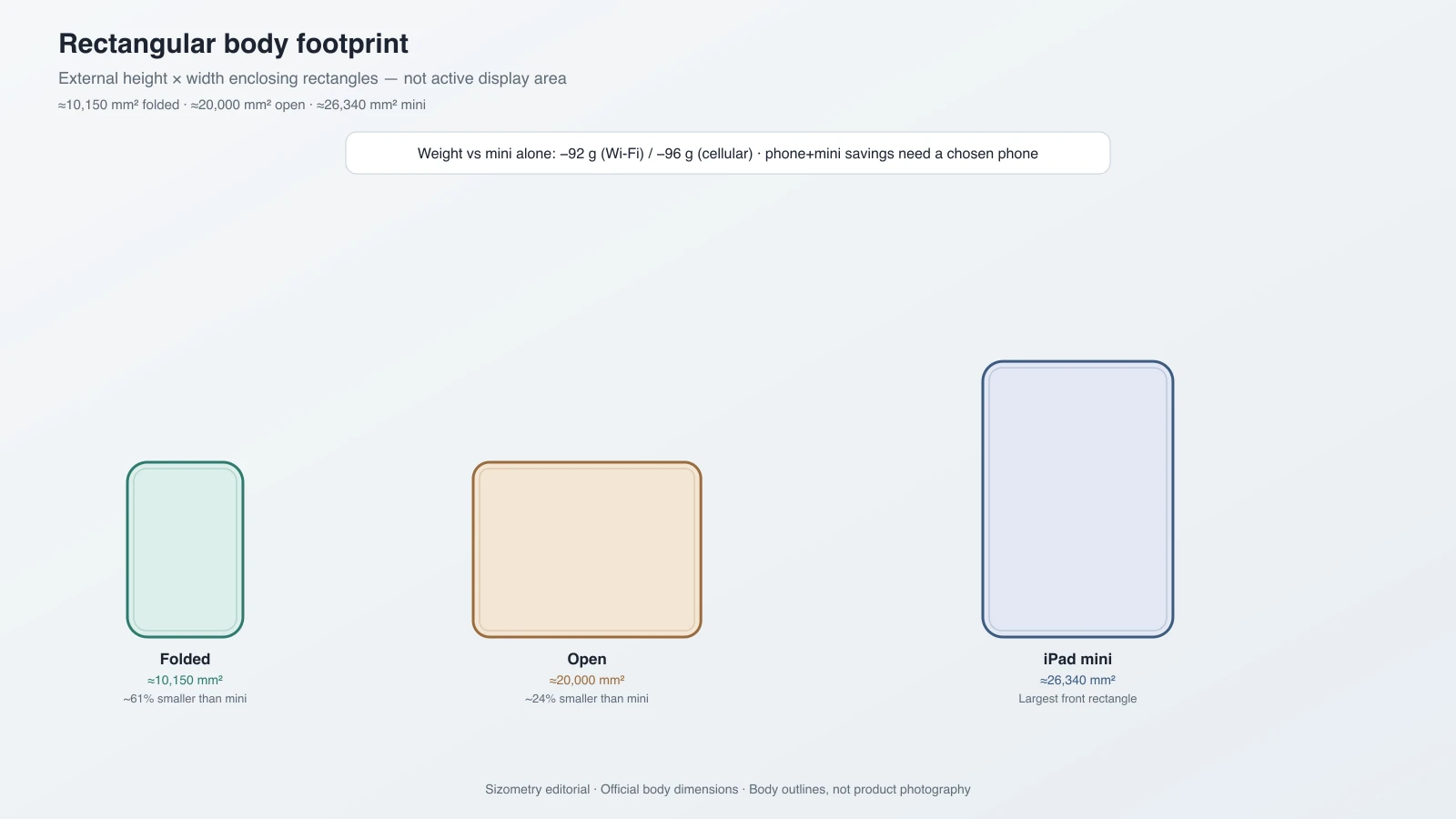
Consolidation is separate. Fold8 versus the mini alone is a tablet-weight comparison. Fold8 versus phone-plus-mini removes a second device, but grams saved depend on which phone would otherwise travel with the mini — this article does not invent that phone weight.
Pocketability and Bag Space
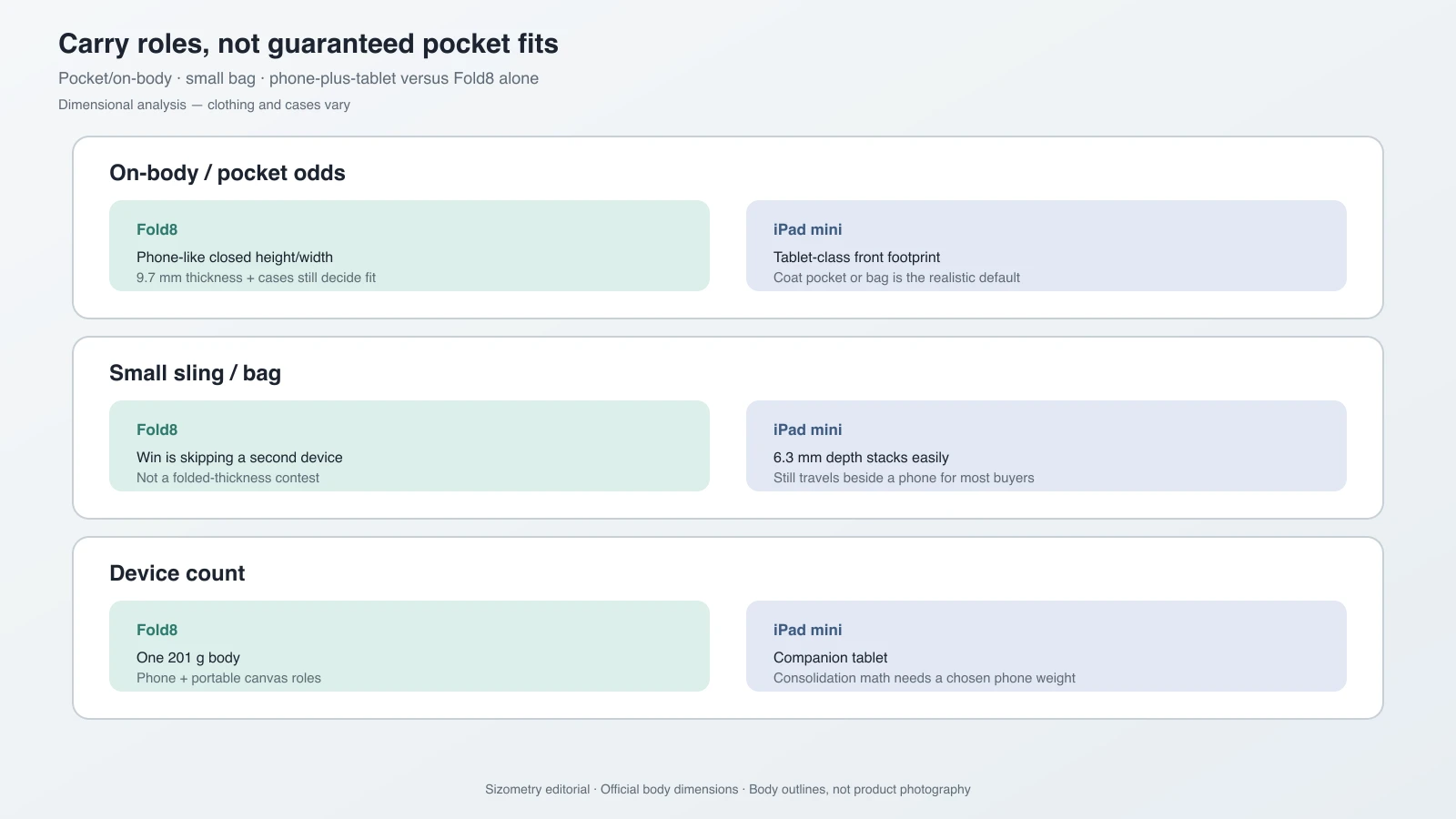
Fold8’s pocket case is not thinness. At 9.7 mm folded it is thicker than the mini’s 6.3 mm slab. The advantage is geometry: 123.9 × 81.9 mm is phone-like enough that on-body carry is plausible for many jackets and some trousers, depending on fabric, cut, and case bulk. The mini’s ~26,340 mm² front footprint makes true pocket carry unlikely for most jeans and shorts; coat pockets and bags remain realistic.
Cases change both stories. A slim Fold8 sleeve can preserve phone-pocket odds; a bulky hinge case can erase them. A thin mini shell still leaves a tablet-sized outline. On long walks, 201 g versus 293–297 g favors Fold8; in bags, volume often matters more than grams. Folded thickness and hard corners raise pressure in tight fabric; coat pockets usually forgive both. In a sling, the mini’s thin depth stacks easily, while Fold8’s main bag benefit is that the second rectangle may not need to travel.
One-Handed Tasks and Standing Use
Three skills get blurred: carrying in one hand, reading supported by one hand, and fully operating the UI with one thumb.
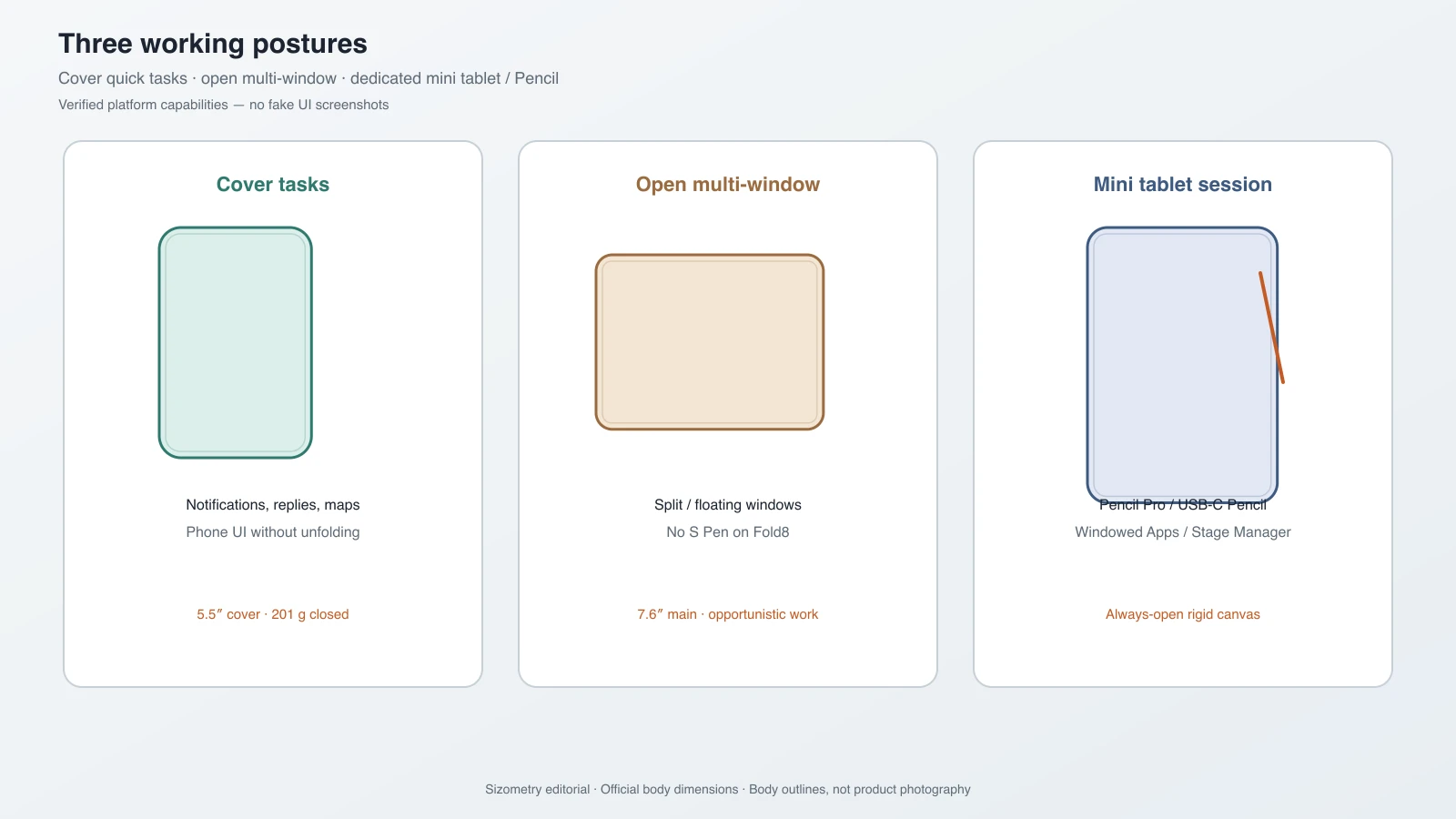
Fold8’s 5.5-inch cover supports phone-like quick tasks without unfolding. Short-and-wide closed proportions improve cover-reach odds versus a tall Max-class phone, though 81.9 mm width still asks for a secure grip. Unfolded, the 7.6-inch main display is generally a two-handed or supported surface.
Some users can carry or read the mini one-handed at 293–297 g; that is not one-handed phone operation. Typing, multitasking, and landscape media still tend toward two hands or a surface. Standing transit use favors Fold8 when the alternative is juggling a phone and retrieving a tablet.
Reading: Books, Web Pages, PDFs, and Manga
Content type matters more than the 7.6-versus-8.3 headline.
Continuous prose often suits the mini’s taller portrait canvas and rigid glass — no mode switch, no crease. Web and technical pages can go either way: mini height helps long scrolls; Fold8 width helps side-by-side research when apps adapt. PDFs benefit from whichever orientation keeps type readable; Fold8’s open width can help landscape documents, while the mini’s slab helps stylus annotation. Comics and manga depend on page mode and aspect ratio — a wider open Fold8 can help some spreads, not every title. Two-app research is one of Fold8’s clearer open-display strengths.
Long-session comfort mixes weight, grip, posture, and support — not a proven eye-strain ranking. Fold8 is lighter; the mini offers unbroken glass. Crease feel remains a Fold compromise for some readers.
Video: Diagonal Size Versus Usable Picture
Perceived video size depends on display and source aspect ratios, letterboxing, orientation, controls, and whether a second app shares the screen. A larger marketed diagonal does not guarantee a larger picture for every title.
Based on the published resolutions, Fold8’s inner display is close to a 4:3 shape, while its cover display is closer to 16:10. Apple’s mini is an 8.3-inch rectangular diagonal with less viewable area after rounded corners. Lean-back episodes favor the mini’s larger uninterrupted tablet surface. Phone-to-video continuity — cover interruption, open watch, multi-window chat — is Fold8’s workflow advantage, not a claim that every streaming layout fills more pixels. Without title-specific picture-area math, this article separates dedicated tablet viewing from portable, interruptible viewing.
Multitasking and Light Productivity
Galaxy Z Fold8: One UI multi-window tools support split layouts and floating windows on the main display, with cover-to-inner continuity between quick phone tasks and a wider canvas. Keyboard and mouse fit Samsung’s desktop-oriented workflows; DeX can present a desktop-like session on an external display with keyboard and mouse (wireless DeX where Miracast conditions apply). That is an external-workstation mode, not a laptop replacement. Samsung states Fold8 does not support S Pen.
iPad mini (A17 Pro): Current iPadOS multitasking centers on Windowed Apps and Stage Manager on the iPad’s own display. Apple lists the mini among Stage Manager models under iPadOS 26, but not among models that move Stage Manager windows to an external display. Apple Pencil Pro and Apple Pencil (USB‑C) are supported. Bluetooth keyboards are supported; Apple’s Magic Keyboard lineup does not include an iPad mini model. Continuity with iPhone and Mac remains a practical reason to keep a mini beside an iPhone.
Fold8 is strong for short, opportunistic multi-app work without packing another device. The mini is stronger for stylus input, a rigid canvas, or iPad-specific apps.
Travel and Device Consolidation
Fold8 can combine phone, messaging, maps, camera, translation, boarding passes, itinerary PDFs, media, and light documents in one 201 g body. Airport queues and transit favor that consolidation when a second slab would otherwise stay buried. Tray tables can host open Fold8 at 4.5 mm or the mini at 6.3 mm — a thickness comparison, not a comfort ranking.
The mini offers a larger fixed canvas, dedicated reading/media time, Apple Pencil, and separation between phone interruptions and tablet focus. Cafés and hotels reward the workflow you already trust: cover-first Fold8 interruptions, or a parked mini beside a phone.
Samsung’s up-to-26-hour video estimate and Apple’s up-to-10-hour Wi‑Fi web/video estimate use different methods. They are not interchangeable, so this article does not declare a travel battery winner.
Where the iPad mini Remains the Better Tool
Keep the mini for tablet jobs: Pencil drawing or handwriting, repeated PDF annotation, long unbroken-glass sessions, iPad-tuned apps, or a deliberate phone/tablet boundary. Fold8 can cover browsing and light Docs; it does not inherit Pencil workflows, and crease plus mode switch remain part of open use.
Related reading: the Galaxy Z Fold8 and iPad mini (A17 Pro) device pages, plus Galaxy Z Fold 8 vs Galaxy S26 Ultra, Is the Galaxy Z Fold 8 Too Big?, and iPad mini 8 size rumors.
Can Galaxy Z Fold8 Replace an iPad mini?
Fold8 can probably replace the mini when the mini is mainly for web, ebooks and news, streaming, travel documents, maps and translation, messaging, and light multi-window tasks. Cover mode handles the street; the open 7.6-inch panel covers the table. Versus phone-plus-mini, device count matters as much as the 92–96 g tablet-weight gap.
Fold8 may replace the mini only outside the home when you want one commuting device, still like the mini for long evenings, use Pencil only occasionally, or can leave the mini as a home or flight tablet.
Fold8 is unlikely to replace the mini when the mini exists for Apple Pencil, drawing, handwriting, repeated annotation, long rigid-surface sessions, iPad-exclusive workflows, or intentional phone/tablet separation. Then Fold8 is a phone upgrade that folds, not a tablet substitute.
Which Should You Buy?
| Decision | Galaxy Z Fold8 advantage | iPad mini advantage |
|---|---|---|
| One-device carry | Phone + portable canvas in one body | Still needs a separate phone for most buyers |
| True pocketability | Closed height/width make on-body carry plausible for many outfits | Front footprint is tablet-class; bag/coat first |
| Dedicated tablet use | Open mode is optional and hinged | Always-open 8.3-inch class slab |
| One-handed quick tasks | Cover display is phone UI | Not a phone interface |
| Long reading sessions | Lighter body; crease/mode-switch trade-offs | Rigid uninterrupted portrait canvas |
| PDFs and research | Wide open multi-window layouts | Stable slab; Pencil markup when needed |
| Video | Continuity from phone tasks; multi-window | Larger dedicated tablet surface |
| Stylus work | No S Pen | Apple Pencil Pro / Apple Pencil (USB‑C) |
| Travel | Strong consolidation story | Strong dedicated media/reading story beside a phone |
| Apple ecosystem | Not the native fit | Continuity with iPhone/Mac habits |
| Samsung/Android ecosystem | Native Fold multitasking and DeX-oriented desk use | Cross-ecosystem friction for some Apple users |
| Long-session comfort | Weight helps; hinge/crease awareness remains | Heavier; unbroken glass plane |
| Purchase value | Judge as a premium phone that can retire a tablet | Judge as a companion tablet, not a phone substitute |
Explore device details
Frequently Asked Questions
Is the Galaxy Z Fold8 screen almost as large as the iPad mini screen? Marketed diagonals are close — 7.6 in versus Apple’s 8.3-inch rectangular measurement — but shapes differ. Open Fold8 is shorter and wider in portrait body terms; the mini is taller. Both makers note rounded corners reduce viewable area, so diagonal closeness is not usable-area equality.
Can Galaxy Z Fold8 fit in a pocket more easily than iPad mini? Closed Fold8’s 123.9 × 81.9 mm outline is more likely to suit many jacket and trouser pockets than the mini’s 195.4 × 134.8 mm slab, but Fold8 is thicker at 9.7 mm versus 6.3 mm. Fit still depends on clothing, case, and pocket cut.
Can Fold8 replace both a phone and an iPad mini? For browsing, reading, travel media, messaging, maps, and light multi-window work, yes for many buyers. If you need Apple Pencil, long rigid tablet sessions, or strict phone/tablet separation, you may still carry two devices.
Which device is better for reading ebooks? Continuous prose often suits the mini’s taller, always-open portrait canvas. Fold8 is lighter and strong when you already live on the phone and open for longer chapters. Typography, orientation, and crease tolerance matter as much as diagonal size.
Which is better for PDFs and document annotation? Fold8’s wider open canvas helps side-by-side reading and multi-window research. For handwriting and markup, Apple Pencil on the mini is the clearer official stylus path; Samsung states Fold8 does not support S Pen.
Which is better for watching video? The mini offers a larger uninterrupted tablet surface for lean-back viewing. Fold8 offers phone-to-open continuity and multi-window watching. Aspect ratio and letterboxing still decide picture size title by title.
Does Galaxy Z Fold8 support a stylus? No. Samsung states Galaxy Z Fold8 does not support S Pen. Do not assume Ultra or older Fold stylus features apply.
Does iPad mini support Stage Manager? Yes on the iPad’s own display under iPadOS 26 — Apple’s list includes iPad mini (A17 Pro). Apple’s separate list for moving Stage Manager windows to an external display does not include the mini.
Which is more practical for travel? Fold8 when reducing device count matters. The mini when you want a dedicated reading/media tablet beside a phone. Manufacturer battery estimates use different methods and should not pick the winner alone.
Should someone wait for a future iPad mini instead? Only if the purchase is not urgent and you care about possible future changes. The current mini’s dimensions and Pencil support are already published. For open questions about a successor’s portability, see Sizometry’s iPad mini 8 size rumors coverage.
Final Verdict
Galaxy Z Fold8 can replace an iPad mini when the mini’s job is portable media, reading, browsing, travel documents, and light multi-window work — especially if the alternative is packing a phone and a tablet. The iPad mini remains the better tool when stylus work, a rigid always-open canvas, or Apple tablet workflows are the reason the mini exists.
The 7.6-inch and 8.3-inch labels are close enough to invite the comparison and different enough in shape, thickness, and carry role that daily experience diverges. Choose Fold8 to consolidate. Choose the mini to keep a purpose-built compact tablet.