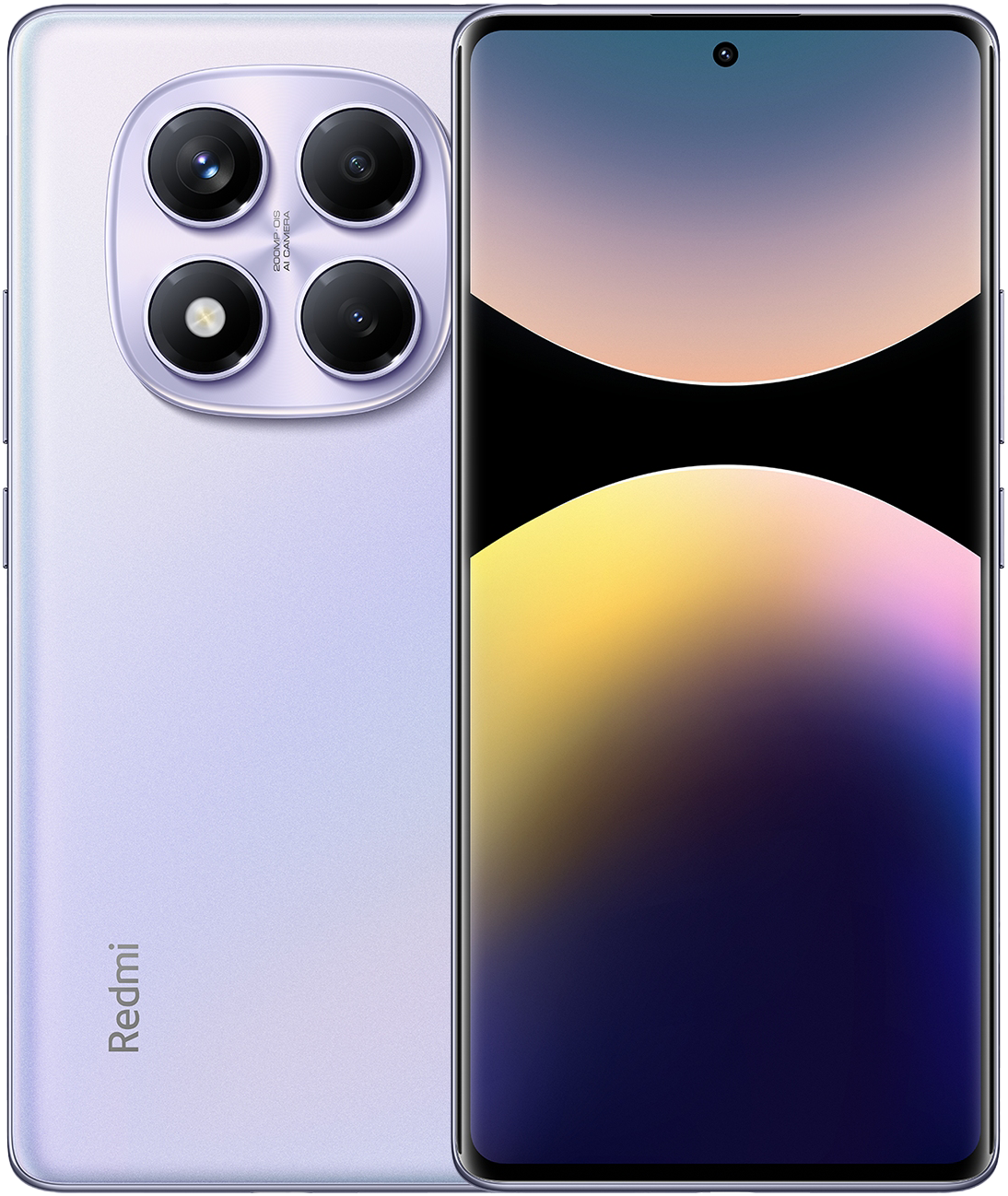
REDMI Note 14 Pro User Experience
Sizometry Verdict
Editorial scores based on recurring themes across professional reviews, hands-on testing, and expert analysis.
Overall user experience
7.5
out of 10
The January 2025 Note 14 imaging pick — Snapdragon 7s Gen 3 smoothness, 200MP daylight imaging, a curved 2100-nit AMOLED, faster 45W charging, and best-in-family 74.92 mm ergonomics — tempered by IP54 sealing identical to entry, low-light gaps versus Samsung, and HyperOS clutter.
Category scores
Camera
8.0
200MP main excels in daylight; night and ultrawide trail flagships.
Battery and charging
7.5
Same 5500mAh as entry with faster 45W charging convenience.
Performance
7.5
Snapdragon 7s Gen 3 handles daily and gaming warmly.
Handling and portability
8.0
74.92 mm and 180 g — best Note 14 handling. Slimmer and lighter than entry; strong midrange pocket fit.
Build quality
7.5
IP54 matches entry — solid but not a durability step-up.
Value
8.0
The January 2025 Note 14 imaging pick — Snapdragon 7s Gen 3 smoothness, 200MP daylight imaging, a curved 2100-nit AMOLED, faster 45W charging, and best-in-family 74.92 mm ergonomics — tempered by IP54 sealing identical to entry, low-light gaps versus Samsung, and HyperOS clutter.
Strengths
- 200MP OIS main with excellent daylight cropping
- Curved 2100-nit AMOLED — brightest in the family
- Snapdragon 7s Gen 3 upper-midrange smoothness
- 180 g ergonomics — lightest Note 14 sibling
Weaknesses
- IP54 sealing offers no upgrade over entry Note 14
- Low-light imaging behind computational leaders
- HyperOS promotional clutter persists
- No wireless charging
Best for
- Imaging-and-display buyers on global HyperOS
- Note 13 Pro upgraders
- One-handed ergonomics prioritizers
- Daylight travel and family photographers
Less suitable for
- Buyers seeking stronger sealing than IP54
- Night photography versus Galaxy or Pixel
- 4G jack and microSD fans — choose Note 14S
- Wireless-charging loyalists
Upgrade recommendation
Current device: REDMI Note 12 Pro or Note 13 Pro owners
Recommendation: Strongly recommendedNotes: 200MP, the brighter curved display, and Snapdragon 7s Gen 3 deliver clear upgrades.
Current device: Entry Note 14 owners
Recommendation: Depends on prioritiesNotes: Upgrade for camera, display, and 45W charging; sealing and battery size stay identical.
Current device: Note 14S shoppers
Recommendation: Probably unnecessaryNotes: S is a separate rebadge product — choose Pro for Snapdragon imaging and display.
Current device: Samsung Galaxy A56 owners
Recommendation: Worth consideringNotes: Pro wins megapixels and display pricing; Samsung wins updates.
Current device: POCO F6 performance hunters
Recommendation: Depends on prioritiesNotes: POCO for gaming frames; Pro for camera and charging speed.
Bottom line
The REDMI Note 14 Pro earns recommendation as the imaging-focused 2025 Note through 200MP daylight imaging, a curved 2100-nit AMOLED, Snapdragon 7s Gen 3 polish, faster 45W charging, and the family's best 74.92 mm ergonomics — while honest trade-offs remain IP54 sealing identical to entry, low-light gaps versus Samsung, and HyperOS first-week cleanup. Mainstream global buyers should audition camera and display brightness; durability-focused buyers should note sealing does not improve over entry; anyone wanting 3.5 mm jack nostalgia must study Note 14S as an unrelated rebadge SKU.
See its real size next to another phone or tablet.
Open size comparisonOverview
Across professional reviews and sustained owner discussions since the January 2025 global launch, the REDMI Note 14 Pro is widely regarded as the imaging-and-display upgrade in Xiaomi's refreshed Note 14 line — a phone that pairs Snapdragon 7s Gen 3 efficiency with a 200MP OIS main sensor, a curved 2100-nit AMOLED, and noticeably slimmer ergonomics than the entry sibling.
For readers evaluating handling before purchase, this summary focuses on global ROM ownership — pocket fit at 74.92 mm width, the curved 2100-nit display in daily use, 200MP camera behavior in restaurants and travel, charging routines with 45W wired-only recovery, and whether Pro imaging premiums justify skipping entry Note 14 pricing or Note 14S jack-and-microSD nostalgia.
Daily use
In daily use, the Note 14 Pro is consistently described as refined for upper-midrange workloads on Snapdragon 7s Gen 3 with HyperOS. App launches, camera readiness, and social multitasking feel snappier than entry Note 14 in side-by-side owner accounts; friction clusters around HyperOS promotional notifications and occasional idle-resume animation stutter rather than chipset limits.
The curved AMOLED panel, stereo speakers, and 2100-nit peak brightness combine into a premium-feeling daily driver for the price. Scrolling stays fluid at 120 Hz, outdoor legibility satisfies commute and travel users even in harsh sun, and camera quick-launch earns enthusiasm for impromptu street and food photography. Owners praise the lighter 180 g feel during one-handed messaging compared with entry Note heft.
HyperOS customization — floating windows, sidebar, second space — receives credit after bloat cleanup. The 8.24 mm profile and glass back still encourage cases for drop protection despite the IP54 rating; slim TPU options preserve the 74.92 mm pocket advantage.
Note 14 Pro
View the full specifications, dimensions, pricing, and related models.
Camera
Camera feedback centers on a capable 200MP main with OIS — excellent daylight detail, flexible 2x and 4x crop modes, and improved portrait separation over Note 13 Pro. Owners praise social-ready food, pet, and travel shots; pixel-peeping reveals marketing resolution exceeds everyday need but benefits cropping.
Low-light performance improved generationally yet still trails Galaxy A56 and Pixel computational leaders. Indoor restaurants and evening venues show more noise than daylight glory shots suggest; night mode helps but ultrawide remains the weak link for dim environments.
Battery and charging
Typical daily reports align around comfortable all-day endurance for moderate use on the same 5500mAh capacity as the entry Note 14: messaging, social, navigation, and camera days finish with charge remaining for many owners. Heavy 120 Hz gaming, max-brightness outdoor days, or prolonged 200MP burst sessions more commonly trigger evening top-ups.
45W wired charging recovers the Pro noticeably faster than the entry model — roughly 55–65 minutes to full versus the entry Note 14's 75–80 minutes on 33W. Owners consistently cite charging speed as the clearest daily upgrade over the base Note 14.
Performance
Snapdragon 7s Gen 3 delivers consistently smooth daily performance — app launches, multitasking, and camera processing feel a tier above Helio entry in owner comparisons. Benchmarks won't impress flagship hunters but satisfy mainstream Pro buyers.
Gaming suits high settings on mainstream titles with mild warmth during long sessions. Casual and mid-core gamers report satisfaction; enthusiasts comparing POCO F series note higher peak frames on gaming-tuned siblings.
Handling and portability
At 74.92 mm wide, 162.16 mm tall, and 180 g, the REDMI Note 14 Pro sits in the comfortable mid-band for one-handed use among 2025 Notes. Thumb reach across lower and middle display zones works well for messaging, maps, and feed scrolling; top corners require modest grip shifts.
In standard men's jeans and jacket pockets, owners report a comfortable fit — 74.92 mm width slides more easily than 76.55 mm entry Note 14, and 180 g feels lighter during walk-around carry.
Holding the Note 14 Pro for 30–60 minutes is comfortable for most users — 180 g and balanced width reduce wrist fatigue versus entry Note during extended reading and video.
Build quality
IP54 dust and splash resistance at Pro pricing matches the entry Note 14 rather than exceeding it — buyers hoping for pool-side IP68 confidence should note the sealing tier is identical across the January 2025 Note 14 pair.
The 8.24 mm profile and 180 g weight feel premium without Ultra-tier heft. Frame rigidity and button consistency earn praise; Gorilla Glass front protection matches category norms.
Considering another Note 14 model?
Similar size devices
This summary is based on recurring reports from public discussions.