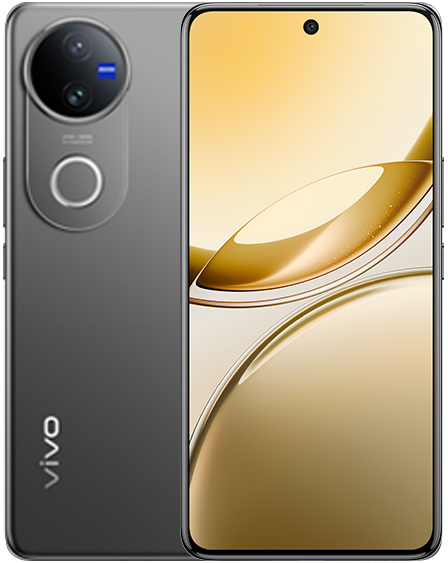
Official manufacturer render.
vivo
V50
- 6.8-inch
- Snapdragon 7 Gen 3
- 189 g
- 6000 mAh
- Model number
- V50
Available colors
Selected: Satin Black
Physical specifications
6.8"
Display size
189 g
Weight
163.3 mm
Height
76.7 mm
Width
7.4 mm
Thickness
19:9
Aspect ratio
Release and pricing
- Released
- February 25, 2025
Display
- Display size
- 6.8"
- Resolution
- 2392 × 1080
- Refresh rate
- 120 Hz
- Peak brightness
- 4500 nits
Performance
- Chipset
- Snapdragon 7 Gen 3
- RAM
- 8 GB, 12 GB
- Storage
- 128 GB, 256 GB, 512 GB
Battery & charging
- Typical capacity
- 6000 mAh
- Rated capacity
- 5870 mAh
- Wired charging
- 90 W
- Battery type
- Li-ion
Cameras
- Rear cameras
- Main · 50 MP · ƒ/1.88 · OIS; Ultra Wide · 50 MP · ƒ/2.0
- Front cameras
- Front · 50 MP · ƒ/2.0
- Video recording
- 4K
Build & durability
- Ingress protection
- IP68; IP69
Connectivity
- Cellular
- 5G, LTE
- Bluetooth
- Bluetooth 5.4
- USB
- USB 2.0
Sizometry Analysis
Overall Score
7.5
out of 10
A camera-first 2025 midranger with Zeiss portrait excellence, 6000mAh endurance, 90W charging, and IP68/69 confidence — held back by no telephoto, modest ultrawide, plastic frame, stagnant Snapdragon 7 Gen 3, and three-year OS updates.
Category scores
Camera
8.5
Zeiss portraits and Wedding Mode shine; main and selfie sensors strong for the class, with ultrawide and missing telephoto as clear limits.
Battery and charging
9.0
6000mAh delivers multi-day moderate use; 90W recovery among the fastest in the midrange tier.
Performance
7.0
Snapdragon 7 Gen 3 handles daily and casual gaming well with mild warmth; trails flagship-chip rivals in benchmarks.
Handling and portability
7.0
Light 189 g and slim 7.39 mm profile help, though 76.72 mm width still demands grip shifts on the 6.77-inch panel. 189 g carry weight is comfortable, but 76.72 mm width and tall 163.29 mm footprint feel large in narrow pockets.
Build quality
7.5
IP68/69 and Diamond Shield glass impress; plastic frame and rear-variant inconsistency temper premium feel.
Value
7.5
Competitive feature set and pricing for the target buyer, with clear trade-offs versus premium siblings.
Strengths
- Zeiss portrait and Wedding Mode — best-in-class midrange processing
- 6000mAh battery with 90W charging — endurance and recovery leaders
- IP68/69 sealing with stereo speakers — durable daily media package
- Slim 189 g chassis despite large silicon-carbon cell
Weaknesses
- No telephoto — optical zoom absent for travel and events
- Snapdragon 7 Gen 3 plateau and UFS 2.2 — behind performance rivals
- Three major OS updates only — shorter than some 2025 promises
- Modest ultrawide and plastic frame — versatility and feel limits
Best for
- Portrait and wedding photographers who prioritize Zeiss color science
- Users upgrading aging phones who need multi-day 6000mAh endurance
- Buyers who value IP69 and 90W over benchmark charts
- Social creators focused on main and selfie cameras over ultrawide
Less suitable for
- Telephoto-dependent travel and concert photographers
- Performance-first shoppers comparing Snapdragon 8 rivals
- Owners who demand five-year major Android updates
- Ultrawide landscape shooters wanting flagship-wide detail
Upgrade recommendation
Current device: vivo V29, V27, or older V-series
Recommendation: Strongly recommendedNotes: 6000mAh, 90W, IP69, and refined Zeiss portraits address battery, sealing, and imaging gaps from prior generations.
Current device: vivo V40 owners
Recommendation: Depends on prioritiesNotes: Battery and charging upgrade versus display resolution downgrade and same chipset — worthwhile mainly for endurance seekers.
Current device: Galaxy A54 or A55 generation
Recommendation: Worth consideringNotes: V50 wins portrait polish and battery; Samsung wins software longevity and ecosystem — choose by camera versus updates.
Current device: OnePlus 13R or Snapdragon 8 rivals
Recommendation: Probably unnecessaryNotes: Stepping sideways trades benchmark leadership for Zeiss portraits — only sensible if imaging matters more than raw speed.
Current device: Shoppers needing telephoto zoom
Recommendation: Depends on prioritiesNotes: Wait for V60 or X-series; V50 digital zoom cannot replace optical reach for travel photography.
Everyday usability
Estimated from device dimensions and weight.
One-handed use
AverageOne-handed use is possible, though two hands will often feel easier.
Pocket friendliness
GoodGenerally pocket-friendly for everyday carry.
Carry comfort
BalancedWeight sits in a balanced range for everyday holding and carrying.
Reading and media
A large canvas for reading, video, and longer on-screen sessions.
Gaming
Casual gamingIt is better suited to lighter games and moderate visual settings than demanding 3D titles.
Bottom line
The vivo V50 earns respect as a 2025 camera-first midranger through Zeiss portrait processing, Wedding Mode delight, 6000mAh multi-day endurance, 90W recovery, IP68/69 sealing, and a light 189 g slim chassis. Its strongest appeal is looking and shooting like a premium event phone without flagship pricing. Dominant trade-offs remain the absent telephoto, modest ultrawide, plastic frame, Snapdragon 7 Gen 3 plateau with UFS 2.2, 1080p panel downgrade from V40, and only three major Android updates. Portrait and battery loyalists should audition Funtouch and ultrawide samples before committing; telephoto and benchmark shoppers should compare V60 or performance rivals first.
Models and configurations
- Storage
- 128 GB256 GB512 GB
- Connectivity
- 5GLTE
- Colors
- Satin BlackMist PurpleStarry BlueAncora Red
- RAM
- 8 GB12 GB
- Model variants
- V50
Compare this device at its real-world size.
Use the Sizometry Tool to compare dimensions, thickness, and weight with other devices.
Open Tool →