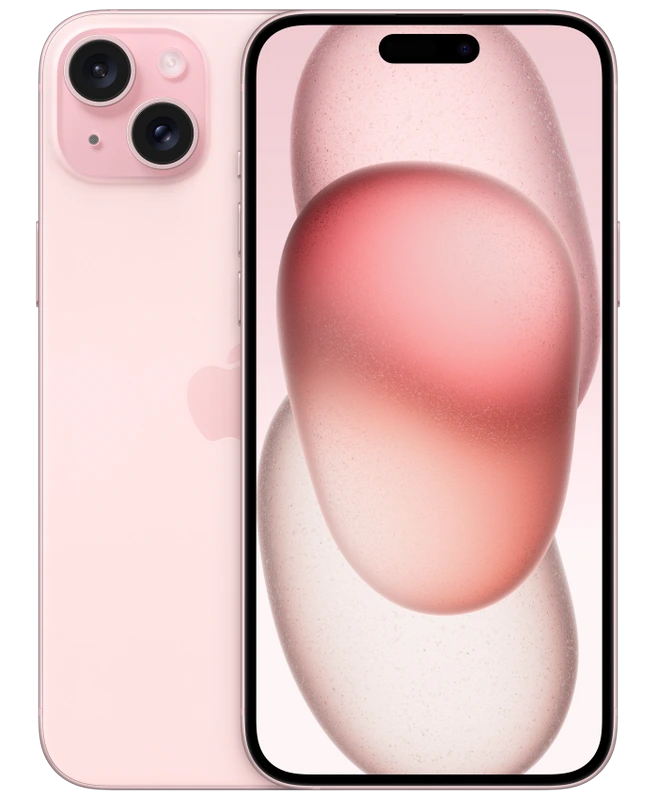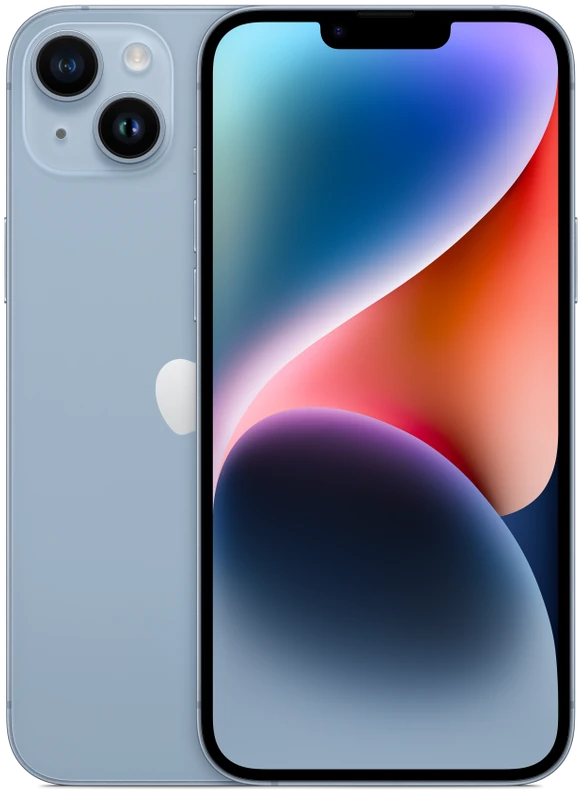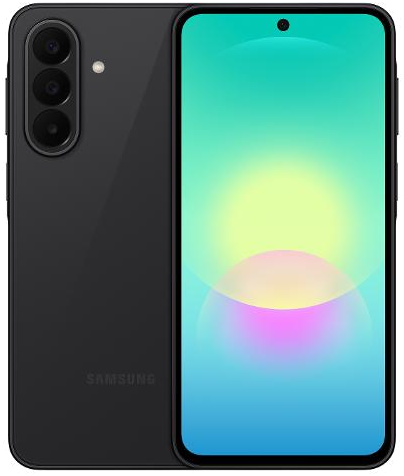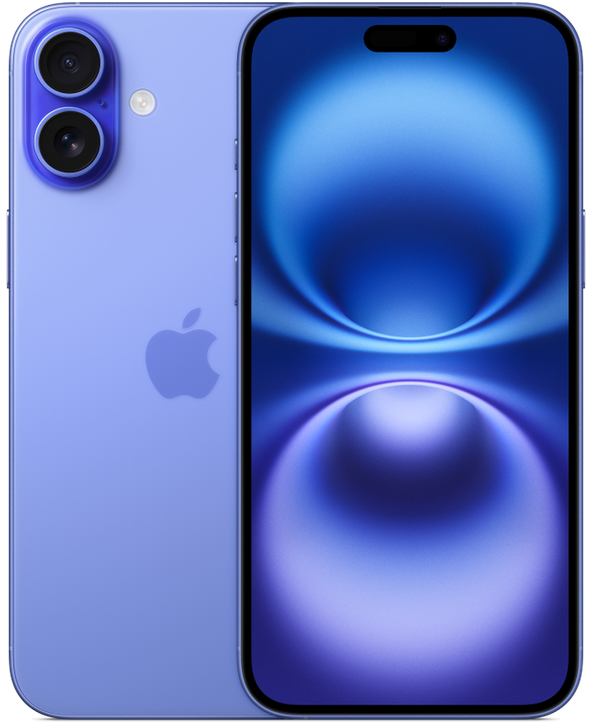
Official manufacturer render.
Apple
iPhone 16 Plus
- 6.7-inch Super Retina XDR OLED
- Apple A18 · 6-core CPU
- 199 g
- From $899
Available colors
Selected: Ultramarine
Physical specifications
6.7"
Display size
199 g
Weight
160.9 mm
Height
77.8 mm
Width
7.8 mm
Thickness
—
Aspect ratio
Release and pricing
- Announced
- September 9, 2024
- Released
- September 20, 2024
- Starting price
- $899
- Market
- US
- Configuration
- 128 GB
Display
- Display size
- 6.7"
- Display technology
- Super Retina XDR OLED
- Resolution
- 2796 × 1290
- Refresh rate
- 60 Hz
- Peak brightness
- 2000 nits
- Protection
- Ceramic Shield
Performance
- Chipset
- Apple A18
- CPU
- 6-core CPU
- GPU
- 5-core GPU
- RAM
- 8 GB
- Storage
- 128 GB, 256 GB, 512 GB
- Expandable storage
- No
Battery & charging
- Wired charging
- 25 W
- Wireless charging
- 15 W
- Charging standard
- MagSafe, Qi2
- Battery type
- Built-in rechargeable lithium-ion
Cameras
- Rear cameras
- Fusion · 48 MP · ƒ/1.6 · 26 mm · Sensor-shift OIS; Ultra Wide · 12 MP · ƒ/2.2 · 13 mm
- Front cameras
- TrueDepth · 12 MP · ƒ/1.9
- Video recording
- 4K Dolby Vision up to 60 fps, Spatial video up to 4K at 30 fps
Build & durability
- Frame
- Aluminum
- Back
- Color-infused glass
- Front
- Ceramic Shield
- Ingress protection
- IP68
Connectivity
- Cellular
- 5G (sub-6 GHz), Gigabit LTE
- Wi‑Fi
- Wi‑Fi 7 (802.11be)
- Bluetooth
- Bluetooth 5.3
- USB
- USB-C (USB 2)
- NFC
- Yes
- eSIM
- Yes
- Satellite
- Emergency SOS via satellite
Sizometry Analysis
Overall Score
8.0
out of 10
A battery standout among standard iPhones with a large, media-friendly display, trading pocket fit and one-handed ease for endurance that rivals Pro Max in many real-world routines.
Category scores
Camera
7.5
Same consistent dual-camera system as iPhone 16 with a larger preview canvas, but telephoto reach and Pro low light remain absent.
Battery and charging
9.0
Among the most praised endurance stories in the standard iPhone line, often approaching Pro Max runtime in mixed use.
Performance
8.0
Fast routine use with occasional warmth under sustained load.
Handling and portability
6.0
Manageable daily carry with familiar reach and pocket trade-offs for the size class.
Build quality
8.0
Solid standard-tier materials lighter than Pro Max, with Camera Control as the main ergonomic debate.
Value
7.5
Balanced capability for the price with deliberate omissions versus higher tiers.
Strengths
- Standout battery endurance for standard iPhones
- Large 6.7-inch display for media and readability
- Lighter than Pro Max at similar screen size
- Fast, dependable A18 daily performance
Weaknesses
- 60Hz display and no Always-On at nearby Pro pricing
- Poor pocket fit and two-handed handling for many users
- No telephoto lens; value debate versus iPhone 16 Pro
- Camera Control remains polarizing
Best for
- Battery-first buyers wanting max standard-iPhone runtime
- Heavy streamers and readers who value screen area
- Users comfortable with two-handed daily use
- Shoppers wanting big screens without Pro Max weight
Less suitable for
- One-handed users and tight-pocket carriers
- Buyers who notice 60Hz and can afford iPhone 16 Pro
- Photography enthusiasts needing telephoto zoom
- iPhone 16 owners without battery pain points
Upgrade recommendation
Current device: iPhone 12 Plus or older large iPhone
Recommendation: Strongly recommendedNotes: A18 speed, camera gains, USB-C, and major endurance improvements address multi-year large-phone pain points.
Current device: iPhone 13 or 14 Plus
Recommendation: Strongly recommendedNotes: Battery, camera flexibility, and Action button still feel meaningful compared with these Plus generations.
Current device: iPhone 16 (standard)
Recommendation: Depends on prioritiesNotes: Worth it mainly for users who routinely need more battery and screen; unnecessary if the smaller phone already lasts the day.
Current device: iPhone 15 Plus
Recommendation: Worth consideringNotes: Incremental but worthwhile for owners wanting A18, 8GB RAM, and Camera Control without waiting another cycle.
Current device: Considering iPhone 16 Pro instead
Recommendation: Depends on prioritiesNotes: Pro wins on 120Hz and telephoto; Plus wins on battery margin, weight, and media size for buyers indifferent to refresh rate.
Current device: Pro Max owners seeking lighter large phone
Recommendation: Worth consideringNotes: Lighter chassis with large display suits owners tired of Pro Max mass if telephoto and 120Hz are not daily needs.
Everyday usability
Estimated from device dimensions and weight.
One-handed use
AverageOne-handed use is possible, though two hands will often feel easier.
Pocket friendliness
GoodGenerally pocket-friendly for everyday carry.
Carry comfort
BalancedWeight sits in a balanced range for everyday holding and carrying.
Reading and media
More comfortable for reading and media than compact phones.
Gaming
SuitableIts hardware should handle most modern games, though demanding titles may benefit from adjusted settings.
Bottom line
The iPhone 16 Plus earns its audience through battery confidence and a spacious display rather than spec-sheet leadership. Its strongest appeal is endurance that many owners describe as best-in-line for standard iPhones, paired with media-friendly size at lower mass than Pro Max. The clearest trade-offs are pocket fit, two-handed handling, and the same 60Hz panel that dominates criticism of the smaller iPhone 16 — compounded by Pro model pricing only slightly higher. Shoppers who charge anxiety or screen size drive the purchase tend to remain satisfied; those who prioritize one-handed use or high refresh should compare carefully with the iPhone 16 Pro before committing.
Models and configurations
- Storage
- 128 GB256 GB512 GB
- Connectivity
- 5G (sub-6 GHz)Gigabit LTE
- Colors
- UltramarineTealPinkWhiteBlack
- RAM
- 8 GB
- SIM configuration
- eSIM
Compare this device at its real-world size.
Use the Sizometry Tool to compare dimensions, thickness, and weight with other devices.
Open Tool →