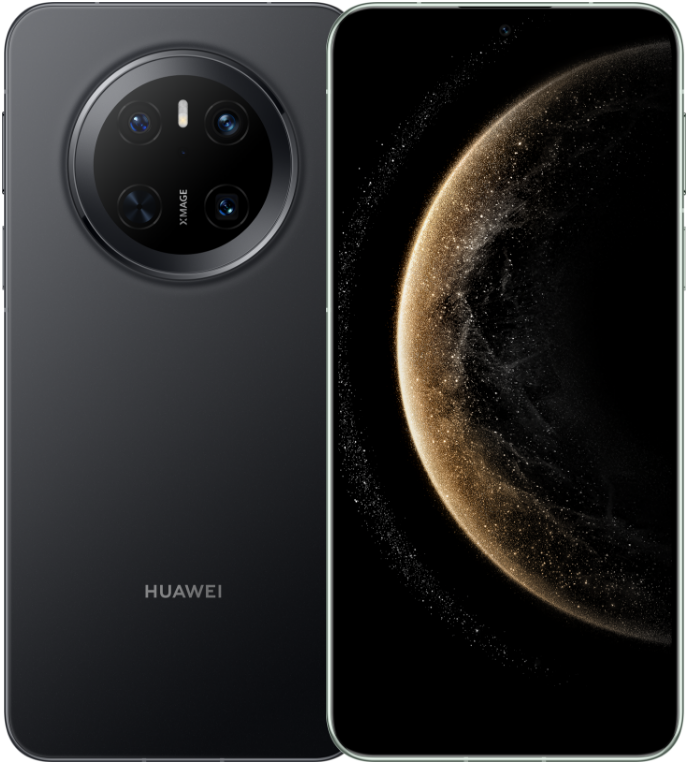
Official manufacturer render.
Huawei
Mate 70
- 6.7-inch OLED
- 203 g
- 5300 mAh
Physical specifications
6.7"
Display size
203 g
Weight
160.9 mm
Height
75.9 mm
Width
7.8 mm
Thickness
19:9
Aspect ratio
Release and pricing
- Released
- November 26, 2024
Display
- Display size
- 6.7"
- Display technology
- OLED
- Resolution
- 2688 × 1216
- Refresh rate
- 120 Hz
Performance
- RAM
- 12 GB
- Storage
- 256 GB, 512 GB
- Expandable storage
- No
Battery & charging
- Typical capacity
- 5300 mAh
- Wired charging
- 66 W
- Wireless charging
- 50 W
Cameras
- Rear cameras
- Wide · 50 MP · F1.4- · OIS
- Front cameras
- Selfie · 13 MP · F2.4
Build & durability
- Ingress protection
- IP68
Connectivity
- Bluetooth
- Bluetooth 5.2
- USB
- USB-C
Sizometry Analysis
Overall Score
7.5
out of 10
A titanium-backed entry Mate flagship with a genuinely useful periscope telephoto, satellite messaging, and solid IP68 durability — limited by charging speed a step below the Pro and the same missing Google Mobile Services as every current Huawei phone.
Category scores
Camera
7.5
A capable main sensor and 5.5x periscope telephoto deliver strong results for the price tier.
Battery and charging
7.5
5300mAh with 66W/50W charging covers a full day comfortably, if slower than the Pro.
Performance
6.5
Kirin 9010 handles daily tasks smoothly but trails class-leading benchmarks.
Handling and portability
7.5
203 g and a titanium frame make this the more manageable Mate 70 sibling for one-handed use.
Build quality
8.5
Titanium casing and IP68 sealing give a genuinely premium, durable feel.
Value
7.0
Strong build and camera offset by the ongoing cost of missing Google Mobile Services.
Strengths
- Premium titanium build with IP68 durability
- Genuinely useful 5.5x periscope telephoto
- Beidou satellite messaging for remote-area communication
- More manageable ergonomics than the Mate 70 Pro
Weaknesses
- No Google Mobile Services — ongoing workaround maintenance
- 66W/50W charging trails the Pro's faster combination
- Kirin 9010 trails class-leading Android benchmarks
- Limited retail and carrier support outside core markets
Best for
- Buyers wanting Mate-line durability in an accessible package
- Owners who value titanium build quality
- Existing Huawei ecosystem users
- Shoppers wanting periscope zoom without Pro pricing
Less suitable for
- Buyers who depend on Google Play or Gmail daily
- Fastest-charging seekers who want the Pro's 100W/80W
- Benchmark-focused performance shoppers
- Markets without reliable Huawei retail support
Upgrade recommendation
Current device: Older Huawei Mate or P-series phones
Recommendation: Strongly recommendedNotes: A titanium build and periscope telephoto without Pro-tier pricing.
Current device: Buyers deciding between Mate 70 and Mate 70 Pro
Recommendation: Depends on prioritiesNotes: Pro wins charging speed and telephoto resolution; base Mate 70 wins weight and titanium finish.
Current device: Google-service-dependent Android shoppers
Recommendation: Probably unnecessaryNotes: Missing GMS remains a hard blocker regardless of build quality.
Everyday usability
Estimated from device dimensions and weight.
One-handed use
ManageableOne-handed use is workable, with some stretch for top-of-screen reach.
Pocket friendliness
GoodGenerally pocket-friendly for everyday carry.
Carry comfort
BalancedWeight sits in a balanced range for everyday holding and carrying.
Reading and media
More comfortable for reading and media than compact phones.
Gaming
Insufficient dataThe available specifications are not detailed enough to assess demanding-game performance reliably.
Bottom line
The Huawei Mate 70 delivers a genuinely premium titanium-backed flagship experience with satellite messaging and a useful periscope telephoto, at the cost of charging speed a step below the Pro and the same missing Google Mobile Services that defines every current Huawei phone. It suits buyers who want Mate-line durability and design in the most accessible package available.
Models and configurations
- Storage
- 256 GB512 GB
- Colors
- `huawei-mate70`
- RAM
- 12 GB
Compare this device at its real-world size.
Use the Sizometry Tool to compare dimensions, thickness, and weight with other devices.
Open Tool →