Insights
RUMOR
Rumor
Pixel 11 Camera Rumors: Expected Cameras, AI Features and Photography Upgrades
Pixel 11 camera rumors covering expected main, ultrawide, and telephoto upgrades, AI photography features, and how the next Pixel may compare with Pixel 10 and Galaxy S26 — still unconfirmed by Google.
Google has not announced the Pixel 11 camera system. What exists today is official Pixel 10 photography hardware, shipping Pixel AI tools, and unconfirmed reports about next-generation sensors and video AI. This Insight keeps those layers separate so Pixel 11 camera searches lead to measured expectations.
Sizometry focuses on how expected Pixel 11 cameras, AI features, and image processing could change everyday shooting versus Pixel 10 and Galaxy S26. Launch timing belongs in [Pixel 11 Release Date Rumors](/insights/pixel-11-release-date-rumors); footprint context lives in [Pixel 11 Size Rumors](/insights/pixel-11-size-rumors).
Expected Pixel 11 Camera System
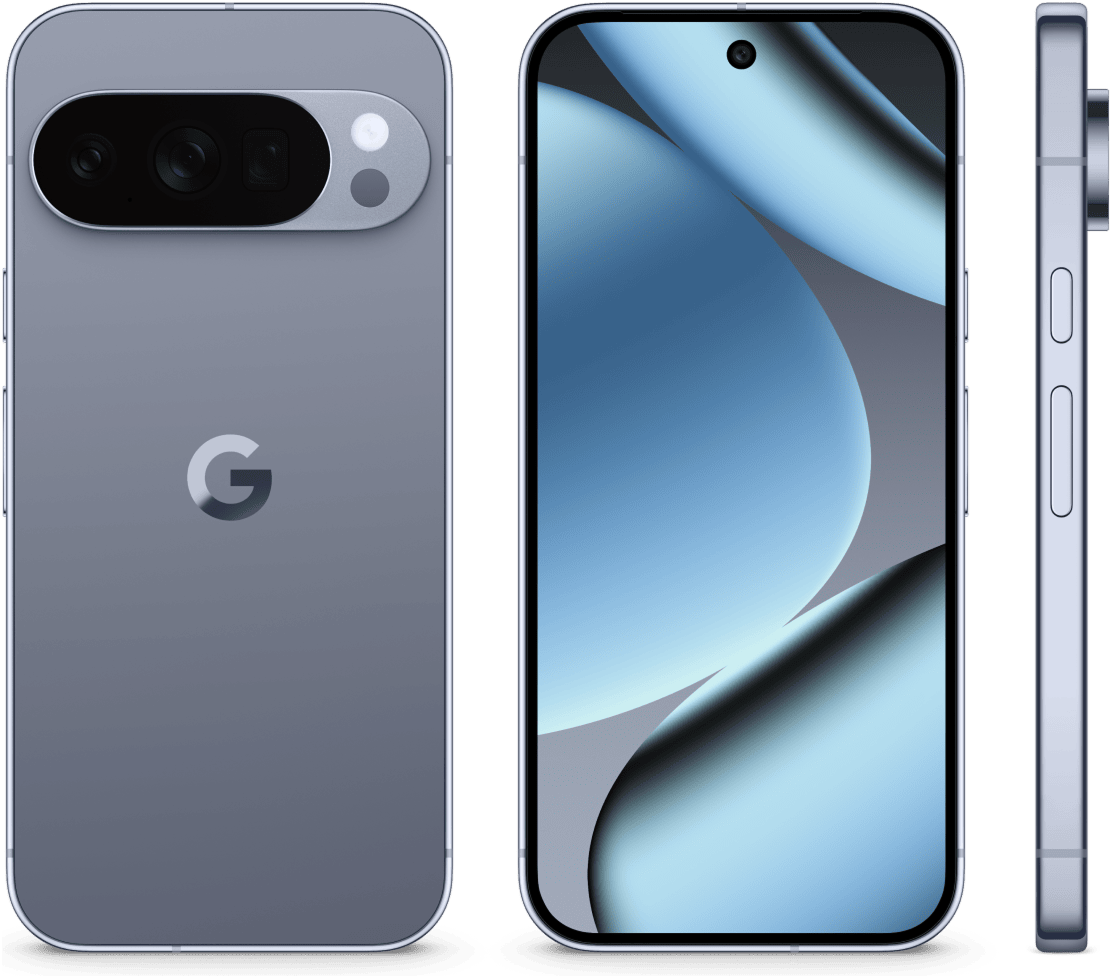
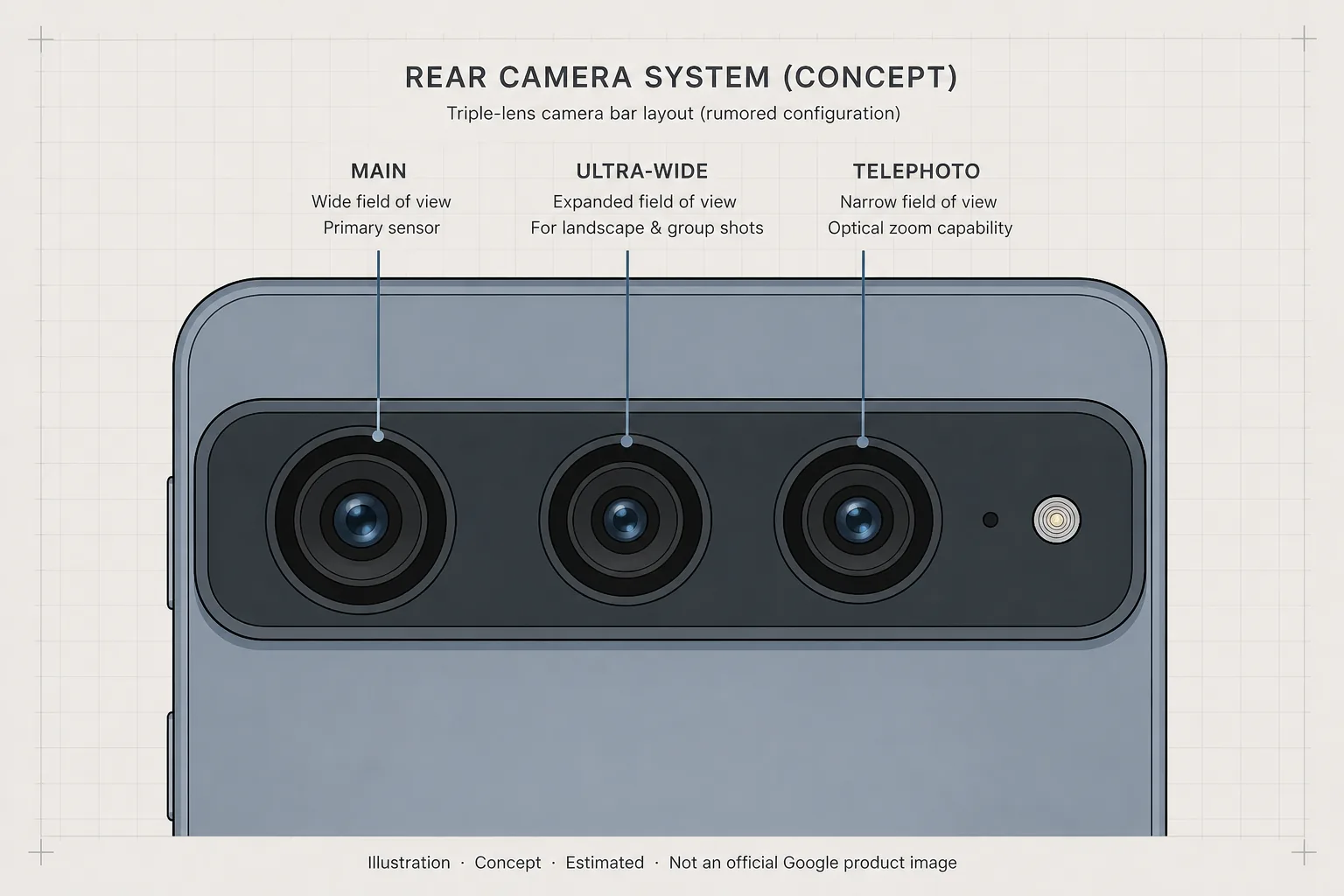
Start with the confirmed Pixel 10 baseline. Google’s official Pixel 10 rear camera system includes three cameras: a 48 MP wide with Macro Focus, a 13 MP ultrawide with a 120° field of view, and a 10.8 MP 5x telephoto with optical image stabilization, plus Super Res Zoom up to 20x. Pixel 10 Pro and Pro XL step up to larger sensors and richer ultrawide/telephoto hardware, including Pro Res Zoom up to 100x.
Current Pixel 11 camera reporting suggests a possible hardware refresh rather than a software-only update. Leak coverage describes a new main sensor, often under the codename “chemosh” and commonly framed as a 50 MP-class unit for the standard Pixel 11 and Pixel 11 Pro Fold. Pro and Pro XL reports separately mention new main and telephoto sensors under “bastet” and “barghest.” Exact apertures, sensor sizes, and final megapixel counts remain unconfirmed.
Also reported is a refreshed ISP path tied to Tensor G6 and a new Google GXP block. Treat every Pixel 11 sensor name and zoom claim as provisional until Google publishes tech specs.
Confirmed today:
• Pixel 10 series camera hardware as sold by Google • Existing Pixel AI photography tools already shipping • No public Google camera sheet for Pixel 11
Still speculative:
• Final Pixel 11 rear camera configuration by model • Exact telephoto optical and digital zoom ceilings • Which AI video and editing tools ship at launch versus later Pixel Drops • Any claim that Pixel 11 “beats” rivals in benchmarks
Main Camera Expectations
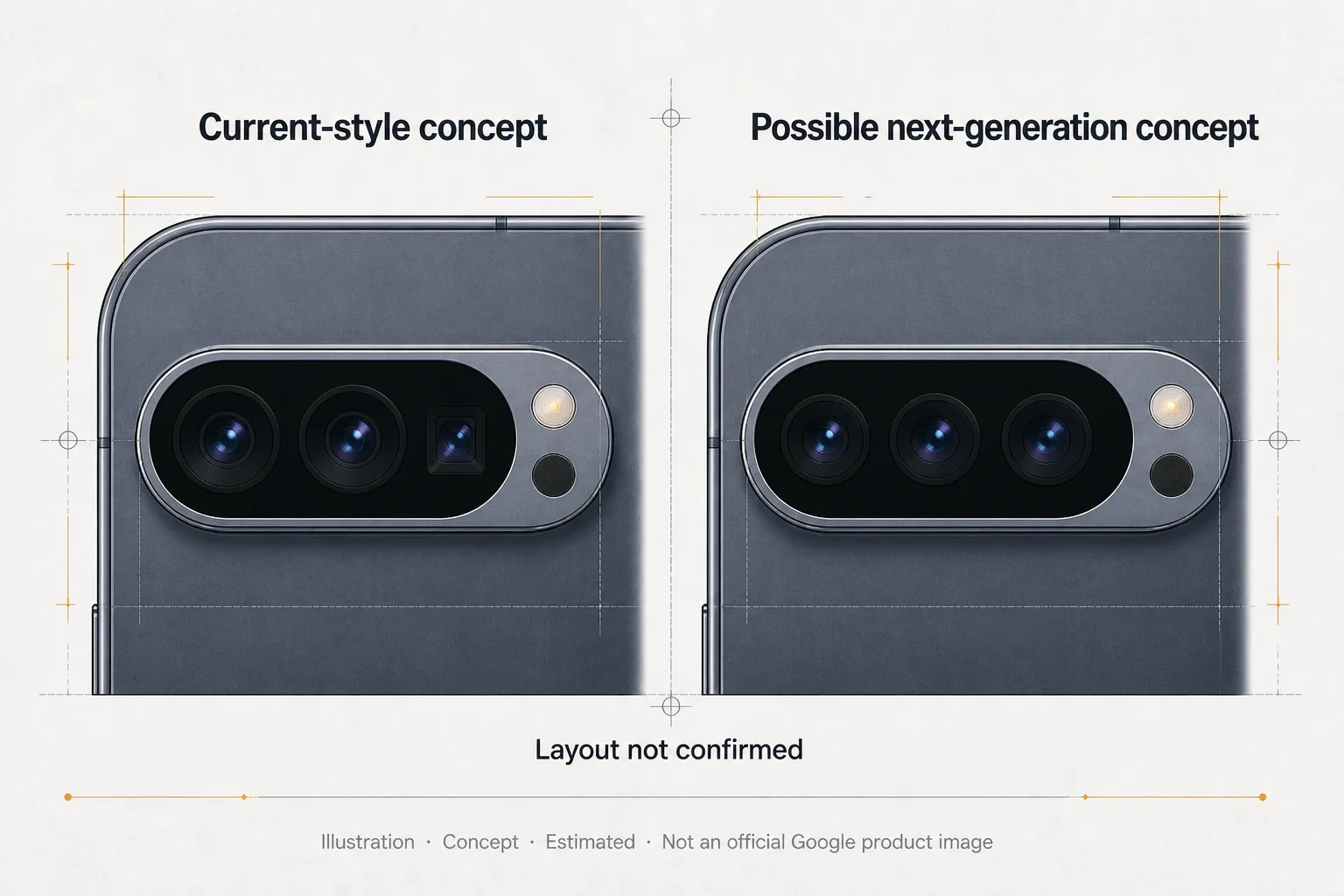
The main camera is typically the default lens for everyday photos, travel, family shots, and social sharing. Rumors of a new Pixel 11 main sensor suggest that Google may be focusing on improving the quality of the data entering its computational pipeline, rather than relying on a resolution increase alone. A reported new main sensor on the standard model would, if accurate, continue Google’s habit of pairing moderate resolution with aggressive HDR.
If the reported sensor and processing changes are accurate, the most likely areas of improvement would be detail retention, highlight control, color consistency, and mixed-light performance. Those outcomes would still depend on next-generation image-processing hardware and color science more than on any sensor label.
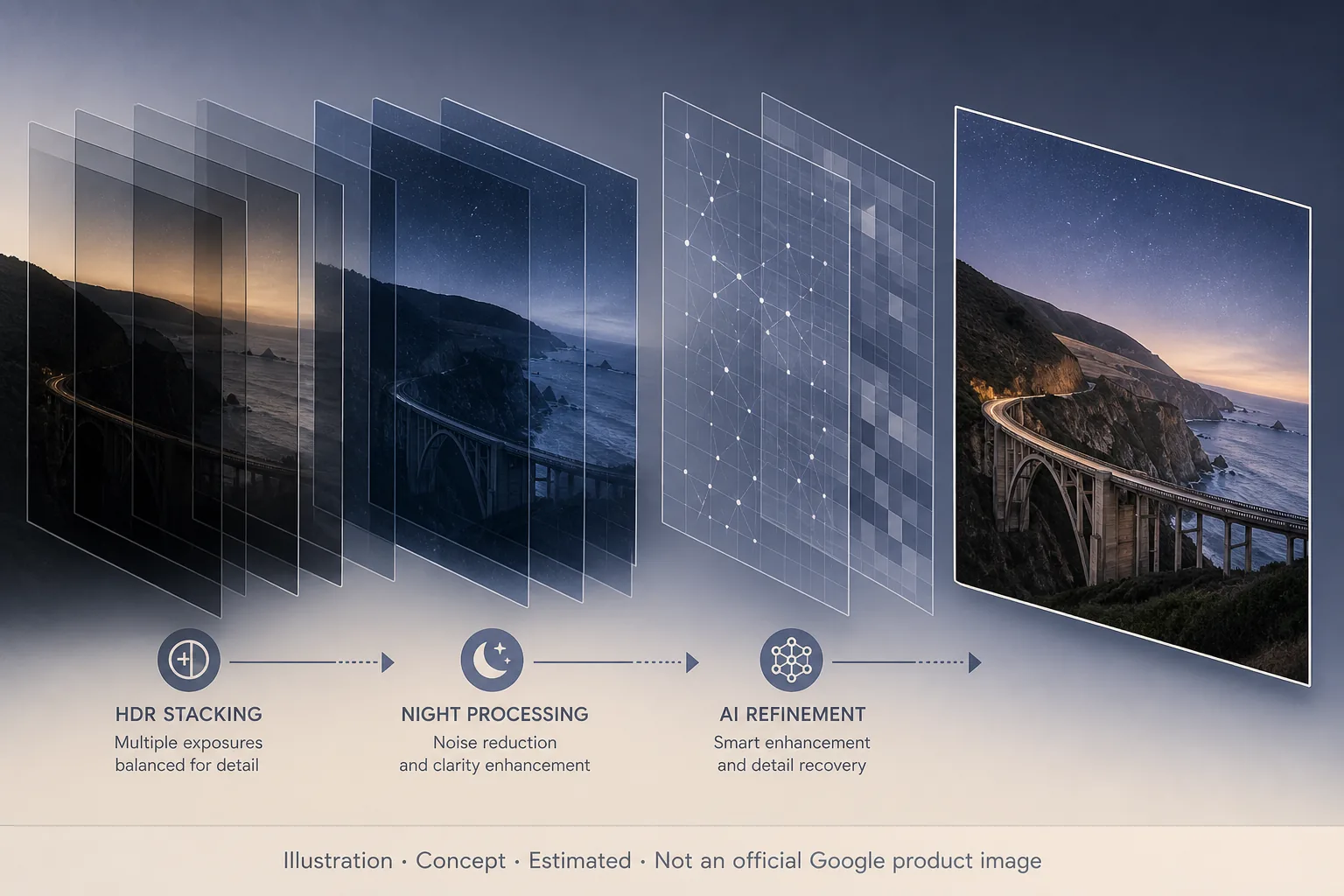
HDR is already central to Pixel photography. A reported new main sensor plus rumored ISP changes could settle multi-frame stacks more cleanly, but that is an editorial expectation, not a measured result. Night Sight already sets a strong software bar, so any Pixel 11 low-light gain is more likely quieter shadows than a brand-new night mode name. Computational photography remains the product story: fewer near-miss shots rather than dramatically different framing.
Explore device details
Ultra-Wide Camera Rumors
Ultra-wide reports are thinner than main-sensor and telephoto coverage. Public leaks emphasize reported main-camera and Pro telephoto hardware more than a major ultrawide redesign. Current reporting points more toward continuity than a major ultrawide redesign: a wide field of view for landscapes, groups, and interiors remains likely, while autofocus or macro upgrades remain unverified.
On Pixel 10, the ultrawide is officially a 13 MP, 120° camera. Pixel 10 Pro models use a higher-resolution autofocus ultrawide. Pixel 11 reports do not yet establish whether the standard model closes that gap or keeps the tier split. No credible public sheet lists a dedicated Pixel 11 macro camera or confirmed working distance, so treat “better ultrawide” as a possible result of processing improvements rather than a confirmed hardware change.
Telephoto Camera Rumors
Current Pixel 11 camera reporting is most concentrated on Pro-model telephoto hardware, although the available details remain preliminary. Pixel 10 already brought a dedicated 5x telephoto to the standard model. Pixel 10 Pro and Pro XL pair stronger telephoto sensors with much longer Pro Res Zoom.
Pixel 11 reports suggest Pro models may receive a reported Pro telephoto sensor, while broader coverage has floated AI-assisted extreme zoom, sometimes framed around 100x-class reach. That does not confirm a new optical zoom factor for every model. Optical zoom is physical focal length; digital and Super Res / Pro Res Zoom reconstruct detail with machine learning. Any reported 100x-class capability would likely rely heavily on computational reconstruction rather than a true 100x optical lens.
If new Pro telephoto hardware is real, potential portrait gains may include cleaner subject separation and more stable skin texture at 5x-class framing. Stabilization expectations should stay modest: recent Pixel telephoto systems already use optical plus electronic stabilization. For the standard Pixel 11, hard public evidence is thinner than Pro-side reporting — do not invent apertures, sensor sizes, or optical multipliers.
AI Photography Features
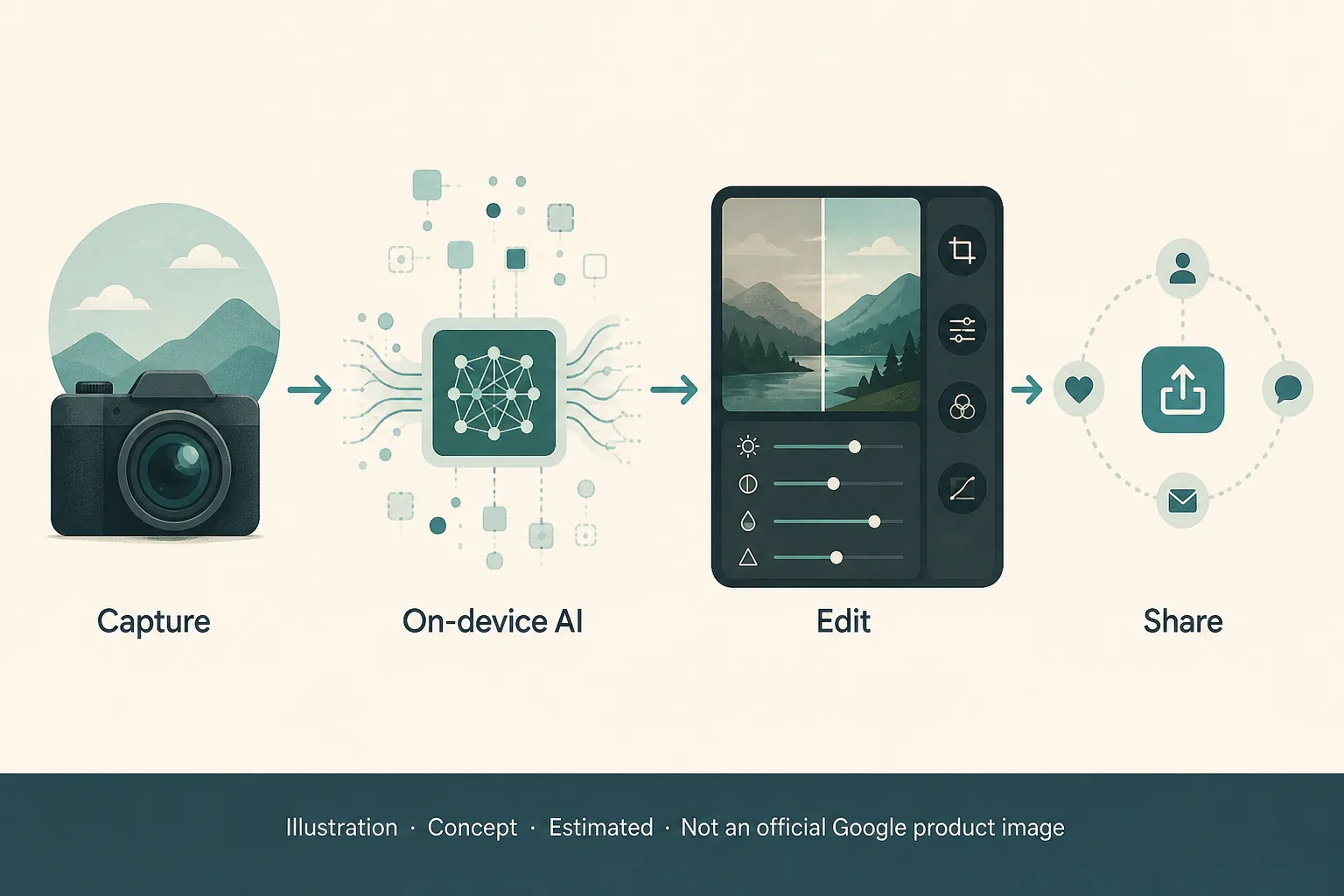
Google continues to differentiate Pixel photography through computational processing and AI-assisted editing. Separate tools that already exist from features only discussed for the next generation.
Already shipping on recent Pixel phones:
• Magic Editor and related generative editing tools • Best Take for group-photo face selection • Night Sight stills and related low-light processing • Video Boost and other cloud-assisted video refinements on supported models • On-device Gemini / Tensor features that assist capture and editing depending on region and plan
Reported Pixel 11 AI camera directions (unconfirmed):
• Ultra-low Light Video for dim indoor or dusk conditions, sometimes framed as more fully on-device than earlier cloud-heavy video pipelines • 4K 30 fps Cinematic Blur, extending a historically resolution-limited mode • Video Relight / post-capture lighting adjustment for video • Voice-driven editing concepts sometimes described as speak-to-tweak style controls • AI-assisted extreme zoom that leans on machine learning plus telephoto hardware • Possible next-generation ISP and neural-processing updates inside Tensor G6
Improvements to Magic Editor should not be treated as confirmed Pixel 11-exclusive features unless Google announces them. Treat reported AI tools as pre-release reporting until Google demos them. Tensor G6 coverage emphasizes efficiency and neural processing, which usually means faster local stacks — none of which is confirmed for every reported Pixel 11 camera feature.
Pixel 11 vs Pixel 10 Camera
Pixel 10 is the most reliable comparison baseline because its hardware and software are publicly documented, while Pixel 11 remains unannounced.
Photography: Current reporting points to a possible main-camera refresh and, on Pro models, telephoto hardware changes. If those reports hold, the potential upgrade value would be most relevant for owners limited by Pixel 10 detail, zoom texture, or processing artifacts — not for owners who already prefer Pixel 10 daylight color.
Video: Reported Ultra-low Light Video, 4K Cinematic Blur, and video relighting would matter more than main-camera resolution reporting. Until Google confirms codecs, frame rates, and model splits, treat video as the more speculative half of the story.
AI and image processing: Pixel 10 already ships a mature computational stack. Pixel 11’s reported advantage is a newer ISP/TPU combination plus possible new editing tools — which could depend as much on software changes as on new hardware, or arrive later as Pixel Drop updates. Daylight-wide shooters may see a smaller jump than Pro zoom users or low-light video shooters.
Pixel 11 vs Galaxy S26 Camera
This comparison is more useful as a contrast in camera strategy than as a pre-launch ranking. Galaxy S26 Ultra emphasizes hardware versatility, high-resolution capture, and long-range zoom. Pixel emphasizes multi-frame processing, HDR consistency, and AI-assisted editing.
Samsung emphasizes camera versatility, long-range zoom, high-resolution capture, and a broad set of manual and editing controls. Pixel emphasizes multi-frame processing, HDR consistency, natural-looking color, and AI-assisted editing. Reported Pixel 11 hardware suggests Google may keep that computational approach while refreshing sensors enough to stay competitive when zoomed or in difficult light — not a claim that Pixel 11 will outscore Galaxy S26 Ultra in every lab chart.
Computational photography: Pixel is expected to continue emphasizing multi-frame processing and generative editing if Magic Editor–class tools continue. Samsung tends to pair strong optics with extensive Expert RAW / Editor options. Zoom: Galaxy Ultra-class periscope systems emphasize reach; Pixel reports around AI-assisted extreme zoom describe a similar capability target, while everyday Pixel strength has often been mid-range telephoto usability plus software reconstruction. Exact Pixel 11 optical multipliers remain unconfirmed. Color science: Pixel usually trends toward restrained naturalism; Samsung commonly applies more vivid default processing, although results vary by scene and camera mode. Official sample galleries and independent comparisons will be necessary before drawing conclusions.
Open Pixel 11 and Pixel 11 Pro side by side in the Sizometry size comparison tool.
Open size comparisonEveryday Photography Experience
If the reported hardware changes are accurate, everyday benefits may vary by use case. Travel could benefit most from any real telephoto and ultrawide refinement. Any improvement in portraits would depend on telephoto quality and skin-tone tuning. Landscapes would still depend on ultrawide geometry correction and highlight control. Night photography remains an area where Google’s processing remains central; reported low-light video is the more novel angle if it ships. Low-light performance cannot be assessed before independent testing.
Social media shooting cares about speed, color consistency, and one-tap edits — areas Magic Editor–class tools already serve. Video is the area with the most detailed pre-release reporting and the least public validation. None of these scenarios are promises; they are the practical questions to ask when Google shows samples.
Sizometry Analysis
Confirmed information:
• Official Pixel 10 series camera specifications from Google • Current Pixel AI photography features already in market • Pixel 11 remains unannounced
Current industry reporting:
• Reported main-camera changes for standard and Fold models • Reported main and telephoto sensor changes for Pro models • Possible ISP and neural-processing updates • Pre-release reports of low-light video, cinematic blur, video relighting, and AI-assisted zoom
Historical Pixel camera evolution:
• Pixel built reputation on computational stills before matching rivals on telephoto hardware • Pixel 9-era mainstream models often lacked dedicated telephoto; Pixel 10 changed that for the standard phone • Pro models have repeatedly carried the richer ultrawide and zoom stack
Sizometry editorial view:
• Current reporting points to a sensor and processing update rather than a fundamental change in Google’s camera strategy • The clearest reported upside is Pro telephoto hardware plus video AI, not a guaranteed ultrawide overhaul • Official sample galleries and independent testing should carry more weight than pre-release sensor codenames; see Sizometry’s Pixel 11 device previews and Pixel 10 User Experience coverage for handling context
Pixel 11 Camera Expectations at a Glance
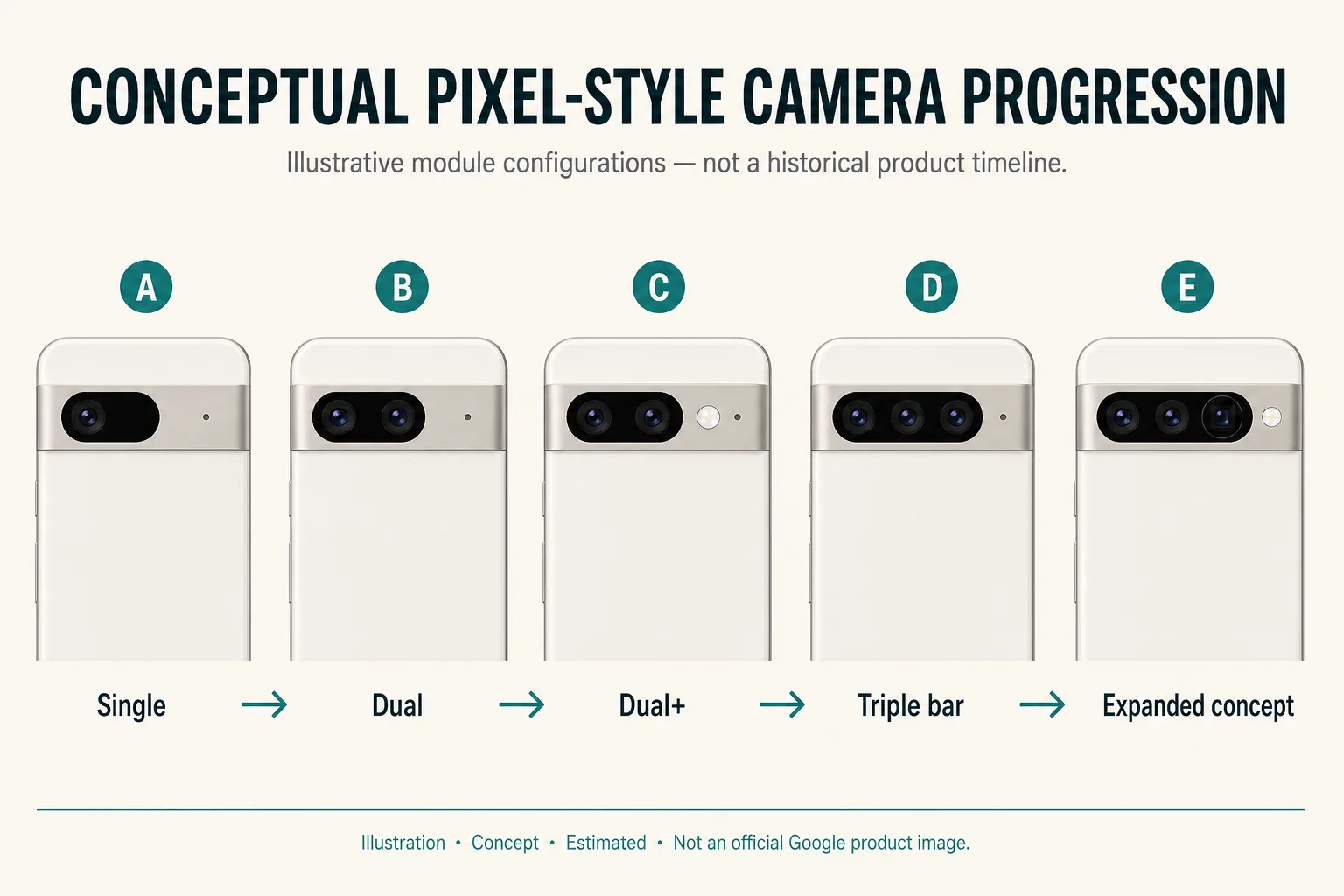
• Feature — Pixel 10 — Pixel 11 Outlook — Status — Notes • Main rear camera — 48 MP wide, official specification — Reported new main-camera sensor; resolution details remain preliminary — Preliminary reporting; not announced by Google — Final specs unconfirmed • Ultrawide — 13 MP, 120° on the standard model — Current reporting points to continuity with possible processing improvements — Editorial expectation based on limited reporting — Fewer hard ultrawide details than main/telephoto coverage • Telephoto — 10.8 MP, 5x optical telephoto on the standard model — Reported new telephoto hardware for Pro models — Preliminary Pro-model reporting — Optical factor not firmly republished • Zoom ceiling — Super Res Zoom up to 20x on the standard model — AI-assisted extended zoom has been discussed — Unconfirmed pre-release reporting — Not the same as optical zoom • ISP / processing — Current Tensor-era imaging pipeline — Possible next-generation ISP and neural-processing updates — Preliminary platform reporting — Central to possible photography gains • Magic Editor / Best Take / Night Sight — Existing features on current Pixel devices — Likely to continue; Pixel 11-specific changes are unknown — Existing features; future changes unconfirmed — Continuation inferred; Pixel 11 exclusives unconfirmed • Video AI tools — Video Boost and related tools on supported models — Low-light video, higher-resolution cinematic blur, and relighting have been reported — Unconfirmed pre-release reporting — Among the least verified current reports • Galaxy S26 comparison — Not applicable — Computational processing compared with Samsung’s hardware versatility — Editorial comparison — Editorial framing only
Frequently Asked Questions
Will Pixel 11 have a new camera? Google has not confirmed it. Current reporting describes possible main-camera hardware changes for the standard Pixel 11 and additional main and telephoto sensor changes for Pro models. These reports should be treated as preliminary rather than as a finished specification sheet.
Will Pixel 11 improve low-light photography? It might, if reported sensor and processing changes land alongside Google’s existing Night Sight strengths. No independent lab results exist yet. Ultra-low light video is a separate claim from still Night Sight and remains unconfirmed.
Is a new telephoto camera expected? Current reporting points to possible telephoto hardware changes for Pro models, but Google has not published final specifications. For the standard Pixel 11, telephoto already exists on Pixel 10, but next-generation hardware is less clearly documented. Extreme 100x-style zoom talk should be read as AI-assisted reach unless Google states otherwise.
What AI camera features are rumored? Coverage has pointed to ultra-low light video, 4K cinematic blur, video relighting, stronger on-device processing, and AI-assisted zoom. Magic Editor, Best Take, and Night Sight already ship on current Pixels and should not be labeled as brand-new Pixel 11 inventions.
Has Google confirmed the camera hardware? No. Google has not published Pixel 11 camera specifications, sample galleries, or an official sensor list. Pixel 10 specs are the confirmed hardware reference today.
Should Pixel 10 owners upgrade for the camera? Only if a specific reported gap matches a real frustration — typically zoom texture, low-light video, or processing limits. Owners satisfied with Pixel 10 daylight photography may see limited reason to upgrade until official samples show a meaningful difference. Physical handling remains a separate factor on Sizometry’s Pixel device pages and Pixel 10 User Experience Insight.
When is Pixel 11 expected to launch? Current reporting points to a possible Made by Google event around August 12, 2026, but Google has not officially confirmed the Pixel 11 announcement, shipping date, or retail availability. See [Pixel 11 Release Date Rumors](/insights/pixel-11-release-date-rumors) for the latest timeline.
Will every Pixel 11 model share the same cameras? Historically, no. Pixel lineups usually split standard and Pro camera stacks. Current reporting again describes different sensors for standard/Pro Fold versus Pro/Pro XL. Final model splits are unconfirmed.
Conclusion
Current Pixel 11 camera reporting points to incremental hardware and processing changes rather than a complete shift in Google’s photography strategy. The most notable areas of interest are reported main-camera updates, possible Pro telephoto changes, and new video-processing features. None of these have been confirmed by Google.
Sizometry’s view is that Pixel 11 may refine Google’s existing computational photography approach, but official specifications, sample galleries, and independent testing will be required before its camera value can be judged. Pixel 10 remains the confirmed reference point; Pixel 11 remains an unannounced product described by preliminary reporting.
This information has not been confirmed by the manufacturer.