REDMI Pad 2 User Experience
Sizometry Verdict
Editorial scores based on recurring themes across professional reviews, hands-on testing, and expert analysis.
Overall user experience
7.5
out of 10
A strong budget-tablet value pairing a sharp 11-inch 2.5K 90 Hz display, excellent 9000 mAh stamina, and capable quad-speaker media experience near entry Redmi pricing, held back mainly by slow 18 W charging, Wi-Fi 5, face-unlock-only security, and Helio G100 Ultra limits under heavy gaming or multitasking on 4 GB SKUs.
Category scores
Camera
6.5
Adequate document scanning and video calls for study; not an imaging priority.
Battery and charging
8.5
9000 mAh delivers multi-day endurance; 18 W recovery is the main compromise.
Performance
7.0
Smooth for media and study on Helio G100 Ultra; warmth under heavy gaming.
Handling and portability
6.0
510 g manageable for brief tasks; 11-inch width exceeds sustained one-hand comfort. Backpack-friendly rather than pocketable, typical for 11-inch family tablets.
Build quality
7.5
Acceptable slim chassis and strong quad speakers for the tier; no fingerprint or IP rating.
Value
8.0
A strong budget-tablet value pairing a sharp 11-inch 2.5K 90 Hz display, excellent 9000 mAh stamina, and capable quad-speaker media experience near entry Redmi pricing, held back mainly by slow 18 W charging, Wi-Fi 5, face-unlock-only security, and Helio G100 Ultra limits under heavy gaming or multitasking on 4 GB SKUs.
Strengths
- Excellent display and battery value for entry Redmi tablet pricing
- Quad Dolby Atmos speakers and 90 Hz panel elevate couch media
- microSD expansion and optional pen support keep family costs flexible
Weaknesses
- Slow 18 W charging on a 9000 mAh cell frustrates daily top-up habits
- Wi-Fi 5 and UFS 2.2 feel dated next to midrange Xiaomi Pad hardware
- Face unlock only and no bundled keyboard limit desk productivity out of box
Best for
- Families and students prioritizing screen, speakers, and battery over charging speed
- Redmi phone owners wanting HyperOS interconnect on a shared household tablet
- Buyers needing microSD for offline content without flagship spend
Less suitable for
- Shoppers who treat fast charging as a daily must-have
- Productivity-first users wanting fingerprint, keyboard dock, and flagship silicon
- Competitive mobile gamers expecting sustained high-frame play
Upgrade recommendation
Current device: Redmi Pad or Pad SE
Recommendation: Strongly recommendedNotes: 2.5K 90 Hz display, 9000 mAh, Helio G100 Ultra, and HyperOS 2 address core budget tablet gaps.
Current device: Pad SE (daily driver)
Recommendation: Worth consideringNotes: Meaningful gains in resolution, refresh, and stamina if 18 W charging is acceptable.
Current device: Pad 2 (satisfied)
Recommendation: Probably unnecessaryNotes: Incremental jump unless Pad Pro gaming or Xiaomi Pad 7 productivity personally matters.
Current device: Need fastest charging and biometrics
Recommendation: Depends on prioritiesNotes: Xiaomi Pad 7 or Redmi Pad Pro add faster recovery, stronger silicon, or fingerprint tiers.
Bottom line
The REDMI Pad 2 earns respect as one of the clearest display-and-battery values in the current entry tablet lane — 2.5K 90 Hz, 9000 mAh, quad Dolby Atmos speakers, and HyperOS 2 interconnect in a 510 g body that fits real student backpacks. Dominant tradeoffs are 18 W charging on a huge cell, Wi-Fi 5, face unlock only, and Helio G100 Ultra limits when buyers push gaming or heavy multitasking. Want faster charging and stronger silicon? Cross-shop Redmi Pad Pro or Xiaomi Pad 7. Want maximum portability?
See its real size next to another phone or tablet.
Open size comparisonOverview
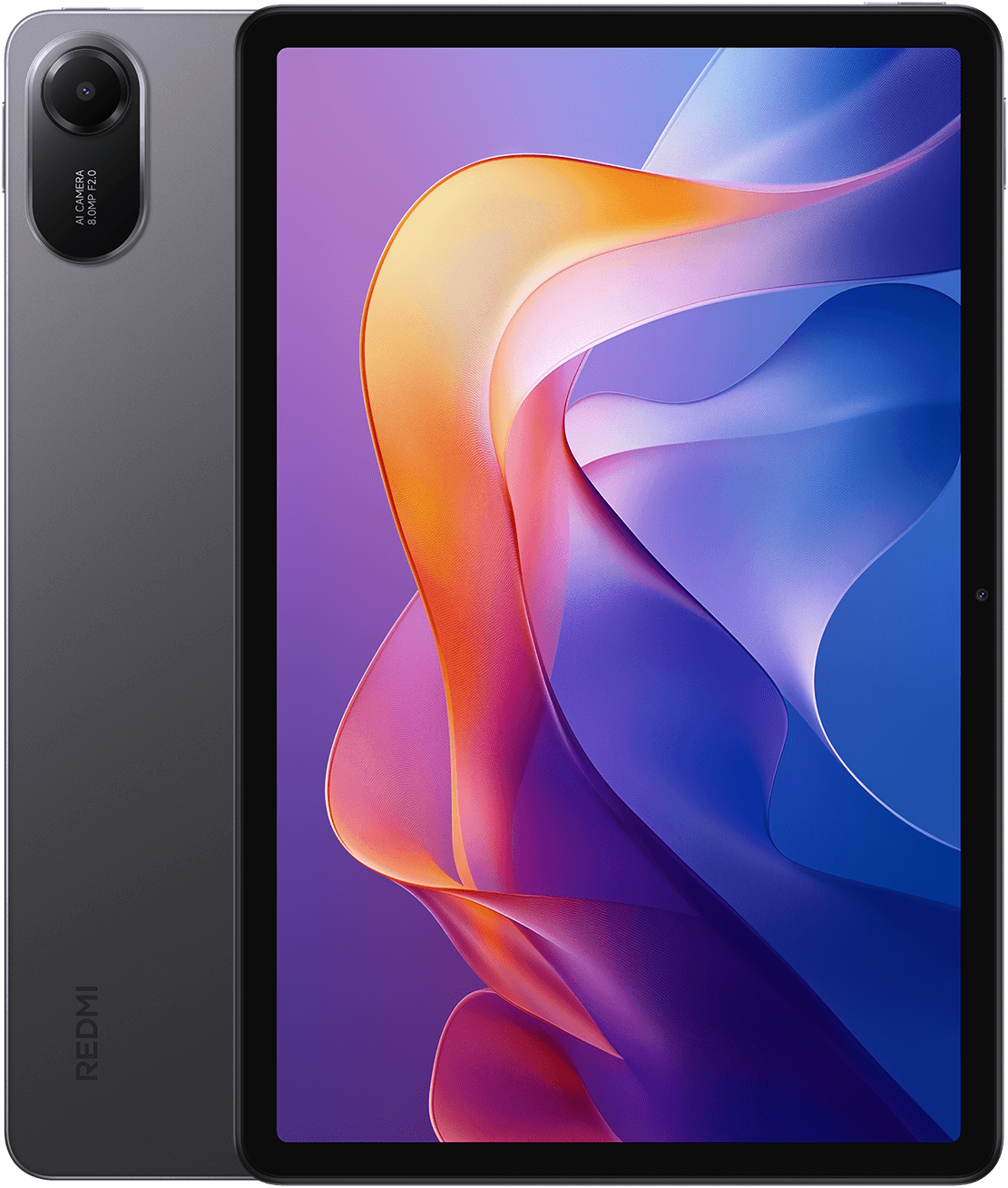
Since the May–June 2025 India and global rollout, the REDMI Pad 2 is widely regarded as Xiaomi's sensible refresh of the budget Redmi tablet lane — an 11-inch media-and-study slab that trades flagship silicon for a sharp 2.5K 90 Hz panel, a massive 9000 mAh cell, and HyperOS 2 polish at aggressive entry pricing.
The most repeated praise centers on display sharpness for the tier, quad-speaker Dolby Atmos output, and multi-day battery endurance on the Helio G100 Ultra platform.
Daily use
In daily use, the Pad 2 is consistently described as smooth for routine workloads on Helio G100 Ultra with HyperOS 2 over Android 15. App launches, messaging, navigation, and social feeds run without the compromise first-generation Redmi Pad owners notice during heavy camera or gaming loads.
The 11-inch 2.5K panel and quad Dolby Atmos speakers make the Pad 2 feel more premium than entry Galaxy Tab A lanes for daily streaming. Scrolling remains fluid at 90 Hz, outdoor legibility benefits from 600 nits outdoor mode on supported builds, and split-screen note-taking beside video works for student stacks when RAM allows.
Pad 2
View the full specifications, dimensions, pricing, and related models.
Camera
Camera feedback centers on utility rather than photographic ambition. The 8 MP rear and 5 MP front sensors handle document scanning, whiteboard capture, and desk-propped video calls — the workloads students and remote workers actually need from a budget tablet.
Buyers rarely choose the Pad 2 for imaging; low light trails modern phones. Classroom snapshots and recipe captures land as good enough; creative photography redirects to phones without surprise.
Battery and charging
Typical study and home days end with reserve for moderate use: lectures, notes, browsing, intermittent streaming, and split-screen research on the 9000 mAh cell. Heavy outdoor brightness, long video marathons, or gaming evenings push bedtime top-ups but rarely midday panic — the largest battery in the current Redmi Pad line.
Eighteen-watt charging is the most debated stamina companion — brief desk sessions add meaningful range but full recovery takes roughly two hours on the bundled 15 W brick. Owners adapt to overnight or between-class top-ups; upgraders from Pad SE with 33 W describe this as the clearest daily regression despite larger capacity.
Performance
App launches, HyperOS 2 animations, and split-screen browsing feel smooth for Pad 2 expectations on Helio G100 Ultra and the 90 Hz panel — a clear step up from entry Helio G88 Pad SE hardware without Pad Pro Snapdragon headroom.
Multitasking pairs — notes beside PDF, browser beside video — resume reliably for student workflows on 6 GB and 8 GB SKUs; 4 GB models reload apps more aggressively under memory pressure. Absence of fingerprint unlock pushes PIN or face security without broader lag complaints.
Handling and portability
At 166.04 mm wide, 254.58 mm tall, and 510 g in Wi-Fi trim, the REDMI Pad 2 sits in the conventional 11-inch tablet band for brief handheld sessions. Thumb reach across the lower display works for notification checks and thumb scrolling; top corners and far-edge targets require grip shifts on the tall 16:10 canvas.
The REDMI Pad 2 does not fit jacket or jeans pockets. Portability means daypacks, school bags, and messenger carriers where 254.58 mm height slides beside laptops and notebooks more easily than 12.4-inch Pad Pro setups.
For extended reading, note-taking, and streaming, the Pad 2 is comfortable for forty-five-to-ninety-minute sessions when propped on a lap, pillow, or stand. The half-kilogram weight reduces forearm fatigue compared with 571 g Pad Pro, though neck angle still benefits from a kickstand case during long desk marathons.
Build quality
At 510 g and 7.36 mm thin, the plastic-and-metal hybrid chassis feels acceptable for the tier — stiff enough for daily backpack carry, precise volume buttons, and a flat back that mates with generic Bluetooth keyboards. Normal flex rarely troubles student carriers.
Display durability follows familiar tablet patterns; film or cases remain common. Matte finishes hide fingerprints reasonably across Graphite Grey and Sky Blue options. There is no IP rating emphasis in ownership talk — buyers treat it as an indoor productivity and media device.
Similar size devices
This summary is based on recurring reports from public discussions.