Google Pixel 9 Pro Fold User Experience
Sizometry Verdict
Editorial scores based on recurring themes across professional reviews, hands-on testing, and expert analysis.
Overall user experience
8.0
out of 10
Google's most convincing foldable to date — a full 180-degree hinge, a slab-like 6.3-inch cover display, and cooler Tensor G4 thermals than the original Pixel Fold — held back by an IPX8 rating with no dust protection, 21W charging that trails Google's own Pro XL, and camera hardware a tier below the non-folding Pixel 9 Pro line at a $1,799 starting price.
Category scores
Camera
7.0
48MP main plus smaller 10.5MP ultrawide and 10.8MP 5x telephoto deliver dependable daylight results but trail the Pixel 9 Pro's larger secondary sensors in low light and zoom.
Battery and charging
6.5
4650mAh covers a comfortable day of cover-screen-dominant use, but 21W charging is a clear step behind the 37W Pixel 9 Pro XL and rival flagships.
Performance
7.5
Tensor G4 runs cooler and smoother than the original Pixel Fold's chip for daily multitasking, though it lacks Snapdragon 8 Gen 3-level sustained headroom.
Handling and portability
7.0
10.5mm folded thickness and a slab-like cover screen make one-handed cover use comfortable; 257g and a two-handed 150.2mm inner canvas still demand real foldable commitment.
Build quality
7.5
Redesigned hinge opens fully flat and runs cooler with a subtler crease, but IPX8 with no dust rating trails the Galaxy Z Fold 6's IP48.
Value
6.5
$1,799 is $100 less than the Z Fold 6 but still demands no-compromise expectations that the camera tier and charging speed don't fully satisfy.
Strengths
- Full 180-degree hinge with a subtler crease than the original Pixel Fold
- Slab-like 6.3-inch cover display that removes the cramped-outer-screen complaint of early foldables
- Tensor G4 runs cooler and more consistently than the first-generation Pixel Fold's chip
Weaknesses
- IPX8 rating provides no formal dust protection, unlike the Galaxy Z Fold 6's IP48
- 21W wired charging trails Google's own Pixel 9 Pro XL and most rival flagships
- Camera sensors sit a tier below the non-folding Pixel 9 Pro and Pro XL
Best for
- Buyers who want a foldable that feels like a normal phone closed and a small tablet open
- Original Pixel Fold owners seeking a thinner, cooler-running, more durable hinge
- Productivity users who value inner-screen multitasking over having the best possible Pixel camera
Less suitable for
- Photography-first buyers who want camera parity with the Pixel 9 Pro or Pro XL
- Owners who need fast charging or all-weather dust protection
- Budget-conscious foldable shoppers unwilling to pay $1,799 and up
Upgrade recommendation
Current device: Original Pixel Fold owners
Recommendation: Strongly recommendedNotes: Thinner 10.5mm folded profile, full 180-degree hinge, subtler crease, and cooler Tensor G4 directly fix the first generation's most common complaints.
Current device: Galaxy Z Fold 6 owners
Recommendation: Probably unnecessaryNotes: Comparable price and capability with Samsung's dust rating and more mature multi-window software make switching a lateral move at best.
Current device: Pixel 9 Pro or Pro XL owners
Recommendation: Depends on prioritiesNotes: The Fold trades camera and charging capability for inner-screen productivity — worthwhile only for buyers who will actually use the format.
Current device: Slab flagship owners (2-3 years old)
Recommendation: Worth consideringNotes: Inner-screen productivity can feel transformative for document and multitasking workflows, but requires genuine format commitment at a premium price.
Bottom line
The Pixel 9 Pro Fold earns respect as the generation where Google's foldable finally feels fully resolved rather than experimental — a hinge that opens completely flat, a cover screen indistinguishable from a normal phone, and Tensor G4 thermals that no longer throttle under routine use. Its clearest trade-offs are an IPX8 rating with no formal dust protection, 21W charging that trails Google's own Pixel 9 Pro XL, and camera hardware a tier below the non-folding Pro line, all at a $1,799 starting price that leaves little room for compromise. Buyers upgrading from the original Pixel Fold see the clearest gains; Galaxy Z Fold 6 owners have little reason to switch either direction.
See its real size next to another phone or tablet.
Open size comparisonOverview
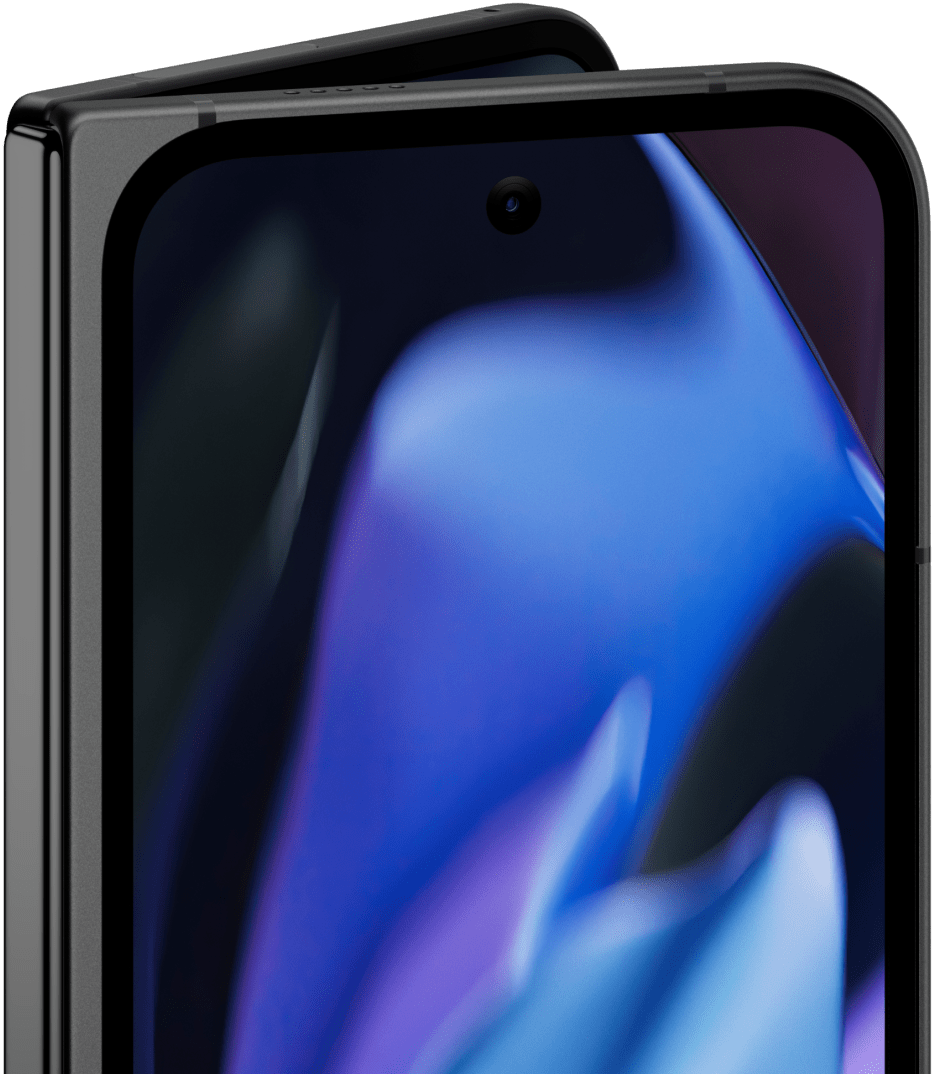
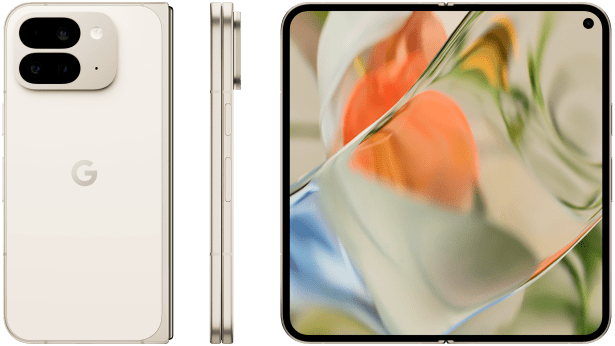
Across professional reviews and early owner discussions since the September 2024 launch, the Pixel 9 Pro Fold is widely treated as Google's most convincing foldable yet — a book-style device that closes much of the hardware gap with Samsung's Galaxy Z Fold 6 through a redesigned multi-alloy steel hinge, a cover display that reviewers describe as indistinguishable from a normal slab phone, and a folded body thin enough at 10.5mm to slide into pockets without obvious bulk. Recurring praise centers on the hinge finally opening to a full 180 degrees, a subtler crease than the original Pixel Fold, and Tensor G4 performance that runs cooler than the first-generation model's chip.
The most repeated criticism is not about the hinge or crease but about durability certification and camera positioning. Google rates the Fold IPX8 for water resistance only, with no formal dust rating — a step behind the Galaxy Z Fold 6's IP48, which adds dust protection. Reviewers also note the triple rear camera sits a tier below the Pixel 9 Pro and Pro XL in sensor size and telephoto reach, and the $1,799 starting price places the Fold in territory where buyers expect no compromises at all.
Daily use
In daily use, the cover display is the Fold's most-praised everyday feature: at 6.3 inches with the same panel as the standard Pixel 9, it behaves like a normal phone for messaging, quick camera launches, and browsing, removing the cramped-outer-screen complaint that dogged the original Pixel Fold.
Opening the phone for the 8-inch inner display shifts the experience toward tablet-style multitasking — email, documents, and split-screen apps draw consistent praise, though reviewers note Google has not pushed foldable software as far as Samsung's multi-window tools on the Z Fold 6.
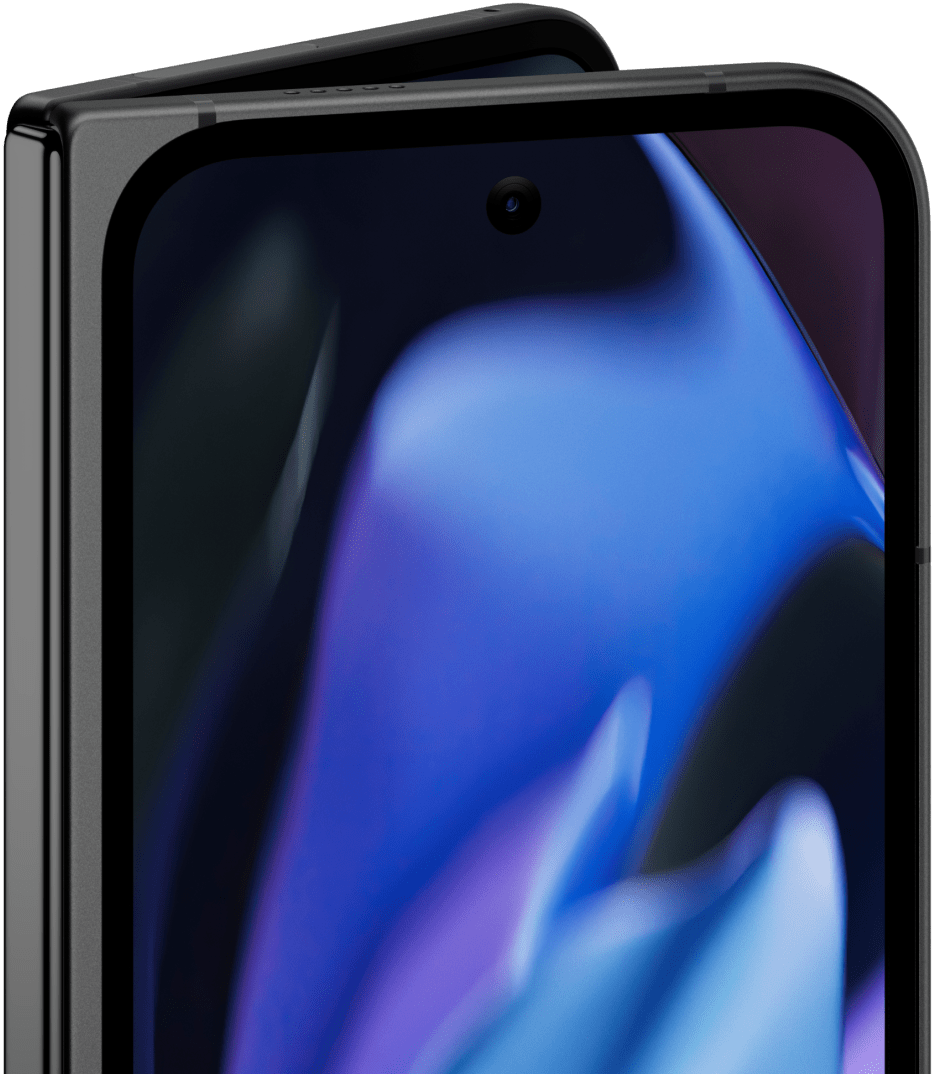
The redesigned hinge is a frequent highlight in daily handling: it opens fully flat to 180 degrees every time, a difference owners call night-and-day from the original Pixel Fold, and it can also hold a stable half-open angle for hands-free video.
Owners consistently mention the inner screen as a fingerprint magnet requiring frequent cleaning, and several long-term threads flag the fingerprint reader's placement as slightly too high on the frame for comfortable one-handed unlocking.
Pixel 9 Pro Fold
View the full specifications, dimensions, pricing, and related models.
Camera
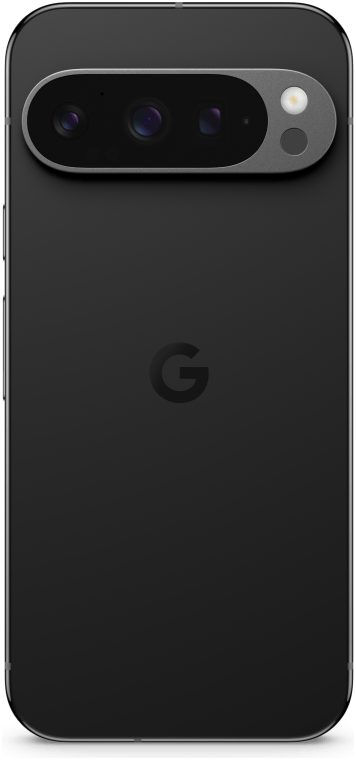
Camera feedback is positive but consistently framed as a step below the non-folding Pixel 9 Pro and Pro XL — the 48MP main, 10.5MP ultrawide, and 10.8MP 5x telephoto system produces reliable daylight and computational-photography results using the same Pixel camera software, Magic Editor, and Add Me tools, but the smaller secondary sensors trail the Pro line's 48MP lenses in low light and zoom detail.
Reviewers repeatedly note that using the cover display as a viewfinder for rear-camera selfies and group shots is a genuine foldable-specific advantage, letting the photographer see exactly what the higher-resolution rear sensors capture rather than relying on a lower-quality front camera.
Video capture is dependable for everyday clips, and propping the phone half-open for stable tripod-free shooting draws consistent praise; owners comparing directly with the Pixel 9 Pro describe the Fold's camera as good enough for daily use but a clear compromise for anyone who treats photography as the primary reason to buy a Pixel.
Battery and charging
The 4650mAh battery is broadly described as adequate rather than exceptional, with GSMArena's testing translating to roughly 12 hours of active screen time and owner reports clustering around comfortable full-day use for cover-screen-dominant routines, dropping into tighter margins on days with heavy inner-screen multitasking.
Charging is the most consistently criticized battery-related spec: Google lists roughly 21W wired charging with Qi wireless support, notably slower than the 37W the Pixel 9 Pro XL offers and far behind rival foldables alike, a gap reviewers call out directly given the Fold's premium price.
Thermal behavior draws relief rather than complaint — owners note the redesigned chassis avoids the constant throttling that plagued the original Pixel Fold, with Tensor G4 running noticeably cooler during streaming, browsing, and multitasking on the inner display.
Performance
App launching and routine multitasking across both displays feel smooth and consistent on Tensor G4 with 16GB of RAM, and reviewers who tested the original Pixel Fold describe the generational jump in efficiency and reduced heat as one of the most noticeable improvements in the redesign.
Heavier workloads, including extended video calls and long inner-screen productivity sessions, are handled competently but without the sustained headroom of a Snapdragon 8 Gen 3 flagship — owners treat the Fold as a productivity and media device first rather than a gaming purchase.
Software polish for foldable multitasking continues to draw mixed marks against Samsung's more mature Z Fold 6 multi-window implementation, even as Google's per-app continuity between screens earns steady praise.
Handling and portability
Folded at 77.1mm wide, 155.2mm tall, and 10.5mm thick, the Pixel 9 Pro Fold is described by reviewers as taking on a conventional 20:9 smartphone shape when closed, making cover-screen tasks like messaging, notifications, and quick photos feel like ordinary one-handed phone use rather than foldable compromise.
Unfolded to a 150.2mm wide, 5.1mm thick inner canvas, the Fold is explicitly a two-handed or table-supported device — reviewers describe holding the open panel like a small book, with typing and browsing on the inner screen requiring two-handed support or a flat surface for extended sessions.
At 257g folded, the Pixel 9 Pro Fold is consistently reported as heavier than both the Galaxy Z Fold 6 and the OnePlus Open; the weight is noticeable when held one-handed in cover-screen mode for longer stretches, though the slab-like folded shape distributes it more naturally than boxier early foldables.
The side-mounted fingerprint reader sits within reach for most grips but is placed slightly higher than ideal for one-handed unlocking, a small but repeated point of friction absent from the standard Pixel 9 Pro line.
Build quality
The rebuilt multi-alloy steel hinge with a high-strength aluminum cover is the most praised structural change in the redesign — reviewers report it opening fully flat to 180 degrees every time, and Google's own durability claims cite testing across roughly 100,000 to 200,000-plus fold cycles depending on the source.
Gorilla Glass Victus 2 covers the display and rear glass, and the matte finish draws praise for resisting fingerprints better than glossier foldable rivals; the inner display uses ultra-thin flexible glass that scratches more easily and benefits from the factory-applied protective film most owners keep in place.
IPX8 water resistance without a dust rating is the clearest weak point relative to the Galaxy Z Fold 6's IP48 — Google confirmed the Fold trades away formal dust protection versus the standard Pixel 9 Pro's IP68.
Considering another Pixel 9 model?
Similar size devices
This summary is based on recurring reports from public discussions.