Pixel 8a User Experience
Sizometry Verdict
Editorial scores based on recurring themes across professional reviews, hands-on testing, and expert analysis.
Overall user experience
7.5
out of 10
A budget-flagship Pixel that still holds up years after launch through a bright 120Hz Actua display, dependable 64MP computational cameras, IP67 sealing, and seven years of updates — held back by persistently slow 18W charging, Tensor G3 heat under load, and no telephoto lens.
Category scores
Camera
8.0
64MP main with OIS and Google's computational stack remain excellent for daylight and indoor stills; no telephoto and modest low-light video trail pricier rivals.
Battery and charging
6.5
4,492mAh comfortably covers a full day of moderate use, but 18W charging and heat-linked drain are the phone's most persistent weaknesses.
Performance
7.0
Tensor G3 with 8GB RAM feels smooth for everyday tasks years later, but thermal throttling under sustained load remains a well-documented limitation.
Handling and portability
8.0
72.7 mm width and 189 g keep this one of the more comfortable one-handed midrangers of its generation.
Build quality
7.5
Aluminum frame and matte back feel premium for the price; IP67 is solid though it trails flagship IP68 sealing.
Value
8.0
Camera quality, display, and seven-year update support remain a standout combination well below flagship pricing.
Strengths
- 64MP computational camera that punches above its price class
- Bright 120Hz Actua OLED display in a compact body
- IP67 sealing and seven years of OS and security updates
- 189 g, 72.7 mm width keeps one-handed use comfortable
Weaknesses
- 18W wired charging feels slow even at launch and more so years later
- Tensor G3 runs warm under sustained camera or gaming load
- No telephoto lens limits zoom versatility
- 7.5W wireless charging trails modern Qi2 rivals
Best for
- Budget buyers who want flagship-level Pixel camera processing
- Pixel 6a and earlier A-series owners seeking a display and chipset upgrade
- Light users who value update longevity over charging speed
- Shoppers who prefer a compact, one-handed-friendly midranger
Less suitable for
- Buyers who need fast wired or wireless charging for busy days
- Heavy gamers or extended-navigation users sensitive to heat
- Telephoto and zoom-focused photographers
- Pixel 7a owners without a specific pain point to address
Upgrade recommendation
Current device: Pixel 6a or older A-series owners
Recommendation: Strongly recommendedNotes: Brighter 120Hz display, steadier Tensor G3, and IP67 sealing address clear, multi-year pain points.
Current device: Pixel 7a owners
Recommendation: Probably unnecessaryNotes: Camera hardware is essentially unchanged; gains are limited to chipset efficiency and display brightness.
Current device: Shoppers comparing 8a to Pixel 9a or 10a
Recommendation: Depends on prioritiesNotes: Newer A-series phones fix the 8a's slow charging and smaller battery directly — worth the premium if those matter.
Current device: Current Pixel 8a owners in 2026
Recommendation: Depends on prioritiesNotes: Still fast enough for daily tasks for most owners; upgrade mainly if charging speed or heat has become a dealbreaker.
Bottom line
The Pixel 8a remains a well-regarded budget-flagship years after release thanks to a genuinely excellent camera for its class, a bright 120Hz display, IP67 durability, and industry-leading update support — trade-offs that matter most are its slow 18W charging and Tensor G3's tendency to run warm under sustained load.
See its real size next to another phone or tablet.
Open size comparisonOverview
Since its May 2024 launch, the Pixel 8a is consistently described in reviews and long-term owner accounts as one of the most complete sub-$500 phones available — a 189 g handset built around a 6.1-inch 120Hz Actua OLED, the Tensor G3 chip with 8GB RAM, a 64MP main camera with a 13MP ultrawide, a 4,492mAh battery, IP67 dust and water resistance, and Google's seven-year commitment to OS, security, and Pixel Drop updates.
The most repeated praise centers on camera consistency, display quality relative to price, and update longevity that rivals phones costing twice as much. The most repeated friction points are 18W wired charging that has aged poorly against faster midrange rivals, and Tensor G3 thermal behavior that shows up as noticeable warmth under sustained load even two years into ownership.
Daily use
Daily use on the Pixel 8a is widely described as smooth and dependable for messaging, social apps, email, and calls, with owners frequently noting they rarely encounter serious lag even well after launch. The Tensor G3 and 8GB of RAM feel adequate for single-app routines and typical multitasking.
The 6.1-inch 120Hz Actua OLED is a standout at this price — reviewers and owners alike describe it as noticeably smoother and brighter than fixed 60Hz rivals, with accurate colors that hold up in daylight.
The clearest recurring complaint is heat. Owners across forums and long-term reviews describe the phone becoming uncomfortably warm during camera-heavy sessions, Android Auto navigation, or extended outdoor use in hot weather, with performance dipping noticeably once the chassis warms up.
Google's clean Pixel UI, At a Glance widgets, and Call Screen integration draw consistent praise, while some owners note that heavier feature updates over the phone's long support window occasionally introduce new background processes that add to the thermal load.
Pixel 8a
View the full specifications, dimensions, pricing, and related models.
Camera
The 64MP main sensor with OIS is the Pixel 8a's most consistently praised feature — reviewers describe daylight and indoor shots as excellent for the price, frequently competitive with cameras on phones costing considerably more, thanks to Google's computational processing.
The 13MP ultrawide is regarded as a solid but unremarkable companion lens, and the lack of any telephoto camera is a known limitation carried over from the Pixel 7a rather than a new complaint.
Low-light stills hold up reasonably well through Night Sight, though video in dim conditions and selfie output in low light draw more criticism than daylight stills. 4K video capture at up to 60fps is regarded as reliable for casual clips without headline-grabbing specs.
Battery and charging
The 4,492mAh battery is broadly described as good for a full day of moderate use, including camera-heavy days with navigation and social media — a clear strength that owners and reviewers repeatedly credit alongside the Tensor G3's efficiency gains over the Tensor G2.
The most persistent and least-forgiven weakness is 18W wired charging, which reviewers flagged as slow at launch and owners in 2026 retrospectives still describe as painfully outdated, with a full charge typically taking 100 minutes or more and no charger included in the box. 7.5W wireless charging is present but similarly unhurried.
Heavy single-day use — extended navigation, hot weather, or resource-intensive apps — accelerates drain noticeably, and some owners connect this directly to the phone's tendency to run warm under load, since heat and battery efficiency are closely linked on this chipset.
Performance
The Tensor G3 with 8GB RAM is generally viewed as a meaningful step up from the Tensor G2 in the Pixel 7a, delivering smooth day-to-day performance for browsing, messaging, and casual gaming without frequent stutter.
The chip's biggest recurring criticism is thermal throttling: owners across forums describe the phone heating up during resource-heavy tasks like Android Auto, extended camera use, or gaming, with performance and battery efficiency both dipping once temperatures climb — a pattern that persists even years into ownership rather than easing with software updates.
For light-to-moderate everyday tasks, most owners report the phone still feels capable well past its first year, though it clearly trails the newer Tensor G4 in the Pixel 9 series for sustained or demanding workloads.
Handling and portability
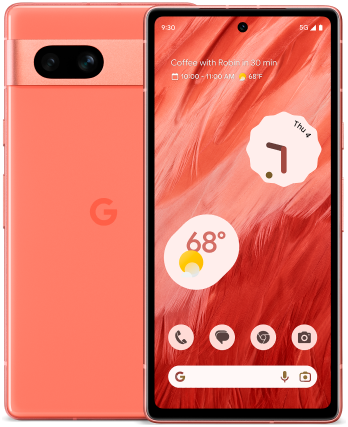
At 72.7 mm wide, 152.1 mm tall, and 189 g, the Pixel 8a sits in a genuinely compact midrange footprint — narrower and shorter than most 6.5-inch-plus Android rivals, which owners consistently cite as one of its most underrated qualities.
The aluminum frame paired with a matte plastic back gives a secure, non-slippery grip, and the rounded corners make one-handed transitions between apps comfortable for the vast majority of hand sizes.
Reaching the top corners of the 6.1-inch display for notification pulls or back gestures occasionally requires a grip shift, but the overall width keeps this phone firmly in one-handed-friendly territory compared with larger 2024-era midrangers.
Build quality
The aluminum frame, Gorilla Glass 3 front panel, and matte plastic back combine into a build that reviewers consistently describe as feeling far more premium than the price suggests, a step up from the Pixel 7a's glossy, fingerprint-prone back.
IP67 dust and water resistance is well regarded for the price tier, offering real protection against rain and brief submersion, even if it trails the IP68 rating on Google's pricier flagships.
Long-term owner reports through 2026 describe the hardware as aging well physically — buttons remain tactile and the frame does not creak — with the phone's biggest wear-related concerns tied to battery health and thermal behavior rather than the chassis itself.
Similar size devices
This summary is based on recurring reports from public discussions.