Motorola razr Fold (2026) User Experience
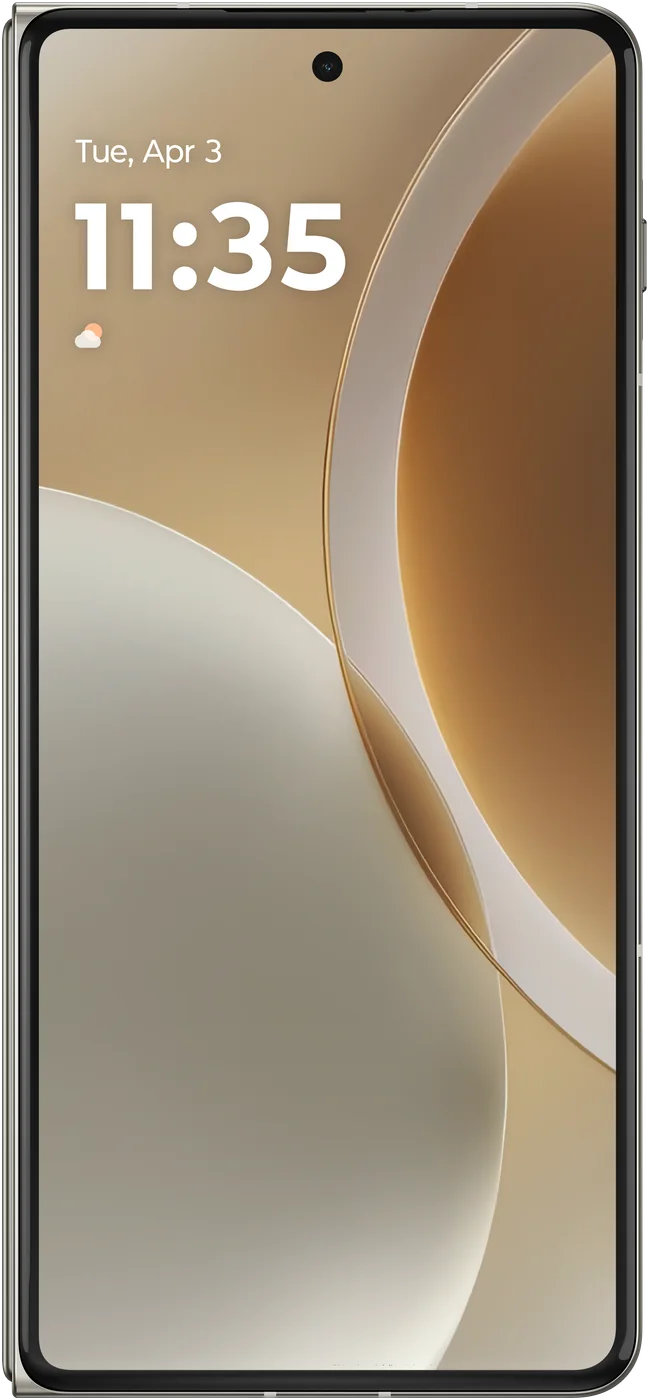
Sizometry Verdict
Editorial scores based on recurring themes across professional reviews, hands-on testing, and expert analysis.
Overall user experience
7.5
out of 10
Motorola's first book fold delivers a transformative 144.47 mm inner productivity canvas, Hello UI lightness, and 4.55 mm thin open profile — offset by heavy 243 g carry, slab-like pocketability, and first-gen durability uncertainty.
Category scores
Camera
7.0
Inner-preview and flex workflows shine; imaging trails Fold Ultra telephoto rivals.
Battery and charging
7.5
Full-day moderate productivity in early reports; heavy inner use may need evening top-ups.
Performance
7.5
Smooth split-screen productivity; moderate warmth under sustained inner load.
Handling and portability
5.5
144.47 mm open width impractical for one-handed inner use; folded cover OK for glances only.
Build quality
7.0
Premium first-gen fit; long-term book-hinge durability still unproven.
Value
7.5
Premium first-gen fit; long-term book-hinge durability still unproven.
Strengths
- Large inner display — true Motorola multitasking canvas
- Hello UI near-stock Android versus Samsung Fold heaviness
- 4.55 mm thin open profile for table productivity
- Competitive book-fold pricing in many markets
Weaknesses
- 243 g weight — pocket and wrist fatigue versus clamshell Razrs
- Slab-like 160.05 mm folded carry — not a pocket square
- First-gen hinge and inner-screen long-term data limited
- Software update tenure shorter than Samsung Fold lineage
Best for
- Productivity users wanting Motorola book-fold multitasking
- Razr clamshell graduates accepting pocket trade-offs
- Hello UI fans cross-shopping Galaxy Z Fold7
- Split-screen workers replacing tablet-plus-phone carry
Less suitable for
- Pocket-square clamshell loyalists
- One-handed inner-display power users
- Weight-sensitive commuters wanting sub-170 g carry
- Camera-chart shoppers comparing Fold Ultra imaging
Upgrade recommendation
Current device: Razr clamshell owners needing tablet canvas
Recommendation: Worth consideringNotes: Inner display transforms work — only if you accept 243 g and slab pocket math.
Current device: Galaxy Z Fold5 or Fold6 owners
Recommendation: Depends on prioritiesNotes: Hello UI and pricing may appeal; Samsung wins maturity and updates.
Current device: Slab plus tablet carry owners
Recommendation: Strongly recommendedNotes: Consolidation into one book fold simplifies daily load.
Current device: Pocketability-first Razr owners
Recommendation: Probably unnecessaryNotes: Book fold sacrifices clamshell pocket magic — stay on flip line.
Current device: First-gen foldable cautious buyers
Recommendation: Depends on prioritiesNotes: Early adopter rewards versus waiting for gen-two refinement.
Bottom line
The Motorola razr Fold (2026) earns attention as Motorola's first book-style foldable through its 144.47 mm inner productivity canvas, 4.55 mm thin open profile, Hello UI's comparatively light software, and multitasking workflows clamshell Razrs cannot replicate.
See its real size next to another phone or tablet.
Open size comparisonOverview
Across professional reviews and early owner discussions since the May 2026 launch, the Motorola razr Fold (2026) represents a category-defining pivot for Motorola — the company's first book-style inward-folding smartphone rather than a clamshell flip.
Common praise centers on inner-display productivity: dual-app layouts, email plus chat side by side, and video calls that feel less cramped than clamshell inner panels.
Daily use
In daily use, the razr Fold (2026) is usually described as transformative for multitasking — email, Slack, and browser side by side on the inner panel replace tablet-plus-phone combos for some road-warrior owners.
Folded daily carry feels like a premium thick phone rather than a clamshell charm. Owners report one-handed cover-screen messaging works for short bursts; anything beyond quick glances opens the book. Transit commuters more commonly unfold for maps and media given the inner canvas advantage over clamshell tall panels.
Flex modes and partial folds support desk-propped video calls and hands-free recipes. The hinge holds intermediate angles in early accounts, though the 243 g weight makes prolonged half-fold wrist holds less comfortable than lighter clamshells. Table-flat fully open use suits document editing and spreadsheet review — workflows clamshell Razrs cannot match.
Outer display visibility receives adequate marks for notification triage; extended outer-panel use feels cramped compared with inner workflows. Stereo speakers and inner-display HDR support make unfolded media feel like the primary entertainment mode rather than cover-screen shortcuts.
razr fold
View the full specifications, dimensions, pricing, and related models.
Camera
Camera feedback emphasizes inner-display preview and flex-mode versatility on Motorola's first book fold rather than absolute image-quality leadership. Rear shooting with unfolded inner panel as viewfinder earns praise for composition; cover-screen selfie framing works folded for quick social shots.
Low-light and zoom performance receive polite rather than ecstatic mentions versus Galaxy Z Fold7 Ultra tiers. Buyers who chose the razr Fold for productivity more commonly report camera satisfaction than spec hunters comparing telephoto charts.
Video capture suits everyday 4K with electronic stabilization. Creators wanting cinematic telephoto or extended pro video modes must look elsewhere, though inner-screen vlogging previews without external monitors earn enthusiasm in early threads.
Battery and charging
Typical daily reports from early owners align around full-day endurance for moderate inner-display productivity with evening top-ups for heavy multitasking or navigation days.
Wired charging speed is described as competitive for the book-fold class — sufficient for overnight-optional habits. Wireless charging depends on SKU; verify regional specs before assuming desk-stand workflows.
Hello UI's straightforward camera app contrasts with Samsung's busier foldable interface. Occasional lag switching camera orientation across fold states appears in early bug reports.
Performance
App launching and split-screen multitasking are usually described as smooth for book-fold flagship expectations. Owners rarely report lag under normal productivity workloads, though sustained gaming produces more warmth than on lighter clamshell Razrs.
Thermal behavior under sustained inner-display load — navigation plus gaming, extended video calls — produces moderate warmth in some accounts.
Handling and portability
Folded at 73.6 mm wide, 160.05 mm tall, and 9.89 mm thick, the razr Fold (2026) permits limited one-handed cover-screen use — narrow 73.6 mm width helps thumb reach on the outer panel, but 160.05 mm height and 243 g weight push most interactions toward a supporting second hand or unfolding.
Opened at 144.47 mm wide, 160.05 mm tall, and 4.55 mm thin, one-handed use is largely impractical for typing and browsing.
Right-handed users report folded cover-screen quick replies as workable while walking, but opening the book for anything beyond notifications becomes the default within days.
Build quality
Hinge feel on Motorola's first book fold receives cautiously positive early mentions — smooth opening resistance without clamshell snap, though long-term dust and particle ingress data are absent.
IP rating varies by market; confirm regional sealing before assuming outdoor confidence. At 243 g, the chassis feels dense and substantial — reassuring for premium build yet heavy for pocket loyalists.
Similar size devices
This summary is based on recurring reports from public discussions.