Huawei nova 13 User Experience
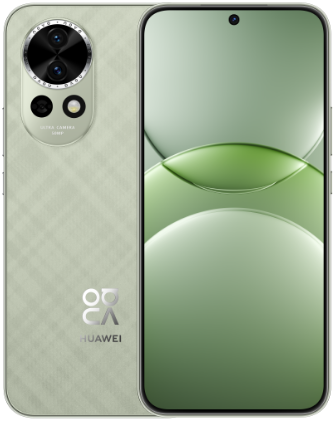
Sizometry Verdict
Editorial scores based on recurring themes across professional reviews, hands-on testing, and expert analysis.
Overall user experience
6.5
out of 10
A slim, selfie-focused mid-ranger with genuinely fast 100W charging, evaluated here from limited available specifications and scattered owner opinions rather than an established long-term ownership pattern — the missing Google Mobile Services and mid-range chipset are the clearest trade-offs.
Category scores
Camera
7.0
A standout 60MP selfie camera and competent, if unremarkable, rear setup based on available sources.
Battery and charging
7.5
5000mAh with 100W SuperCharge Turbo delivers genuinely fast charging with no significant battery-life complaints found.
Performance
6.0
Kirin 8000 is an adequate mid-range performer, not a benchmark leader.
Handling and portability
8.0
195g and a 6.98mm profile make this one of the slimmer, lighter phones in its class.
Build quality
6.5
Aluminosilicate glass and splash resistance are solid for the price tier based on available specifications.
Value
6.0
Strong charging and selfie camera offset by the missing Google Mobile Services and thin available ownership data.
Strengths
- Fast 100W SuperCharge Turbo wired charging
- Standout 60MP selfie camera with sharp pixel-binned output
- Slim, lightweight 195g design
- Splash and dust resistance at a mid-range price
Weaknesses
- No Google Mobile Services — a genuine limitation outside core markets
- Kirin 8000 trails performance-focused mid-range rivals
- Rear camera setup is unremarkable next to the selfie camera
- Limited Western availability and thin long-term ownership evidence
Best for
- Buyers prioritizing selfie and video-call camera quality
- Shoppers wanting fast charging without flagship pricing
- Buyers in Huawei's core AppGallery-comfortable markets
- Anyone valuing a slim, lightweight design
Less suitable for
- Buyers who depend on Google Play or Gmail daily
- Performance-focused mobile gamers
- Buyers outside Huawei's core retail markets
- Shoppers wanting extensive long-term ownership data before purchase
Upgrade recommendation
Current device: Selfie- and charging-focused mid-range shoppers
Recommendation: Worth consideringNotes: Strong charging speed and selfie camera quality for the price, based on available specifications.
Current device: Google-service-dependent Android shoppers
Recommendation: Probably unnecessaryNotes: Missing GMS remains a hard blocker regardless of camera or charging appeal.
Current device: Performance-focused gamers
Recommendation: Probably unnecessaryNotes: The Kirin 8000 is a mid-range chipset better suited to everyday tasks than demanding games.
Bottom line
Based on available specifications and limited owner opinions, the Huawei nova 13 appears to be a slim, selfie-focused mid-ranger with genuinely fast charging — but the evidence base is thinner than for Huawei's flagship lines, and the missing Google Mobile Services and mid-range chipset remain clear trade-offs for buyers outside Huawei's core non-Google markets.
See its real size next to another phone or tablet.
Open size comparisonOverview
Western coverage of the Huawei nova 13 is noticeably thinner than for Huawei's Mate and Pura flagships, since the nova series targets markets — the Middle East, Southeast Asia, and Latin America — where English-language long-term ownership discussion is limited. Available specifications, buying guides, and scattered owner opinions point to a slim, selfie-focused mid-ranger built around fast charging and a 60MP front camera.
The available evidence should be read as a mixed, specification-driven picture rather than an established community consensus. What is consistent across sources is praise for the 100W charging speed and selfie camera quality, alongside repeated notes that the Kirin 8000 chipset is a mid-range performer and that the missing Google Mobile Services is a genuine consideration for buyers outside Huawei's core non-Google markets.
Positioning within Huawei's broader lineup places the nova 13 below the Mate and Pura flagships, aimed squarely at buyers in the Middle East, Southeast Asia, and Latin America who prioritize charging speed and selfie quality over flagship-tier chipset performance or Mate-line durability features.
Daily use
At just 6.98mm thick and 195g, owner and reviewer impressions consistently describe the nova 13 as feeling notably slim and light in daily handling, a signature trait of the nova line's design focus.
The 6.7-inch OLED display at 120Hz draws positive mentions for brightness and smoothness, and available user opinions mention the camera performance favorably, with at least one reviewer noting Microg/Aurora Store workarounds for accessing Google apps without full GMS.
As with all current Huawei phones, the AppGallery ecosystem gap is the most consistently flagged limitation, though available discussion suggests workarounds are common practice among nova 13 buyers in its core markets.
NFC and dual-SIM support round out the connectivity feature set according to available specifications, and buying guides note the phone receives regular security updates despite its distance from Huawei's flagship attention.
nova 13
View the full specifications, dimensions, pricing, and related models.
Camera
The 60MP front-facing ultrawide portrait camera is the nova 13's most consistently praised feature across available sources, with pixel-binning producing sharp 15MP final images that one buying guide describes as sharper than many higher-megapixel competitors.
The 50MP main rear camera with an 8MP ultrawide macro lens rounds out a competent but unremarkable rear setup, with available opinions describing rear photo quality as solid for the price tier rather than class-leading.
The wide 100-degree field of view on the selfie camera is specifically called out in available sources as useful for group shots and video calls, a practical advantage over narrower rival front cameras.
Battery and charging
The 5000mAh battery paired with 100W SuperCharge Turbo wired charging is the device's other headline strength, with sources citing roughly 50% charge in 10 minutes and a full charge in under 30 minutes under typical conditions.
Available discussion does not raise significant battery-life complaints, suggesting the 5000mAh capacity comfortably covers a full day of typical use.
Buying guides note the included 100W charger as a genuine value-add that eliminates the need to purchase a separate fast charger, a detail specifically praised at this price tier.
Performance
The Kirin 8000 chipset is positioned as a mid-range performer, and available benchmarks and buying guides describe it as adequate for everyday tasks, messaging, and social media rather than a gaming-focused choice.
Given the limited volume of long-term performance discussion available, buyers should treat day-to-day performance impressions as reasonably confident for routine use but less certain for sustained heavy workloads.
HarmonyOS on the nova 13 is described in available sources as smooth for the device's typical tasks, without significant software performance complaints reported.
Handling and portability
At 75.3mm wide, 161.4mm tall, and 195g, the nova 13's slim profile is repeatedly cited as its standout ergonomic trait, with the thin 6.98mm body making it feel lighter in hand than its dimensions alone would suggest.
Available impressions describe comfortable one-handed reach for most everyday tasks, consistent with the phone's mid-range flagship-slim positioning.
Buying guides comparing the nova 13 against thicker mid-range rivals consistently flag the slim profile as the phone's most immediately noticeable trait when picked up for the first time.
Build quality
The aluminosilicate glass front and slim aluminum-feeling frame are described favorably in available specifications and buying guides, with splash and dust resistance noted as a welcome inclusion at this price tier.
Given thinner available coverage, long-term durability impressions should be treated as provisional rather than an established pattern.
The symmetrical bezel design and centered display camera are mentioned in manufacturer specifications as optimized for video calling and immersive viewing.
Similar size devices
This summary is based on recurring reports from public discussions.