Huawei Mate 70 User Experience
Sizometry Verdict
Editorial scores based on recurring themes across professional reviews, hands-on testing, and expert analysis.
Overall user experience
7.5
out of 10
A titanium-backed entry Mate flagship with a genuinely useful periscope telephoto, satellite messaging, and solid IP68 durability — limited by charging speed a step below the Pro and the same missing Google Mobile Services as every current Huawei phone.
Category scores
Camera
7.5
A capable main sensor and 5.5x periscope telephoto deliver strong results for the price tier.
Battery and charging
7.5
5300mAh with 66W/50W charging covers a full day comfortably, if slower than the Pro.
Performance
6.5
Kirin 9010 handles daily tasks smoothly but trails class-leading benchmarks.
Handling and portability
7.5
203 g and a titanium frame make this the more manageable Mate 70 sibling for one-handed use.
Build quality
8.5
Titanium casing and IP68 sealing give a genuinely premium, durable feel.
Value
7.0
Strong build and camera offset by the ongoing cost of missing Google Mobile Services.
Strengths
- Premium titanium build with IP68 durability
- Genuinely useful 5.5x periscope telephoto
- Beidou satellite messaging for remote-area communication
- More manageable ergonomics than the Mate 70 Pro
Weaknesses
- No Google Mobile Services — ongoing workaround maintenance
- 66W/50W charging trails the Pro's faster combination
- Kirin 9010 trails class-leading Android benchmarks
- Limited retail and carrier support outside core markets
Best for
- Buyers wanting Mate-line durability in an accessible package
- Owners who value titanium build quality
- Existing Huawei ecosystem users
- Shoppers wanting periscope zoom without Pro pricing
Less suitable for
- Buyers who depend on Google Play or Gmail daily
- Fastest-charging seekers who want the Pro's 100W/80W
- Benchmark-focused performance shoppers
- Markets without reliable Huawei retail support
Upgrade recommendation
Current device: Older Huawei Mate or P-series phones
Recommendation: Strongly recommendedNotes: A titanium build and periscope telephoto without Pro-tier pricing.
Current device: Buyers deciding between Mate 70 and Mate 70 Pro
Recommendation: Depends on prioritiesNotes: Pro wins charging speed and telephoto resolution; base Mate 70 wins weight and titanium finish.
Current device: Google-service-dependent Android shoppers
Recommendation: Probably unnecessaryNotes: Missing GMS remains a hard blocker regardless of build quality.
Bottom line
The Huawei Mate 70 delivers a genuinely premium titanium-backed flagship experience with satellite messaging and a useful periscope telephoto, at the cost of charging speed a step below the Pro and the same missing Google Mobile Services that defines every current Huawei phone. It suits buyers who want Mate-line durability and design in the most accessible package available.
See its real size next to another phone or tablet.
Open size comparisonOverview
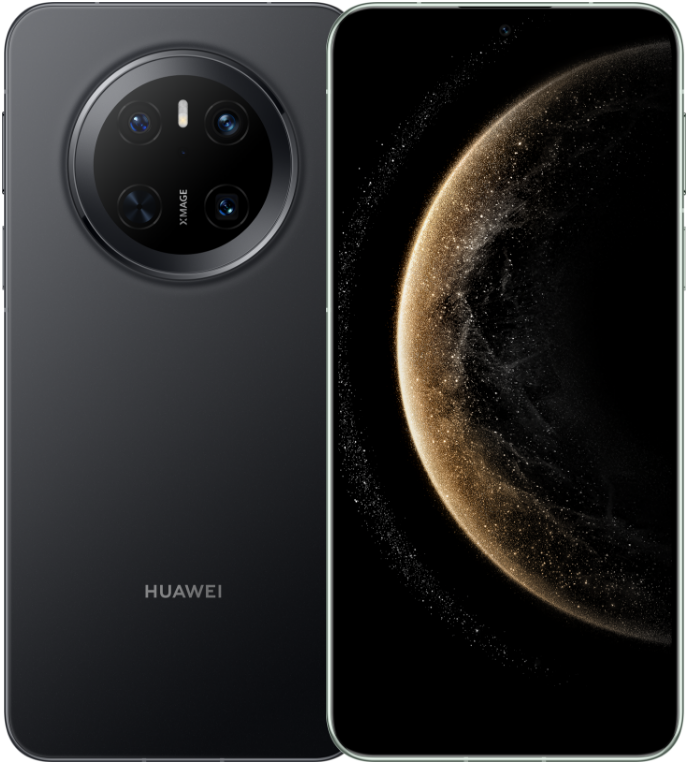
Since its November 2024 launch, the Huawei Mate 70 is consistently discussed as the accessible entry point into the Mate line — a titanium-backed flagship that trims the Pro's periscope resolution and charging speed while keeping a genuinely premium build and a Beidou satellite messaging feature that rivals rarely match.
Reviewers frequently frame the Mate 70 as proof that Huawei's Mate-line durability and camera philosophy scale down gracefully, since none of the Pro's headline hardware — titanium, satellite messaging, periscope zoom — feels stripped out entirely, only dialed back a notch.
The most repeated praise centers on the titanium build, satellite connectivity, and a still-capable 5.5x periscope telephoto. As with every current Huawei flagship, the recurring caveat is life without Google Mobile Services, which owners describe as manageable but an unavoidable adjustment.
Positioning within Huawei's own lineup is a recurring theme in owner discussion: the Mate 70 sits between the photography-focused Pura and nova models and the flagship Mate 70 Pro, aiming to deliver the Mate line's signature durability and satellite messaging without the Pro's premium price or bulk. Reviewers and owners alike frame it as the phone most budget-conscious Mate shoppers actually end up choosing.
Daily use
Daily use on the Kirin 9010 chipset with HarmonyOS feels smooth for messaging, browsing, and camera-first workflows, and owners note the titanium casing gives the Mate 70 a distinctly premium hand feel compared with typical glass-and-aluminum flagships.
The 6.7-inch LTPO OLED display draws consistent praise for brightness and color, and the side-mounted fingerprint reader integrated into the power button earns steady approval for natural thumb placement.
AppGallery gaps for Western banking, streaming, and productivity apps remain the most consistent friction point, with owners describing sideloaded workarounds as functional but requiring occasional maintenance.
NFC, an infrared blaster, and dual-SIM support round out a well-equipped everyday feature set, and owners note that Huawei continues to ship steady security updates despite the platform's break from Google services.
Mate 70
View the full specifications, dimensions, pricing, and related models.
Camera
The 50MP main camera with variable aperture and OIS delivers strong daylight and low-light results, while the 12MP 5.5x periscope telephoto offers genuinely useful reach that most rivals at this price skip entirely.
The 40MP ultrawide rounds out a capable triple system, and the single 13MP ultrawide selfie camera handles video calls and casual selfies competently.
Portrait mode benefits from the periscope lens's natural compression, and owners note that Huawei's XMAGE color science continues to deliver punchy, pleasing results straight out of the camera app without heavy editing.
Battery and charging
The 5300mAh battery delivers solid full-day endurance for moderate use, and 66W wired plus 50W wireless charging keep top-ups reasonably fast, if a step behind the Pro's 100W/80W combination.
Heavy camera use with the telephoto lens draws down the battery faster, a pattern owners describe as typical rather than surprising.
Standby drain is described as minimal, and owners who primarily use messaging and browsing report the phone comfortably stretching toward a second day on a single charge.
Performance
The Kirin 9010 handles daily tasks and casual gaming smoothly, and owners describe the day-to-day experience as dependable even though synthetic benchmarks trail Snapdragon and Dimensity flagships.
HarmonyOS multitasking tools remain a highlight for productivity-minded owners, particularly those already using other Huawei devices.
Switching between messaging, browsing, and camera apps feels snappy in owner reports, and the Kirin 9010's NPU handles on-device photo processing without noticeable lag.
Handling and portability
At 75.9 mm wide, 160.9 mm tall, and 203 g, the Mate 70 is noticeably more manageable than the Pro, and owners consistently cite this as a meaningful ergonomic advantage for daily one-handed tasks.
The titanium frame keeps the phone feeling substantial without excess bulk, and the flat sides provide a secure grip during extended browsing sessions.
Owners switching from the Mate 70 Pro or other oversized flagships describe the adjustment period as short, with most reporting comfortable one-handed operation within the first few days of ownership.
Build quality
The titanium casing is the Mate 70's signature build feature, and owners repeatedly describe it as feeling more premium and drop-resistant than typical aluminum-and-glass flagship frames.
IP68 sealing gives owners real confidence for rain and splash exposure, matching the durability expectations set by the Pro model.
The matte glass and vegan-leather back options, depending on color variant, resist fingerprints noticeably better than glossy flagship rivals, a small but frequently mentioned detail in owner impressions.
Considering another Mate 70 model?
Similar size devices
This summary is based on recurring reports from public discussions.