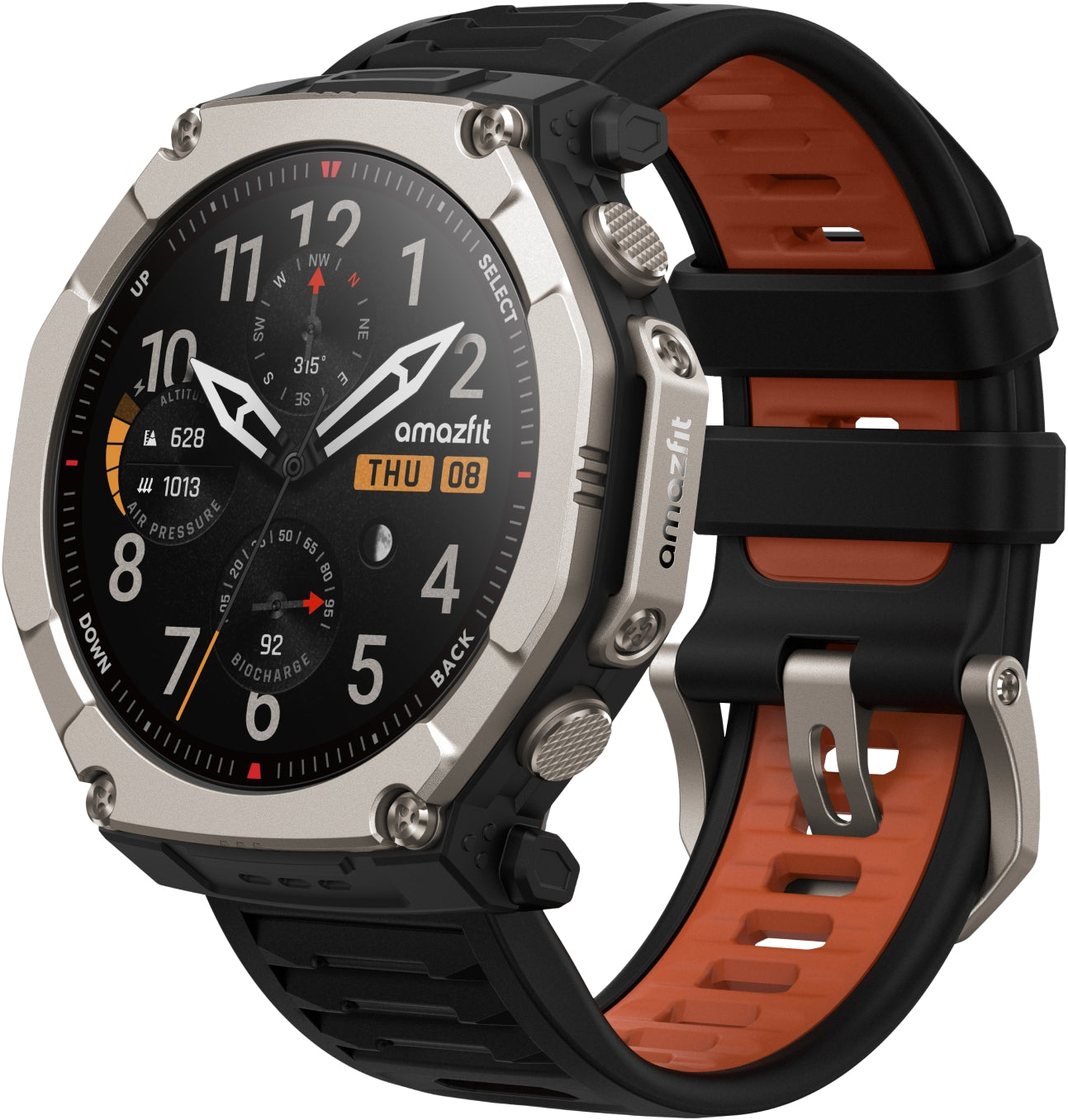
Official manufacturer render.
Amazfit
Amazfit T-Rex Ultra 2
- 1.5-inch AMOLED
- 89 g
- 870 mAh
Physical specifications
1.5"
Display size
89 g
Weight
51.0 mm
Height
51.0 mm
Width
14.3 mm
Thickness
—
Aspect ratio
Everyday usability
Estimated from the watch’s size, weight, battery, display, and intended wearing conditions.
Wrist comfort
Substantial on the wristIts large footprint and mass make it a substantial presence on the wrist.
Sleep comfort
BulkyThe large, heavier case is more likely to feel bulky overnight.
Battery usability
Data unavailableAvailable battery information is insufficient for a reliable daily-use assessment.
Screen and controls
Easy to useDetailed brightness information is unavailable, so outdoor visibility cannot be fully assessed.
Workout usability
BulkyThe larger case provides good glanceability but may feel bulky during high-movement workouts.
See its real size next to another watch.
Compare watchesDisplay
- Display size
- 1.5"
- Display technology
- AMOLED
- Resolution
- 480 × 480
- Protection
- Sapphire
Performance
- Expandable storage
- No
Battery & charging
- Rated capacity
- 870 mAh
- Charging standard
- Magnetic charging
- Battery type
- Lithium-ion
Build & durability
- Frame
- Fiber-reinforced polymer / metal bezel
- Ingress protection
- 10 ATM
Connectivity
- Cellular
- GPS / multi-GNSS
- Wi‑Fi
- Wi-Fi
- Bluetooth
- Bluetooth
Release and pricing
- Announced
- February 19, 2026
- Released
- February 19, 2026
Buying guide FAQ
Practical upgrade and buying answers based on published specifications and previous-generation comparisons when available.
Who should buy Amazfit T-Rex Ultra 2 (2026)?
Amazfit T-Rex Ultra 2 (2026) fits buyers who prefer a compact phone footprint. This is an editorial reading of size and published differences, not a personalized recommendation.
Similar size devices
Models and configurations
- Connectivity
- GPS / multi-GNSS
Official sources
Dimensions and specifications are based on manufacturer-published data. Learn more in our Methodology