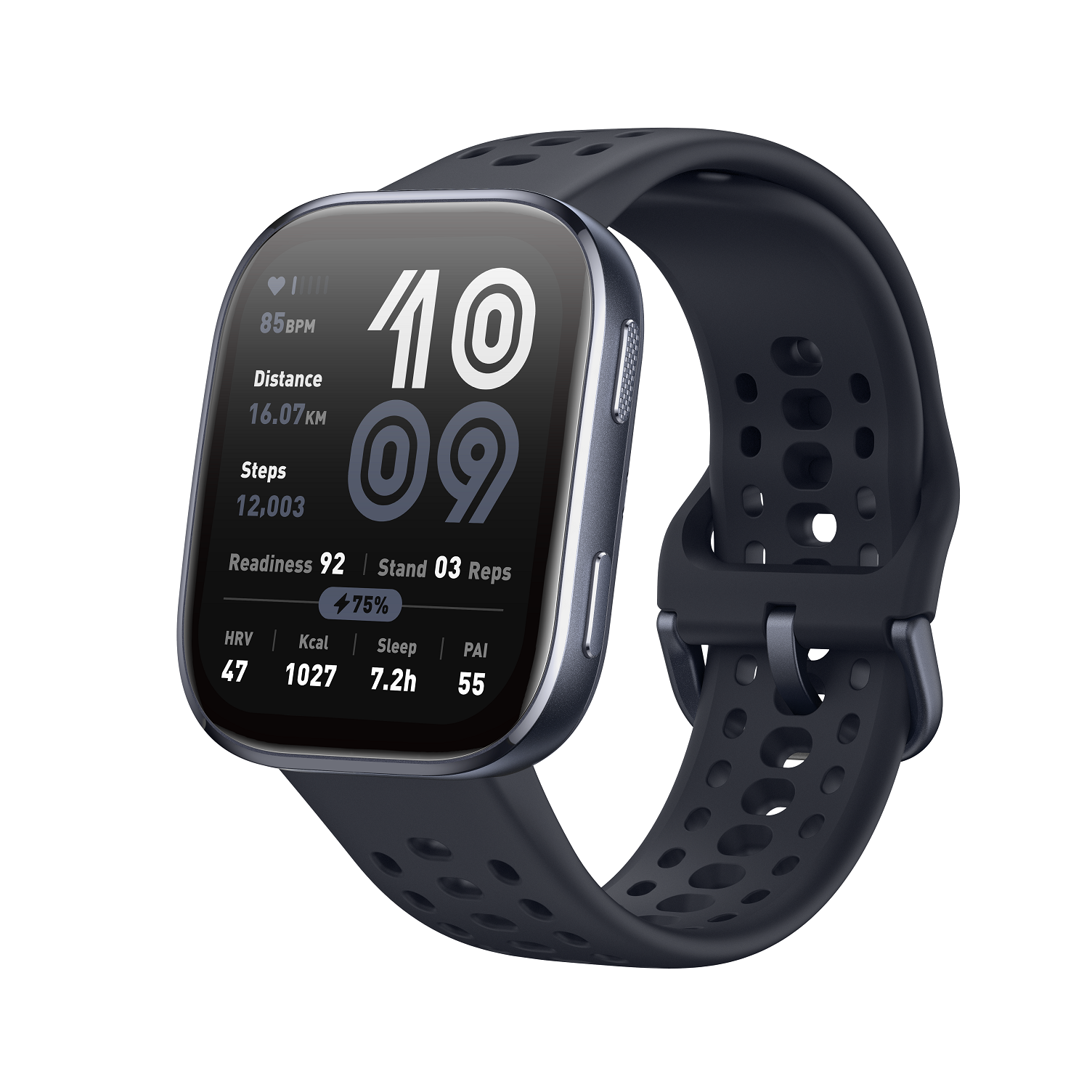
Official manufacturer render.
Amazfit
Amazfit Bip 6
- 2-inch AMOLED
- 28 g
Physical specifications
2"
Display size
28 g
Weight
46.3 mm
Height
40.2 mm
Width
10.4 mm
Thickness
—
Aspect ratio
Everyday usability
Estimated from the watch’s size, weight, battery, display, and intended wearing conditions.
Wrist comfort
ComfortableThe case size and body-only weight should feel comfortable for everyday wrist wear.
Sleep comfort
NoticeableIts thickness and larger footprint may remain noticeable when sleeping.
Battery usability
Data unavailableAvailable battery information is insufficient for a reliable daily-use assessment.
Screen and controls
Easy to useDetailed brightness information is unavailable, so outdoor visibility cannot be fully assessed.
Workout usability
ExcellentIts low weight, water resistance, and GPS support make it well suited to running and gym sessions.
See its real size next to another watch.
Compare watchesDisplay
- Display size
- 2"
- Display technology
- AMOLED
- Resolution
- 390 × 450
Performance
- Expandable storage
- No
Battery & charging
- Charging standard
- Magnetic charging
- Battery type
- Lithium-ion
Build & durability
- Frame
- Aluminum alloy / fiber-reinforced polymer
- Ingress protection
- 5 ATM
Connectivity
- Cellular
- GPS / multi-GNSS
- Bluetooth
- Bluetooth
Release and pricing
- Announced
- April 2, 2025
- Released
- April 2, 2025
Buying guide FAQ
Practical upgrade and buying answers based on published specifications and previous-generation comparisons when available.
What’s new in Amazfit Bip 6 (2025) compared with Amazfit Bip 5 (2023)?
Published changes versus Amazfit Bip 5 (2023) include a frame material change from Plastic to Aluminum alloy / fiber-reinforced polymer and a body size change of +0.4 mm height and +2.1 mm width. These are specification differences, not measured real-world scores.
Is it worth upgrading from Amazfit Bip 5 (2023) to Amazfit Bip 6 (2025)?
An upgrade is easiest to justify if you care about a frame material change from Plastic to Aluminum alloy / fiber-reinforced polymer and a body size change of +0.4 mm height and +2.1 mm width. If those areas already meet your needs on Amazfit Bip 5 (2023), the move is optional rather than urgent.
Is the display improved on Amazfit Bip 6 (2025)?
Published display specifications remain closely aligned with Amazfit Bip 5 (2023). Buyers should not expect a clearly different screen experience from the listed panel data alone.
Has durability improved on Amazfit Bip 6 (2025)?
Published durability-related changes versus Amazfit Bip 5 (2023) include a frame material change from Plastic to Aluminum alloy / fiber-reinforced polymer. Ratings describe lab protection claims, not drop-test results.
Who should buy Amazfit Bip 6 (2025)?
Amazfit Bip 6 (2025) fits buyers who prefer a compact phone footprint and people moving up from Amazfit Bip 5 (2023). This is an editorial reading of size and published differences, not a personalized recommendation.
Who should keep Amazfit Bip 5 (2023)?
Keep Amazfit Bip 5 (2023) if you do not need the listed generation changes. Moving to Amazfit Bip 6 (2025) makes more sense when the listed upgrades match what you actually use.
What are the biggest improvements on Amazfit Bip 6 (2025)?
The clearest published improvements are a frame material change from Plastic to Aluminum alloy / fiber-reinforced polymer and a body size change of +0.4 mm height and +2.1 mm width. Treat these as catalog differences rather than ranked review scores.
What are the biggest drawbacks of Amazfit Bip 6 (2025)?
Against Amazfit Bip 5 (2023), the catalog does not show obvious trade-offs such as a higher launch price or a clearly heavier body. That does not mean the device is flawless—only that those drawbacks are not evident in the compared specs.
Similar size devices
Models and configurations
- Connectivity
- GPS / multi-GNSS
Official sources
Dimensions and specifications are based on manufacturer-published data. Learn more in our Methodology