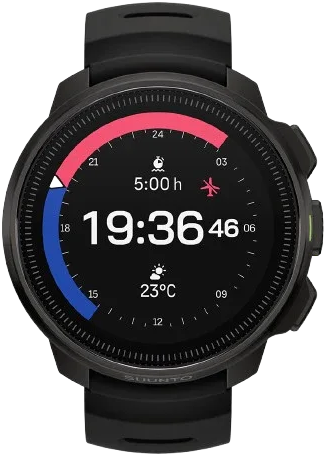
Suunto
Ocean vs Vertical
Device summary
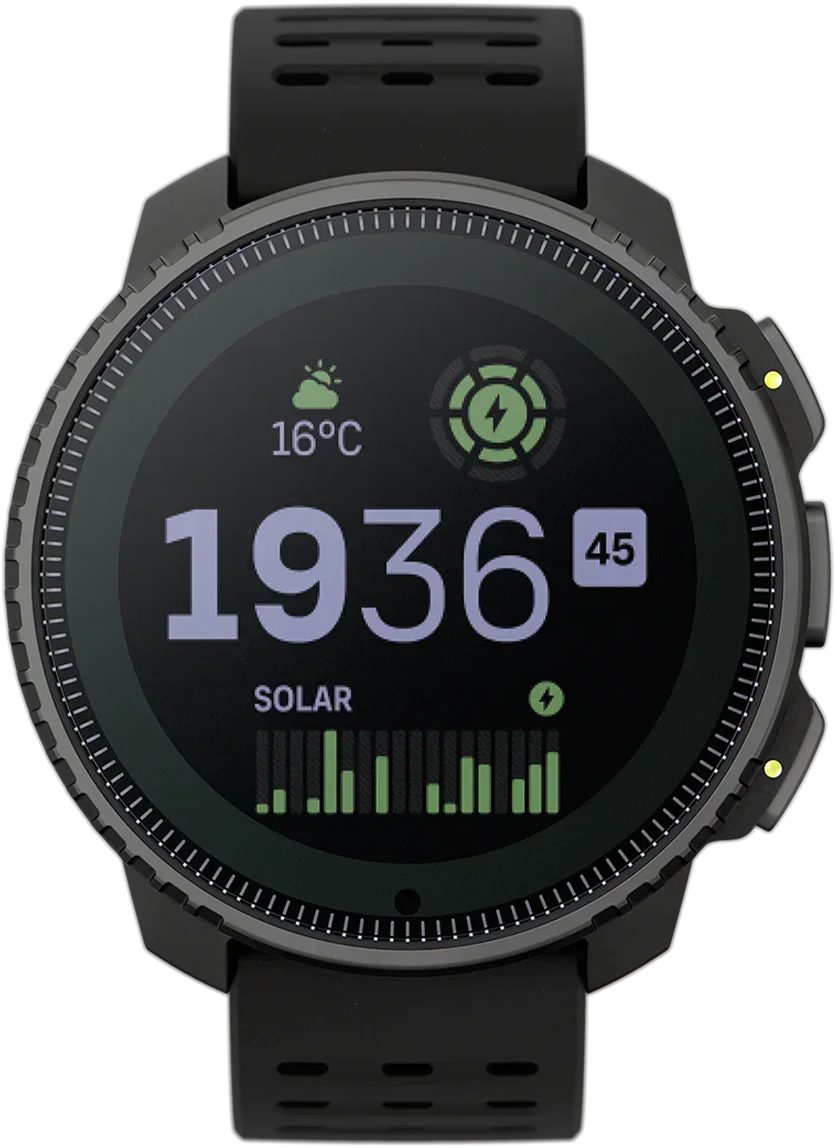
Suunto
Vertical
Full specifications
| Basic information | ||
|---|---|---|
| Release year | 2024 | 2023 |
| Starting price | — | $649 |
| Display size | 1.4-inch | 1.4-inch |
| Dimensions | 49.9 mm × 49.9 mm × 13.2 mm | 49.0 mm × 49.0 mm × 13.6 mm |
| Weight | 99 g | 86 g |
| Front material | Sapphire crystal | Sapphire crystal |
| Back material | Glass fibre reinforced polyamide | Glass fibre reinforced polyamide |
| Display | ||
| Display technology | AMOLED | Memory LCD (MIP) |
| Resolution | 466 × 466 | 280 × 280 |
| Protection | Sapphire crystal | Sapphire crystal |
| Performance | ||
| Storage | 32 GB | 32 GB |
| Expandable storage | No | No |
| Battery & charging | ||
| Charging standard | USB charging. Daily use up to 16 days / standby 26 days; dive 40–60 h; All-systems GNSS multi-band up to 50 h / single-band 65 h; power-saving GNSS up to 200 h (not everyday life) | USB charging. Daily use up to ~60 days (solar-assisted titanium longer); Performance / Endurance / Ultra / Tour GPS modes; dual-band GNSS modes shorter — Tour/Ultra not everyday life |
| Battery type | Lithium-ion | Lithium-ion |
| Connectivity | ||
| Cellular | GPS / GLONASS / Galileo / BeiDou / QZSS (dual-band), Offline outdoor maps (32 GB), Wireless Tank POD air integration, Bühlmann 16 GF decompression; scuba / nitrox / freedive | GPS / GLONASS / Galileo / BeiDou / QZSS (dual-band), Offline outdoor maps |
| Bluetooth | Bluetooth | Bluetooth |
| Build & durability | ||
| Frame | Glass fibre reinforced polyamide; stainless steel bezel | Glass fibre reinforced polyamide; stainless steel bezel |
| Ingress protection | 100 m (dive computer; max operating depth 60 m EN 13319) | 100 m |
Basic information
Release year
- Ocean
- 2024
- Vertical
- 2023
Starting price
- Ocean
- —
- Vertical
- $649
Display size
- Ocean
- 1.4-inch
- Vertical
- 1.4-inch
Dimensions
- Ocean
- 49.9 mm × 49.9 mm × 13.2 mm
- Vertical
- 49.0 mm × 49.0 mm × 13.6 mm
Weight
- Ocean
- 99 g
- Vertical
- 86 g
Front material
- Ocean
- Sapphire crystal
- Vertical
- Sapphire crystal
Back material
- Ocean
- Glass fibre reinforced polyamide
- Vertical
- Glass fibre reinforced polyamide
Display
Display technology
- Ocean
- AMOLED
- Vertical
- Memory LCD (MIP)
Resolution
- Ocean
- 466 × 466
- Vertical
- 280 × 280
Protection
- Ocean
- Sapphire crystal
- Vertical
- Sapphire crystal
Performance
Storage
- Ocean
- 32 GB
- Vertical
- 32 GB
Expandable storage
- Ocean
- No
- Vertical
- No
Battery & charging
Charging standard
- Ocean
- USB charging. Daily use up to 16 days / standby 26 days; dive 40–60 h; All-systems GNSS multi-band up to 50 h / single-band 65 h; power-saving GNSS up to 200 h (not everyday life)
- Vertical
- USB charging. Daily use up to ~60 days (solar-assisted titanium longer); Performance / Endurance / Ultra / Tour GPS modes; dual-band GNSS modes shorter — Tour/Ultra not everyday life
Battery type
- Ocean
- Lithium-ion
- Vertical
- Lithium-ion
Connectivity
Cellular
- Ocean
- GPS / GLONASS / Galileo / BeiDou / QZSS (dual-band), Offline outdoor maps (32 GB), Wireless Tank POD air integration, Bühlmann 16 GF decompression; scuba / nitrox / freedive
- Vertical
- GPS / GLONASS / Galileo / BeiDou / QZSS (dual-band), Offline outdoor maps
Bluetooth
- Ocean
- Bluetooth
- Vertical
- Bluetooth
Build & durability
Frame
- Ocean
- Glass fibre reinforced polyamide; stainless steel bezel
- Vertical
- Glass fibre reinforced polyamide; stainless steel bezel
Ingress protection
- Ocean
- 100 m (dive computer; max operating depth 60 m EN 13319)
- Vertical
- 100 m
Key differences
The most meaningful measured gaps in size and weight — not an overall winner.
Thickness
Ocean
0.4 mm thinner · minor difference
Height
Ocean
0.9 mm taller · minor difference
Width
Ocean
0.9 mm wider · minor difference
Display size
Very similar display size