Samsung
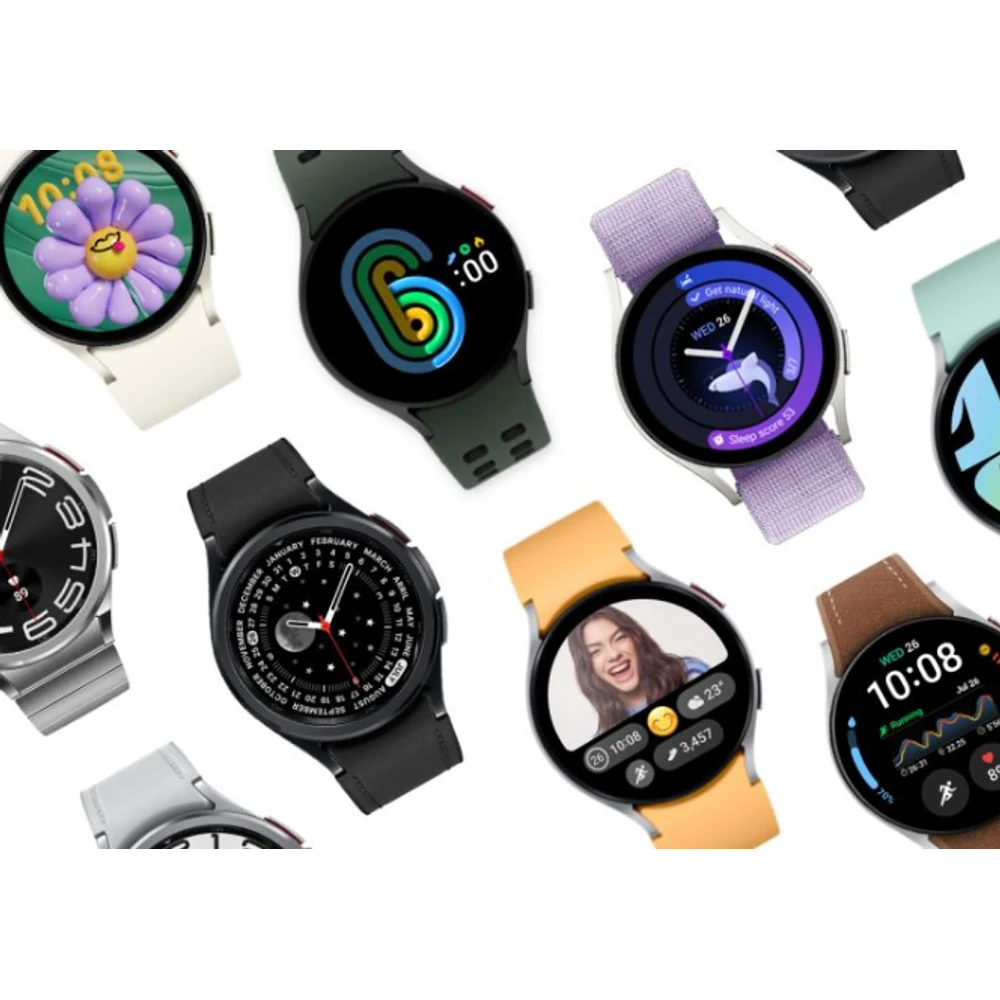
Galaxy Watch6 40mm vs Galaxy Watch7 40mm
Device summary
Samsung
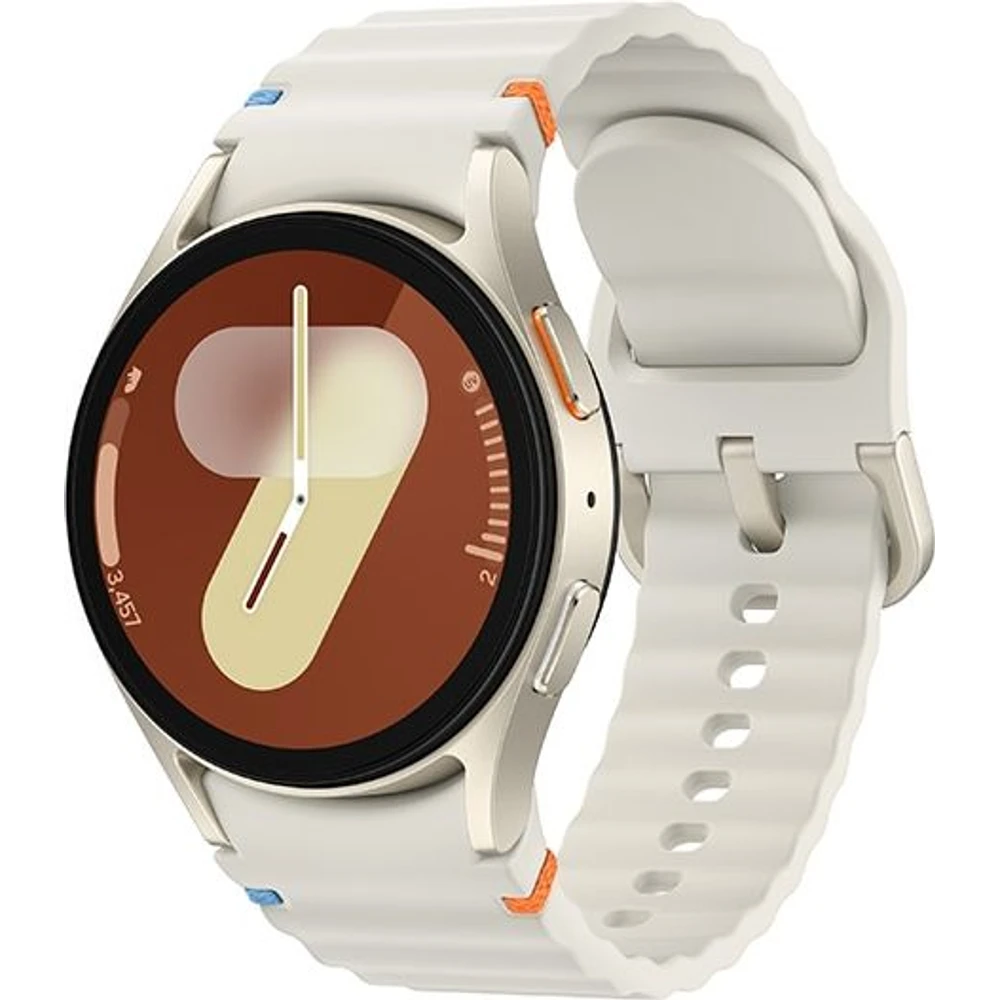
Galaxy Watch7 40mm
Full specifications
| Basic information | ||
|---|---|---|
| Release year | 2023 | 2024 |
| Starting price | — | — |
| Display size | 1.3-inch | 1.3-inch |
| Dimensions | 38.8 mm × 40.4 mm × 9.0 mm | 40.4 mm × 40.4 mm × 9.7 mm |
| Weight | 29 g | 29 g |
| Front material | Sapphire crystal | Sapphire crystal |
| Back material | — | — |
| Display | ||
| Display technology | Super AMOLED | Super AMOLED |
| Resolution | 432 × 432 | 432 × 432 |
| Peak brightness | 2000 nits | 2000 nits |
| Protection | Sapphire crystal | Sapphire crystal |
| Performance | ||
| Chipset | Exynos W930 Dual-Core 1.4GHz | Exynos W1000 (5 Core, 3nm) |
| RAM | 2 GB | 2 GB |
| Storage | 16 GB | 32 GB |
| Expandable storage | No | No |
| Battery & charging | ||
| Battery capacity | 300 mAh | 300 mAh |
| Charging standard | Wireless charging (WPC) with Fast Charging | Wireless charging (WPC) with Fast Charging |
| Battery type | Lithium-ion | Lithium-ion |
| Connectivity | ||
| Cellular | LTE (optional models), GPS, GLONASS, Galileo, BDS | LTE (optional models), Dual-frequency GPS (L1+L5) |
| Wi‑Fi | Wi‑Fi 2.4GHz & 5GHz | Wi‑Fi 2.4GHz & 5GHz |
| Bluetooth | Bluetooth 5.3 | Bluetooth 5.3 |
| NFC | Yes | Yes |
| Build & durability | ||
| Frame | Armor aluminum | Armor aluminum |
| Ingress protection | 5ATM / IP68 / MIL-STD-810H | 5ATM / IP68 / MIL-STD-810H |
Basic information
Release year
- Galaxy Watch6 40mm
- 2023
- Galaxy Watch7 40mm
- 2024
Starting price
- Galaxy Watch6 40mm
- —
- Galaxy Watch7 40mm
- —
Display size
- Galaxy Watch6 40mm
- 1.3-inch
- Galaxy Watch7 40mm
- 1.3-inch
Dimensions
- Galaxy Watch6 40mm
- 38.8 mm × 40.4 mm × 9.0 mm
- Galaxy Watch7 40mm
- 40.4 mm × 40.4 mm × 9.7 mm
Weight
- Galaxy Watch6 40mm
- 29 g
- Galaxy Watch7 40mm
- 29 g
Front material
- Galaxy Watch6 40mm
- Sapphire crystal
- Galaxy Watch7 40mm
- Sapphire crystal
Back material
- Galaxy Watch6 40mm
- —
- Galaxy Watch7 40mm
- —
Display
Display technology
- Galaxy Watch6 40mm
- Super AMOLED
- Galaxy Watch7 40mm
- Super AMOLED
Resolution
- Galaxy Watch6 40mm
- 432 × 432
- Galaxy Watch7 40mm
- 432 × 432
Peak brightness
- Galaxy Watch6 40mm
- 2000 nits
- Galaxy Watch7 40mm
- 2000 nits
Protection
- Galaxy Watch6 40mm
- Sapphire crystal
- Galaxy Watch7 40mm
- Sapphire crystal
Performance
Chipset
- Galaxy Watch6 40mm
- Exynos W930 Dual-Core 1.4GHz
- Galaxy Watch7 40mm
- Exynos W1000 (5 Core, 3nm)
RAM
- Galaxy Watch6 40mm
- 2 GB
- Galaxy Watch7 40mm
- 2 GB
Storage
- Galaxy Watch6 40mm
- 16 GB
- Galaxy Watch7 40mm
- 32 GB
Expandable storage
- Galaxy Watch6 40mm
- No
- Galaxy Watch7 40mm
- No
Battery & charging
Battery capacity
- Galaxy Watch6 40mm
- 300 mAh
- Galaxy Watch7 40mm
- 300 mAh
Charging standard
- Galaxy Watch6 40mm
- Wireless charging (WPC) with Fast Charging
- Galaxy Watch7 40mm
- Wireless charging (WPC) with Fast Charging
Battery type
- Galaxy Watch6 40mm
- Lithium-ion
- Galaxy Watch7 40mm
- Lithium-ion
Connectivity
Cellular
- Galaxy Watch6 40mm
- LTE (optional models), GPS, GLONASS, Galileo, BDS
- Galaxy Watch7 40mm
- LTE (optional models), Dual-frequency GPS (L1+L5)
Wi‑Fi
- Galaxy Watch6 40mm
- Wi‑Fi 2.4GHz & 5GHz
- Galaxy Watch7 40mm
- Wi‑Fi 2.4GHz & 5GHz
Bluetooth
- Galaxy Watch6 40mm
- Bluetooth 5.3
- Galaxy Watch7 40mm
- Bluetooth 5.3
NFC
- Galaxy Watch6 40mm
- Yes
- Galaxy Watch7 40mm
- Yes
Build & durability
Frame
- Galaxy Watch6 40mm
- Armor aluminum
- Galaxy Watch7 40mm
- Armor aluminum
Ingress protection
- Galaxy Watch6 40mm
- 5ATM / IP68 / MIL-STD-810H
- Galaxy Watch7 40mm
- 5ATM / IP68 / MIL-STD-810H
Key differences
The most meaningful measured gaps in size and weight — not an overall winner.
Thickness
Galaxy Watch6 40mm
0.7 mm thinner
Width
Galaxy Watch7 40mm
1.6 mm wider · minor difference
Height
Very similar height
Weight
Very similar weight