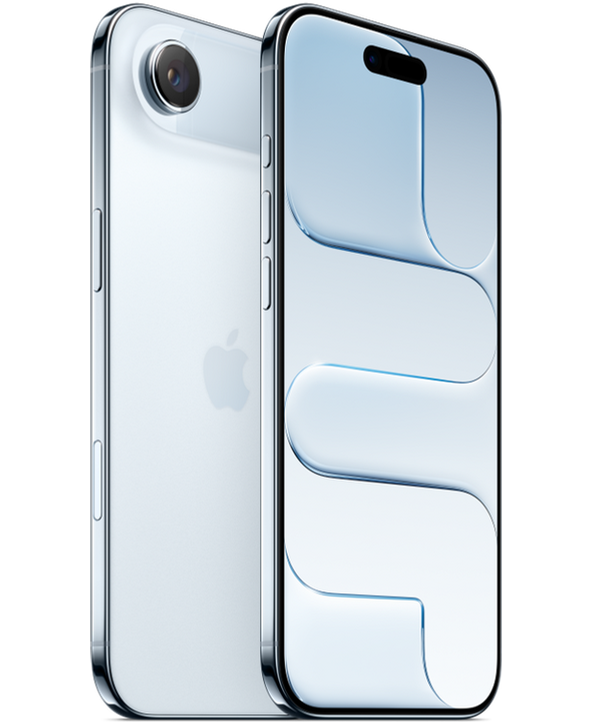
Official manufacturer render.
Apple
iPhone Air
- 6.5-inch Super Retina XDR OLED
- Apple A19 Pro · 6-core CPU
- 165 g
- 27 h · Video playback
- From $999
Available colors
Selected: Sky Blue
Physical specifications
6.5"
Display size
165 g
Weight
156.2 mm
Height
74.7 mm
Width
5.6 mm
Thickness
19:9
Aspect ratio
Release and pricing
- Announced
- September 9, 2025
- Released
- September 19, 2025
- Starting price
- $999
- Market
- US
- Configuration
- 256 GB
Display
- Display size
- 6.5"
- Display technology
- Super Retina XDR OLED
- Resolution
- 2736 × 1260
- Refresh rate
- 120 Hz
- Peak brightness
- 2000 nits
- Protection
- Ceramic Shield
Performance
- Chipset
- Apple A19 Pro
- CPU
- 6-core CPU
- GPU
- 5-core GPU
- RAM
- 12 GB
- Storage
- 256 GB, 512 GB, 1024 GB
- Expandable storage
- No
Battery & charging
- Wired charging
- 25 W
- Wireless charging
- 15 W
- Charging standard
- MagSafe, Qi2
- Video playback (Manufacturer claim)
- 27 h
- Battery type
- Built-in rechargeable lithium-ion
Cameras
- Rear cameras
- Fusion · 48 MP · ƒ/1.6 · 26 mm · Sensor-shift OIS
- Front cameras
- Center Stage · 18 MP · ƒ/1.9
- Video recording
- 4K Dolby Vision up to 60 fps
Build & durability
- Frame
- Titanium
- Back
- Ceramic Shield
- Front
- Ceramic Shield
- Ingress protection
- IP68
Connectivity
- Cellular
- 5G (sub-6 GHz), Gigabit LTE
- Wi‑Fi
- Wi‑Fi 7 (802.11be)
- Bluetooth
- Bluetooth 6
- USB
- USB-C (USB 3)
- NFC
- Yes
- eSIM
- Yes
- Satellite
- Emergency SOS via satellite
Sizometry Analysis
Overall Score
7.5
out of 10
A striking thin-and-light iPhone with premium display and build, divided by mono speaker limits and workload-dependent battery endurance.
Category scores
Camera
7.0
Excellent single-lens results for everyday shooting, with clear gaps versus multi-lens Pro hardware.
Battery and charging
6.5
Adequate for light-to-moderate days, but trails larger iPhones and pressures heavy users by evening.
Performance
7.0
Fast routine use with occasional warmth under sustained load.
Handling and portability
7.5
Manageable daily carry with familiar reach and pocket trade-offs for the size class.
Build quality
9.0
Premium titanium construction with standout durability and scratch resistance for an ultra-thin phone.
Value
7.5
Balanced capability for the price with deliberate omissions versus higher tiers.
Strengths
- Distinctive thin-and-light design at 165 g
- Large 120Hz ProMotion display
- Exceptional durability for extreme thinness
- Capable everyday wide-angle camera
Weaknesses
- Mono speaker limits media and speakerphone use
- Battery margin below larger iPhones for heavy users
- Single rear camera limits lens versatility
- Premium price with visible feature trade-offs
Best for
- Design-first buyers who value thinness and weight
- Headphone-first media consumers
- Large-screen users avoiding Pro Max bulk
- Casual photographers satisfied with one strong lens
Less suitable for
- Speaker-dependent media and call habits
- Maximum battery endurance seekers
- Telephoto and ultrawide enthusiasts
- Value-focused shoppers comparing with iPhone 17 Pro
Upgrade recommendation
Current device: Pro Max owners seeking lighter carry
Recommendation: Depends on prioritiesNotes: Weight and thinness gains are real, but battery and speaker downgrades disappoint some switchers within months.
Current device: iPhone 14 Pro Max or older large iPhone
Recommendation: Worth consideringNotes: Modern display, chip, and design leap appeal when thinness matters more than maximum endurance.
Current device: iPhone 17 standard
Recommendation: Depends on prioritiesNotes: Lateral camera capability with design upgrade; battery and speaker are not clear improvements.
Current device: Deciding between Air and iPhone 17 Pro
Recommendation: Depends on prioritiesNotes: The Pro is widely seen as the better all-rounder; the Air fits buyers who consciously trade features for form.
Current device: iPhone 17 Pro or Pro Max
Recommendation: Probably unnecessaryNotes: Recent Pro owners sacrifice camera versatility and endurance without a sustained-performance advantage.
Current device: Speaker-heavy or battery-heavy daily use
Recommendation: Probably unnecessaryNotes: Mono audio and smaller battery are recurring deal-breakers for these workflows.
Everyday usability
Estimated from device dimensions and weight.
One-handed use
ManageableOne-handed use is workable, with some stretch for top-of-screen reach.
Pocket friendliness
GoodGenerally pocket-friendly for everyday carry.
Carry comfort
LightFeels light to carry relative to typical devices in its class.
Reading and media
More comfortable for reading and media than compact phones.
Gaming
SuitableIts hardware should handle most modern games, though demanding titles may benefit from adjusted settings.
Bottom line
The iPhone Air earns attention through design rather than completeness. Its thin titanium chassis, light 165 g weight, and large 120Hz display create a carry experience owners describe with unusual enthusiasm — when the compromises align with their habits. Mono speaker output and workload-dependent battery endurance are the clearest fault lines: headphone-first, moderate-use buyers often love the phone; speaker-dependent and heavy-use shoppers frequently return to Pro hardware. Mid-term reports suggest durability fears were overblown, but value debates at $999 remain open. Buy it for the form factor you will consciously protect; choose the iPhone 17 Pro when features matter more than silhouette.
Models and configurations
- Storage
- 256 GB512 GB1 TB
- Connectivity
- 5G (sub-6 GHz)Gigabit LTE
- Colors
- Sky BlueSpace BlackCloud WhiteLight Gold
- RAM
- 12 GB
- SIM configuration
- eSIM
Compare this device at its real-world size.
Use the Sizometry Tool to compare dimensions, thickness, and weight with other devices.
Open Tool →