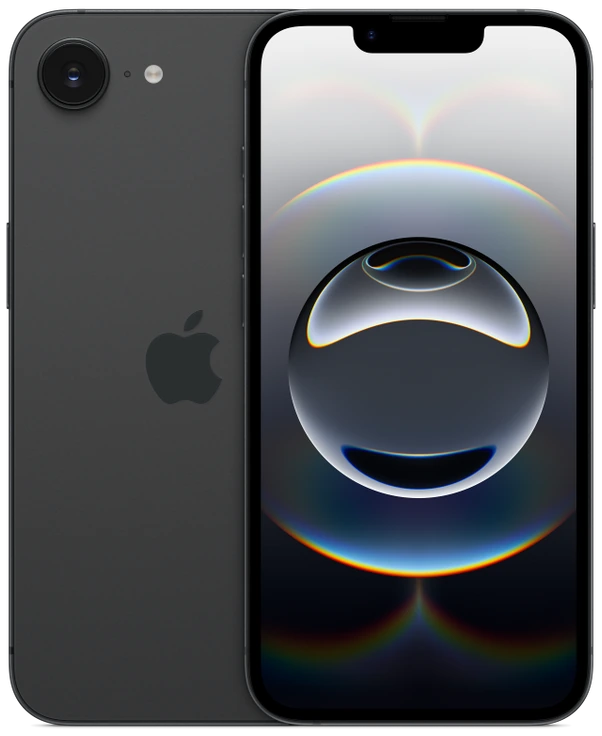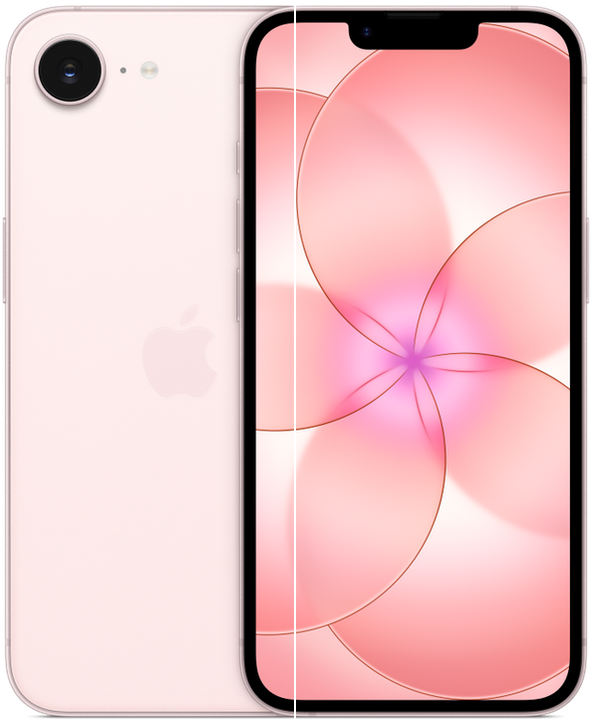
Official manufacturer render.
Apple
iPhone 17e
- 6.1-inch Super Retina XDR OLED
- Apple A19 · 6-core CPU
- 169 g
- 26 h · Video playback
- From $599
Available colors
Selected: Soft Pink
Physical specifications
6.1"
Display size
169 g
Weight
146.7 mm
Height
71.5 mm
Width
7.8 mm
Thickness
—
Aspect ratio
Release and pricing
- Announced
- February 19, 2026
- Released
- February 27, 2026
- Starting price
- $599
- Market
- US
- Configuration
- 256 GB
Display
- Display size
- 6.1"
- Display technology
- Super Retina XDR OLED
- Resolution
- 2532 × 1170
- Refresh rate
- 60 Hz
- Peak brightness
- 1200 nits
- Protection
- Ceramic Shield
Performance
- Chipset
- Apple A19
- CPU
- 6-core CPU
- GPU
- 4-core GPU
- RAM
- 8 GB
- Storage
- 256 GB, 512 GB
- Expandable storage
- No
Battery & charging
- Wired charging
- 20 W
- Wireless charging
- 15 W
- Charging standard
- MagSafe, Qi
- Video playback (Manufacturer claim)
- 26 h
- Battery type
- Built-in rechargeable lithium-ion
Cameras
- Rear cameras
- Fusion · 48 MP · ƒ/1.6 · 26 mm · Sensor-shift OIS
- Front cameras
- TrueDepth · 12 MP · ƒ/1.9
- Video recording
- 4K Dolby Vision up to 60 fps
Build & durability
- Frame
- Aluminum
- Back
- Glass
- Front
- Ceramic Shield
- Ingress protection
- IP68
Connectivity
- Cellular
- 5G (sub-6 GHz), Gigabit LTE
- Wi‑Fi
- Wi‑Fi 6 (802.11ax)
- Bluetooth
- Bluetooth 5.3
- USB
- USB-C (USB 2)
- NFC
- Yes
- eSIM
- Yes
- Satellite
- Emergency SOS via satellite
Sizometry Analysis
Overall Score
7.5
out of 10
A practical budget iPhone that fixes key 16e gaps with MagSafe and 256GB storage, while asking visible compromises on display and camera versatility.
Category scores
Camera
6.5
Adequate 48MP results for casual shooting, with single-lens limits on ultrawide and zoom versatility.
Battery and charging
7.5
Comfortable reported endurance for typical days, improved versus 16e and older iPhones, though not class-leading.
Performance
8.0
Fast routine use with occasional warmth under sustained load.
Handling and portability
8.5
Manageable daily carry with familiar reach and pocket trade-offs for the size class.
Build quality
7.5
Solid materials and familiar iPhone tolerances, with a dated notch-and-bezel presentation.
Value
7.5
Balanced capability for the price with deliberate omissions versus higher tiers.
Strengths
- MagSafe support versus the iPhone 16e
- 256GB base storage at $599
- A19 performance for everyday tasks
- Light, manageable size at 169 g
Weaknesses
- 60Hz display feels behind the iPhone 17
- Single rear camera limits framing options
- Notch design reads as older generation
- Slower 15W MagSafe than the standard iPhone 17
Best for
- iPhone 11–13 owners on a budget
- Cheapest new iPhone shoppers
- Casual photographers who value simplicity
- Users prioritizing MagSafe and storage over display
Less suitable for
- Flagship buyers expecting 120Hz and modern design
- Current iPhone 16e owners
- Users who need ultrawide or telephoto hardware
- Shoppers who can justify the iPhone 17 step up
Upgrade recommendation
Current device: iPhone 11, 12, or 13
Recommendation: Strongly recommendedNotes: A19 speed, MagSafe, 256GB base, and improved battery reports address multi-generation pain points.
Current device: iPhone 14 generation
Recommendation: Worth consideringNotes: Gains matter mainly if battery health, storage, or MagSafe accessories are daily frustrations.
Current device: iPhone 16e
Recommendation: Probably unnecessaryNotes: MagSafe and storage fixes are real, but many 16e owners see insufficient reason to switch so soon.
Current device: iPhone 15 or 16 standard
Recommendation: Probably unnecessaryNotes: Recent standard-model owners already have capable hardware; the 17e reads as lateral or downward on display.
Current device: Deciding between 17e and iPhone 17
Recommendation: Depends on prioritiesNotes: The iPhone 17 is widely seen as better value at +$200 when 120Hz, ultrawide, and faster MagSafe matter weekly.
Current device: Budget Android or very old phone
Recommendation: Worth consideringNotes: A sensible Apple ecosystem entry when price caps rule out the standard iPhone 17.
Everyday usability
Estimated from device dimensions and weight.
One-handed use
ComfortableIts width suits comfortable one-handed reach for many users.
Pocket friendliness
ExcellentIts footprint fits standard pockets more easily than larger phones.
Carry comfort
LightFeels light to carry relative to typical devices in its class.
Reading and media
Better for quick glances and messaging than long reading or video.
Gaming
SuitableIts hardware should handle most modern games, though demanding titles may benefit from adjusted settings.
Bottom line
The iPhone 17e earns attention as Apple’s most approachable new iPhone, not as a flagship substitute. MagSafe restoration and 256GB base storage address the clearest complaints about the 16e, while the A19 chip and improved battery reports make it a rational upgrade path from iPhone 11 through 13. The compromises are visible: 60Hz display, notch-era design, a single rear camera, and slower magnetic charging than the iPhone 17. Early consensus suggests most buyers who can stretch the price gap should consider the standard iPhone 17 instead; the 17e fits shoppers with a firm budget who accept those trade-offs.
Models and configurations
- Storage
- 256 GB512 GB
- Connectivity
- 5G (sub-6 GHz)Gigabit LTE
- Colors
- Soft PinkWhiteBlack
- RAM
- 8 GB
- SIM configuration
- eSIM
Compare this device at its real-world size.
Use the Sizometry Tool to compare dimensions, thickness, and weight with other devices.
Open Tool →