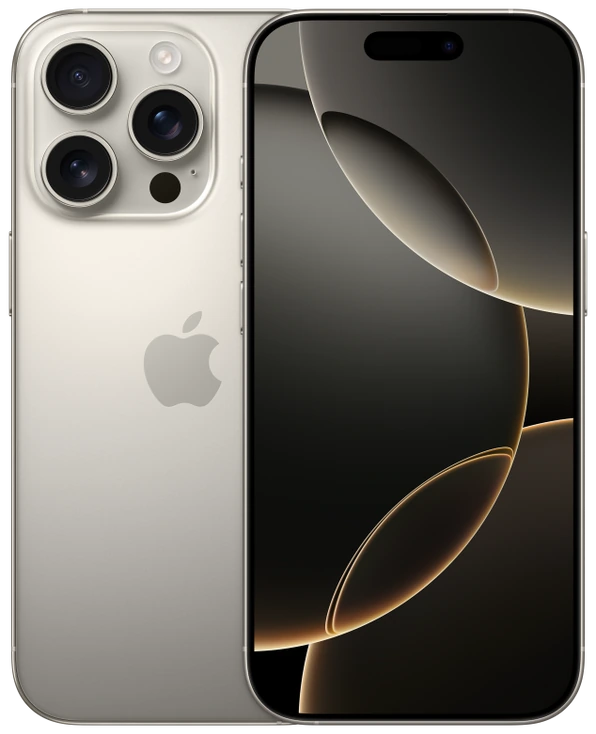
Apple
Device summary

Xiaomi
14
Full specifications
| Basic information | ||
|---|---|---|
| Release year | 2024 | 2024 |
| Starting price | $999 | — |
| Display size | 6.3-inch | 6.4-inch |
| Dimensions | 71.5 mm × 149.6 mm × 8.3 mm | 71.5 mm × 152.8 mm × 8.2 mm |
| Weight | 199 g | 193 g |
| Front material | Ceramic Shield | — |
| Back material | Textured matte glass | — |
| Display | ||
| Display technology | Super Retina XDR OLED | LTPO AMOLED |
| Resolution | 2622 × 1206 | 2670 × 1200 |
| Refresh rate | 120 Hz | 120 Hz |
| Peak brightness | 2000 nits | 3000 nits |
| Protection | Ceramic Shield | — |
| Performance | ||
| Chipset | Apple A18 Pro | Snapdragon 8 Gen 3 Mobile Platform |
| RAM | 8 GB | 12 GB |
| Storage | 128 GB, 256 GB, 512 GB, 1024 GB | 256 GB, 512 GB |
| Expandable storage | No | No |
| Cameras | ||
| Main camera | Fusion · 48 MP · ƒ/1.78 · 24 mm · Second-generation sensor-shift OIS | Wide · 50 MP · f/1.6 · OIS |
| Ultra-wide camera | Ultra Wide · 48 MP · ƒ/2.2 · 13 mm | Ultra Wide · 50 MP · f/2.2 |
| Telephoto camera | Telephoto · 12 MP · ƒ/2.8 · 120 mm · 5× optical zoom · OIS | Telephoto · 50 MP · f/2.0 · OIS |
| Front cameras | TrueDepth · 12 MP · ƒ/1.9 | Selfie · 32 MP · f/2.0 |
| Video recording | 4K Dolby Vision up to 120 fps, ProRes up to 4K at 60 fps | — |
| Battery & charging | ||
| Wired charging | 25 W | 90 W |
| Wireless charging | 15 W | 50 W |
| Charging standard | MagSafe, Qi2 | — |
| Battery type | Built-in rechargeable lithium-ion | — |
| Typical capacity | — | 4610 mAh |
| Connectivity | ||
| Cellular | 5G (sub-6 GHz and mmWave), Gigabit LTE | 5G, LTE, 3G, 2G |
| Wi‑Fi | Wi‑Fi 7 (802.11be) | Wi-Fi 7 |
| Bluetooth | Bluetooth 5.3 | Bluetooth 5.4 |
| USB | USB-C (USB 3) | USB-C 3.2 Gen 1 |
| NFC | Yes | Yes |
| eSIM | Yes | Yes |
| Satellite | Emergency SOS via satellite | — |
| Build & durability | ||
| Frame | Titanium | — |
| Ingress protection | IP68 | IP68 |
Key differences
The most meaningful measured gaps in size and weight — not an overall winner.
Height
14
3.2 mm taller
Weight
14
6 g lighter · minor difference
Width
Very similar width
Thickness
Very similar thickness
What these size differences mean
Calculated from the dimensions shown, rounded to 0.1 mm and 1 g. Percentages use the smaller measurement as the reference. Fold and rotation settings affect the dimensions compared.
- Both have the same listed width (71.5 mm) at the displayed precision. Check this difference against the width of your current device and pocket opening.
- 14 is 3.2 mm (2.1% relative to iPhone 16 Pro) taller. This describes the body outline; screen diagonal alone does not tell you the overall size.
- iPhone 16 Pro is 0.1 mm (1.2% relative to 14) thicker. Cases and camera protrusions can change the clearance you need.
- 14 is 6 g lighter. This is the listed device-weight difference, not a measured comfort rating.
Use these figures to compare physical size. They do not establish one-handed reach, pocket fit, durability or an overall winner.
Size in everyday life
Picture it in your front pocket.
2018 US jeans study · 20 brands · 80 pairs · Approx. 32-inch waists
iPhone 16 Pro
14
Sources and measurement notes
Sizometry compares published specifications and calculates differences. These are not hands-on measurements or tests of comfort, performance or pocket fit.
iPhone 16 Pro
Check the exact model, year, region and configuration on the linked page. References may cover several variants. Folded and unfolded dimensions differ; cases and camera protrusions may change the space a device needs. Drawings share a relative scale and are not calibrated to life size on your screen.
iPhone 16 Pro vs 14 Size Comparison
User Experience Summary
iPhone 16 Pro
Strengths
- 5x telephoto with real everyday usefulness
- Improved thermals and sustained performance
- Strong battery endurance for a compact Pro
Compromises
- Camera Control reception remains polarized
- Significant premium over the standard iPhone 16
- Heavier than the standard model for one-handed use
14
Strengths
- Compact size with excellent one-handed handling
- 90W wired charging that recovers range quickly
- Leica-tuned daylight imaging with distinct color character
Compromises
- 4,610 mAh battery tight on heavy-use days versus larger rivals
- Thermal warmth during sustained gaming and recording
- HyperOS bloatware and control-center layout friction